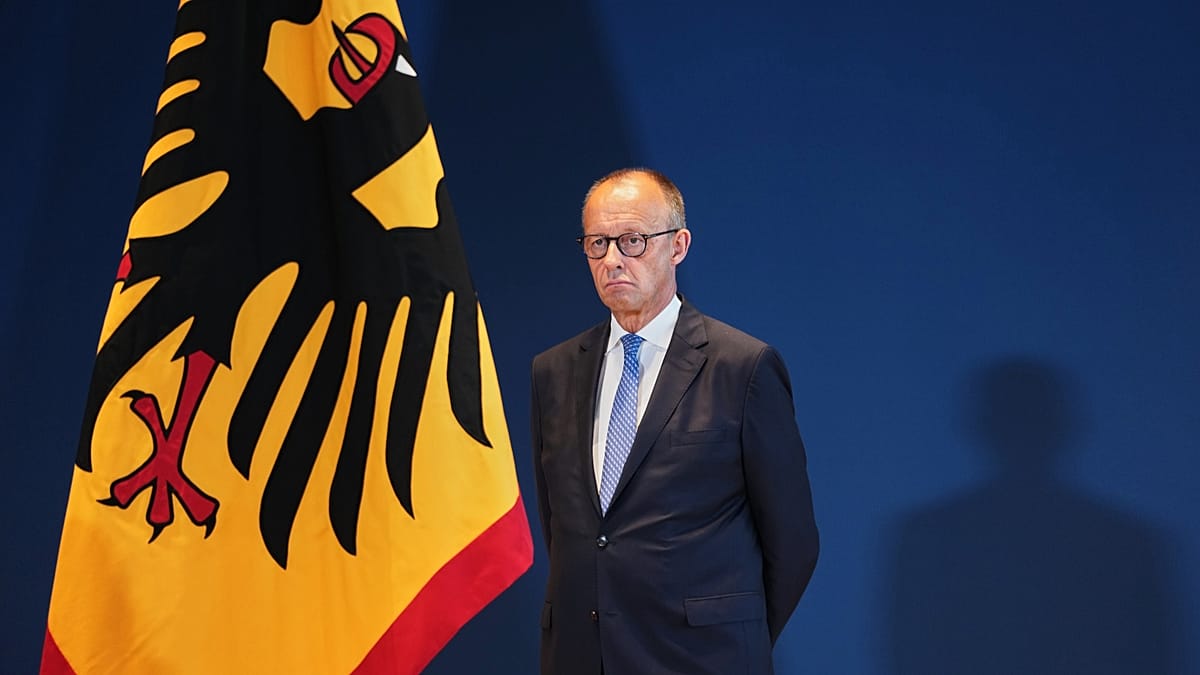
Sunday's regional election in Saxony-Anhalt has delivered a seismic shock to Germany's political establishment, with the far-right Alternative for Germany (AfD) securing a commanding victory. Preliminary results show the party winning 43.8% of the vote, translating into 39 seats in the 83-member state parliament in Magdeburg. While short of an outright majority, the result marks the AfD's strongest performance in any German state election and has sent tremors through Berlin.
For Chancellor Friedrich Merz and his centre-right Christian Democratic Union (CDU), the outcome is nothing short of a disaster. The CDU, which had governed Saxony-Anhalt for 24 years, managed only 17.2% of the vote — its worst result in the state since reunification. The party's candidate for state premier, Sven Schulze, conceded defeat late Sunday, acknowledging that voters had delivered a clear message.
A crisis of confidence in Berlin
The scale of the defeat has triggered immediate political fallout. AfD co-chair Alice Weidel told CNN that she expects Merz to be gone by Christmas, a prediction that, while speculative, underscores the gravity of the moment. Merz has remained largely out of the public eye since the results were announced, but he is expected to face his cabinet in Berlin on Monday for emergency discussions.
CDU Bundestag member Günter Krings admitted to Europe Today that the result was “devastating” and that “the perception and credibility of our party is at a low.” Asked about the implications for the European Union, Krings warned that the right would feel “emboldened” across the continent. “The European Union also should ask, 'What did we contribute to this anger, and what do we have to change?'” he said.
The timing could hardly be more awkward for Brussels. European Council President António Costa is scheduled to meet Merz in Berlin on Wednesday as part of his tour of EU capitals, a weeks-long listening exercise ahead of negotiations on the bloc's next long-term budget. The Saxony-Anhalt result is likely to dominate those talks, even if the official agenda focuses on the multi-annual financial framework. Costa's subsequent meeting with Spanish Prime Minister Pedro Sánchez on Thursday may also touch on the ongoing migration pressures at Ceuta, a issue that resonates with the anti-immigration sentiment fueling the AfD's rise.
The CDU's collapse in the east is part of a broader pattern. In recent years, the party has struggled to connect with voters in the former East Germany, where economic anxieties and cultural grievances have fueled support for the AfD. The far-right surge in Saxony-Anhalt tests not only Germany's political taboos but also the resilience of its democratic institutions.
EU faces uncomfortable questions
The result has also reignited debate about the EU's role in eastern Germany. Critics argue that Brussels has failed to address the region's economic disparities and that its policies on migration and climate have alienated voters. Krings' call for introspection reflects a growing concern among mainstream parties that the EU is being blamed for problems it cannot solve alone.
For Merz, the immediate challenge is to prevent the CDU's decline from becoming a terminal spiral. The chancellor has staked his reputation on restoring conservative credibility, but Sunday's result suggests that voters in the east are no longer listening. With federal elections due in 2027, the CDU's prospects look increasingly bleak unless it can find a way to counter the AfD's appeal.
Meanwhile, the AfD's victory has implications beyond Germany. As the party consolidates its position in the east, it is likely to push for a more eurosceptic agenda, potentially complicating EU decision-making. The AfD's Saxony-Anhalt win and the controversy over Ratko Mladić's funeral in Serbia both test the EU's commitment to its values, albeit in very different ways.
In Brussels, officials are watching the situation with concern. The European Commission has repeatedly stressed the importance of upholding democratic standards and the rule of law, but the rise of the far right in a founding member state poses a direct challenge to those principles. As one EU diplomat put it, “The EU cannot ignore what happened in Saxony-Anhalt. It is a wake-up call for all of us.”
For now, Merz faces the daunting task of rebuilding his party's credibility while managing a coalition government that is already fragile. The next few weeks will be critical, as the chancellor seeks to reassure both his domestic audience and his European partners that Germany remains a stable and reliable anchor in the EU. But with the AfD surging and public trust in the political establishment eroding, that task has never looked more difficult.