On Sunday, voters in the small eastern German state of Saxony-Anhalt may deliver a political earthquake. The far-right Alternative for Germany (AfD) is polling above 40 percent, far ahead of Friedrich Merz's Christian Democrats (CDU). A result like that could give the far right a realistic route to governing a German state for the first time since the Second World War, shattering one of the most deeply held taboos in the Federal Republic and sending a powerful signal across Europe.
The stakes extend well beyond Magdeburg. A stronger AfD would harden the debate on migration, climate policy, and support for Ukraine. It would also make Germany a less predictable partner for the European Union at a moment when the bloc faces acute geopolitical pressure, from Russian hybrid attacks to the fallout of the war in Ukraine. The recent drone incident near Leipzig, which Berlin attributes to Moscow, is a reminder of how quickly security concerns can feed into domestic politics.
Two MEPs, two diagnoses
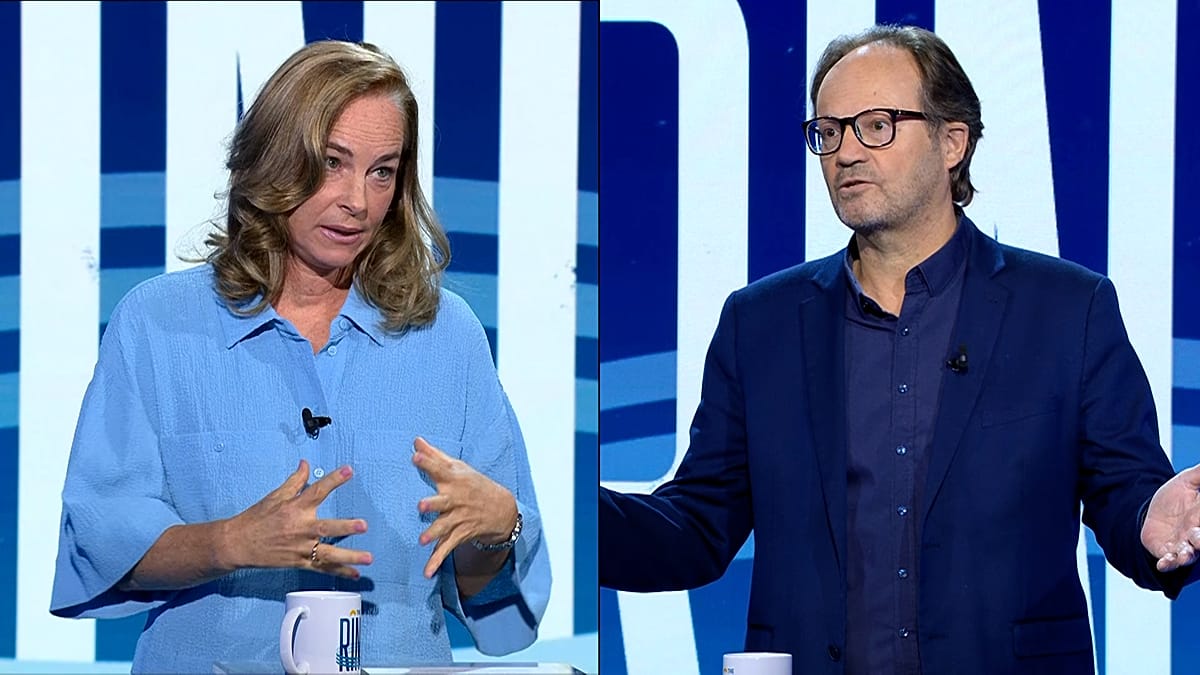
In this edition of The Ring, two members of the European Parliament go head-to-head on the question: who is to blame for the far-right surge? Hildegard Bentele, a German MEP from the centre-right European People's Party (EPP), and Jean-Marc Germain, a French MEP from the Socialists & Democrats (S&D), offer sharply different readings.
Bentele, who serves as vice-chair of the Committee on Development and sits on the Committee on Industry, Research and Energy, insists that the answer lies in offering a credible alternative. "As Christian-Democrats, we're convinced that the only way to counter the rise of the far-right in Saxony-Anhalt, in Germany and across Europe, is listening closely to people, offering realistic solutions and presenting - based on our values - an optimistic vision for the future," she says.
Germain, an economist and former adviser to French Prime Minister Lionel Jospin, takes a more structural view. He argues that the far right thrives where globalisation and de-industrialisation have left deep scars. "As long as Europe fails to build economic sovereignty, the far right will thrive in the regions devastated by globalisation and de-industrialisation," he warns.
A test for the CDU and the EPP
The CDU, which has governed Saxony-Anhalt for years, is now fighting to hold off the AfD. For Friedrich Merz, the national party leader, a defeat would be a personal blow and would intensify the internal debate over how to respond to the far right. Some in the CDU have floated the idea of cooperating with the AfD at the local level, a move that would break the so-called Brandmauer (firewall) that mainstream parties have maintained against the far right since 1945.
Bentele rejects any such cooperation. "We will not work with the AfD," she insists. "They are not a normal party; they are a threat to our democracy and to European unity."
Germain, however, is sceptical of the CDU's resolve. "The EPP has been playing with fire for years, flirting with far-right parties in other countries," he says. "Now they are reaping what they sowed."
European implications
The outcome in Saxony-Anhalt will be watched closely in Brussels and in other capitals. A strong AfD result would embolden far-right parties elsewhere, from France's National Rally to Italy's Brothers of Italy, which is already in government. The Italian foreign minister's warnings about Russian meddling highlight the broader pattern of external interference in European elections.
For the EU, a more unstable Germany would complicate decision-making on issues ranging from the green transition to fiscal policy. Germany is the bloc's largest economy and its political anchor; if that anchor begins to drag, the entire European project feels the strain.
What happens next?
If the AfD wins, it will not automatically enter government. Other parties have ruled out coalitions with it, and the AfD itself may not have a majority. But even a strong opposition presence would shift the political centre of gravity. The CDU would face pressure to adopt tougher positions on migration and security to win back voters, while the SPD and Greens would struggle to defend their policies.
For Germain, the lesson is clear: "The answer is not to imitate the far right, but to address the economic anxieties that fuel it. That means investing in regions that have been left behind, creating good jobs, and building a Europe that protects its citizens."
Bentele counters that the CDU's approach is already the right one. "We have to show people that we have a plan for their future, not just for the next election. That is how we defeat the far right."
Sunday's vote will be a test of whether that message resonates. The result will be felt far beyond the borders of Saxony-Anhalt.