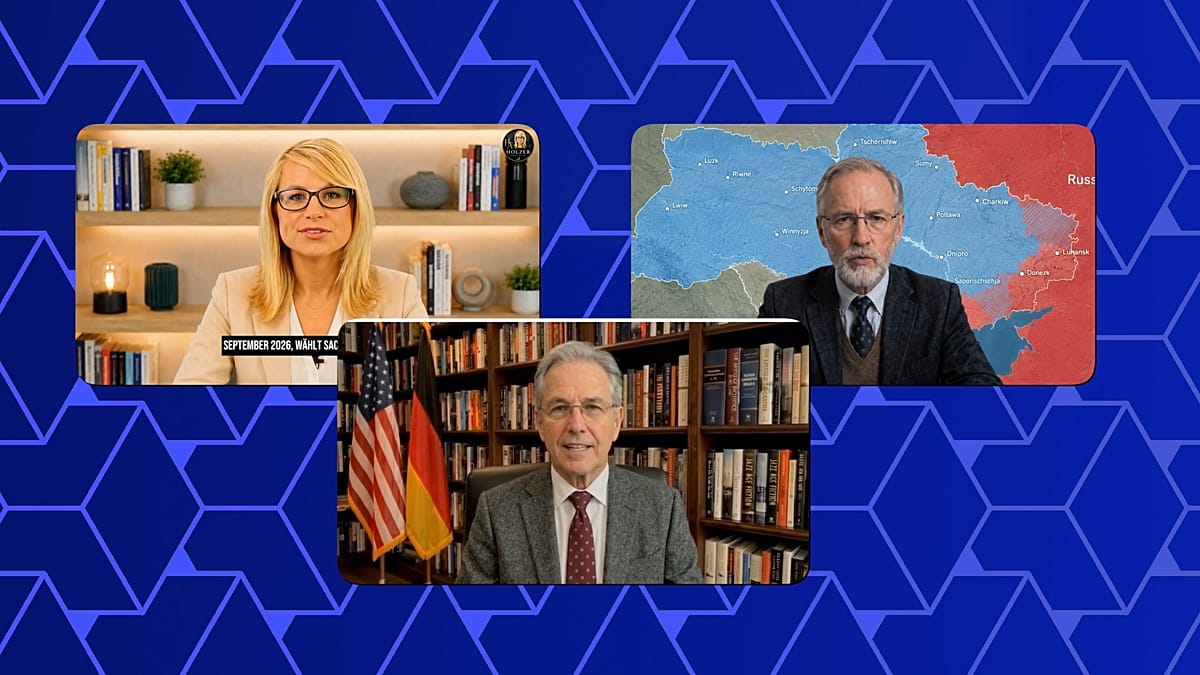
Across YouTube, a viewer might stumble upon a woman earnestly dissecting the recent election in Saxony-Anhalt, or a man explaining the latest developments in Iran and China's role in the conflict. Another channel features an expert discussing shifts in the global order. But these presenters are not flesh-and-blood analysts—they are entirely synthetic, created with artificial intelligence.
The non-profit Centre for Monitoring, Analysis and Strategy (CeMAS), based in Berlin, has identified 47 German-language YouTube channels that use AI-generated avatars to comment on political and geopolitical issues. In a report released this week, researchers analyzed 38 of these channels, cataloguing 1,876 videos published between December 2025 and August 2026. Collectively, the channels have amassed over 66,000 subscribers and their videos have been viewed more than 7.5 million times, with nearly 30,000 comments.
Despite the artificial nature of the presenters, the comment sections suggest that many viewers are engaging with the content as if it were genuine. "You repeatedly have people who go like, 'Oh, this is AI, guys, don’t you see that?'" said Lea Frühwirth, a senior researcher on disinformation at CeMAS, in an interview with Euronews' fact-checking team, The Cube. "And then there's others replying, going like, 'I don't care.'"
Signs of a coordinated effort
CeMAS points to several indicators that these channels are not the work of independent creators but part of a larger, coordinated operation. "We have multiple markers of coordination in this activity," Frühwirth explained. "We have similarities in what they're talking about, how they are presenting it, the registration dates, the time frame in which most of the activity goes down in terms of months."
The researchers also observed that some accounts switched their avatars over time, while others kept the same avatar but changed the voice. In some cases, the same avatar appeared on multiple channels. These patterns suggest a shared infrastructure or a single operator behind the network.
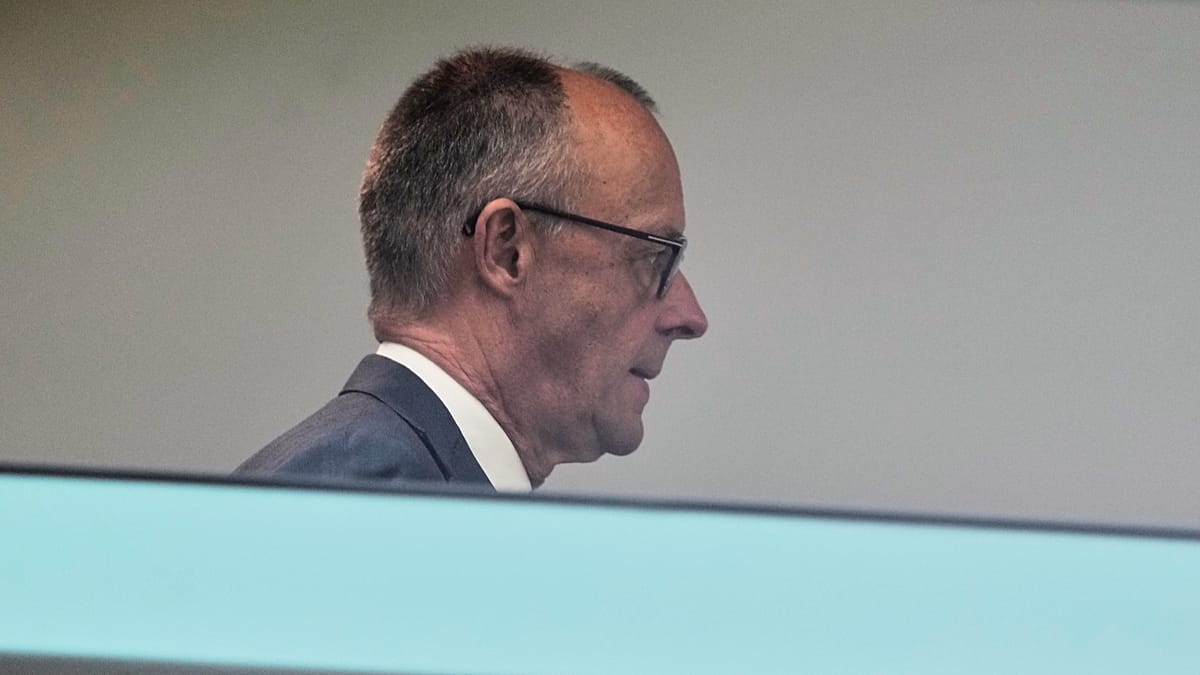
Of the videos analyzed, 795 focused on German domestic politics. CeMAS found that these videos portrayed Germany as being in a deep political and economic crisis, and they were sharply critical of Chancellor Friedrich Merz's government. The timing is notable: the videos were published in the run-up to state and local elections in Germany, where the far-right Alternative for Germany (AfD) emerged victorious in Saxony-Anhalt and is projected to narrowly win in Mecklenburg-Western Pomerania. Meanwhile, Merz's Christian Democratic Union (CDU) is expected to fall just short of the 5% threshold needed to retain seats in the latter state's parliament, and The Left party came out as the strongest force in Berlin.
Despite the electoral context, Frühwirth cautioned against assuming the videos were a targeted campaign. "I wouldn't expect this to be a campaign targeted specifically at the elections," she said. Still, she acknowledged that the narratives attacking the federal government were relevant to the broader debate surrounding the votes.
The German-language channels are not an isolated phenomenon. A separate investigation by social media analysis firm Graphika found similar patterns in English, French, Korean, Portuguese, and Spanish, with AI-generated presenters discussing world affairs. Graphika could not identify the operators or confirm that all accounts belonged to a single network, but it found signs that they likely shared content creation and amplification methods. CeMAS believes the German channels could be part of this wider pattern, though a direct link has not been conclusively established.
Harder to spot
Many of the YouTube videos include a disclosure label stating that the content has been altered or synthetically generated. However, Frühwirth notes that this label is small and does not clearly indicate whether AI was used for just one element or to create the entire presenter. "It's not designed in a way that makes sure that whoever sees this is informed that this is entirely the product of AI generation," she said.
On closer inspection, the videos do contain telltale signs of AI involvement: translation errors, inconsistent voices, and thumbnails that show a different avatar from the one in the video. But these signals are becoming increasingly difficult to detect as the technology improves. "The thing with AI-generated content is it’s getting better by the minute," Frühwirth said. "If we were to talk to each other in three months, we would have an entirely new level of quality that we’re looking at."
The rise of AI-generated political commentary poses a challenge for platforms and regulators alike. As the German elections showed, such content can easily blend into the broader information ecosystem, potentially influencing public opinion without viewers realizing the source is not human. For now, researchers like those at CeMAS are urging greater transparency and better labeling to help audiences distinguish between real and synthetic voices.