A team of researchers based in Munich has developed an artificial intelligence framework that maps the effects of obesity across the entire body at the cellular level, revealing damage that extends far beyond adipose tissue. The findings, published in Nature, offer a holistic view of the disease's systemic impact, including unexpected changes in the nervous system.
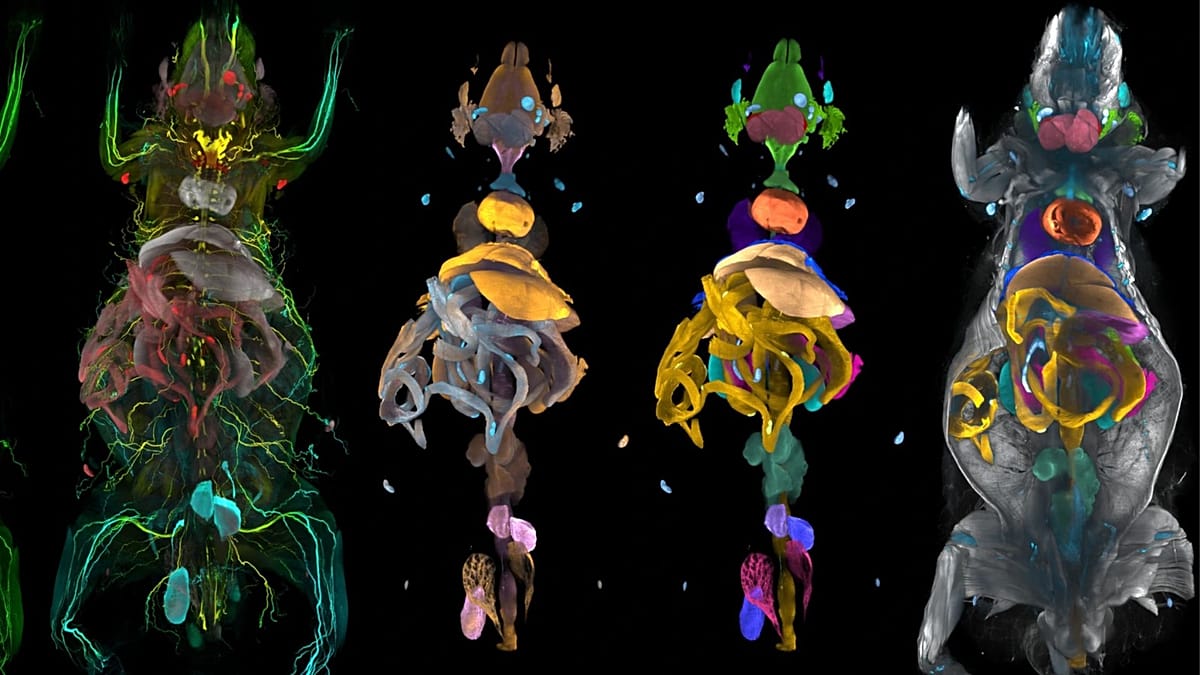
The tool, named MouseMapper, was created by scientists at Helmholtz Munich and Ludwig Maximilian University (LMU). It constructs a detailed three-dimensional 'atlas' of the whole body, identifying organs, nerves, and immune cells across tens of millions of structures in a single analysis. Until now, researchers could only study disease-related changes organ by organ, missing the interconnected nature of conditions like obesity.
How the AI Maps the Body
To build the atlas, the team labelled nerves and immune cells in mice using fluorescent markers. The animals underwent tissue-clearing techniques that rendered their bodies optically transparent while preserving the fluorescent signals. High-resolution 3D scans were then captured using light-sheet microscopy, and the AI automatically analysed the images to map 31 distinct organs and tissue types. This allowed the researchers to observe inflammation and structural damage across the body simultaneously.
The system was tested on mice fed a high-fat diet, which developed obesity and metabolic changes similar to those seen in humans. The results showed widespread inflammation and tissue alterations in organs including fat, liver, and muscle. But the most striking findings emerged in the nervous system.
Major structural changes were detected in the trigeminal nerve, which controls facial sensation. In obese mice, the nerve had fewer branches and endings, suggesting a loss of normal sensory function. Behavioural tests confirmed that the mice responded less to touch and stimulation, indicating a tangible impact on sensory perception.
To verify the relevance to humans, the scientists analysed tissue samples from people with obesity. They found similar molecular changes in the trigeminal ganglion, the nerve centre linked to facial sensation. This suggests that the obesity-related nerve damage observed in mice may also occur in humans, raising questions about the broader neurological consequences of the condition.
The study's implications extend beyond obesity. The researchers believe the platform could transform how complex diseases are studied, allowing scientists to examine how conditions affect the entire body as a connected system rather than focusing on one organ at a time. This approach aligns with growing interest in systems biology and personalised medicine.
Looking ahead, the team hopes to build 'digital twins' of organisms, which would enable researchers to simulate disease progression and test treatments before moving to physical experiments. Such a tool could accelerate drug development and reduce reliance on animal testing.
The research comes amid broader European efforts to understand and combat obesity. As global obesity trends diverge, with wealthy nations plateauing while developing countries see sharp rises, tools like MouseMapper could help identify early markers of disease and guide interventions. The findings also underscore the importance of considering systemic effects in public health strategies, particularly as rising childhood obesity in the UK has been linked to widening inequality.
While the technology is still in its early stages, the Munich team's work represents a significant step toward understanding how obesity rewires the body at a fundamental level. For now, the atlas provides a stark visual reminder that the disease is far more than a matter of excess weight—it is a systemic condition with consequences that reach into the very architecture of the nervous system.