Watching a loved one gradually lose their memories is an experience many Europeans know all too well. For Hilde Vautmans, a Belgian member of the European Parliament, it meant witnessing her father eventually stop recognising her. “That is something that hurts so much you cannot even describe it,” she said.
Vautmans’s story echoes across the continent, where dementia affects more than 12 million people, a figure projected to rise to 20 million by 2050. Alzheimer’s disease, the most common form, accounts for 60 to 80 percent of cases and brings progressive decline in memory, thinking, and communication.
While researchers stress that early diagnosis can open doors to treatment, others are focusing on improving daily life for those already living with memory loss. Reminiscence therapy, a traditional approach using photographs, music, and familiar objects to spark recollection, is now being enhanced by technology. Virtual reality, interactive platforms, and artificial intelligence are creating more personalised ways to help people reconnect with their past.
One such initiative is Synthetic Memories, a project by the Barcelona-based creative studio Domestic Data Streamers. Since 2023, the team has worked with care homes in Spain, collaborating with social workers and neurotherapists. During one-hour sessions, an interviewer and an AI prompter guide participants through their memories, and generative AI models transform those spoken recollections into visual images.
The project is careful to position itself not as a cure but as a supportive tool for reminiscence therapy. “We are not trying to replace memory, but to give it a tangible form,” said a studio representative. The resulting images often become conversation starters, helping families and caregivers engage with patients in new ways.
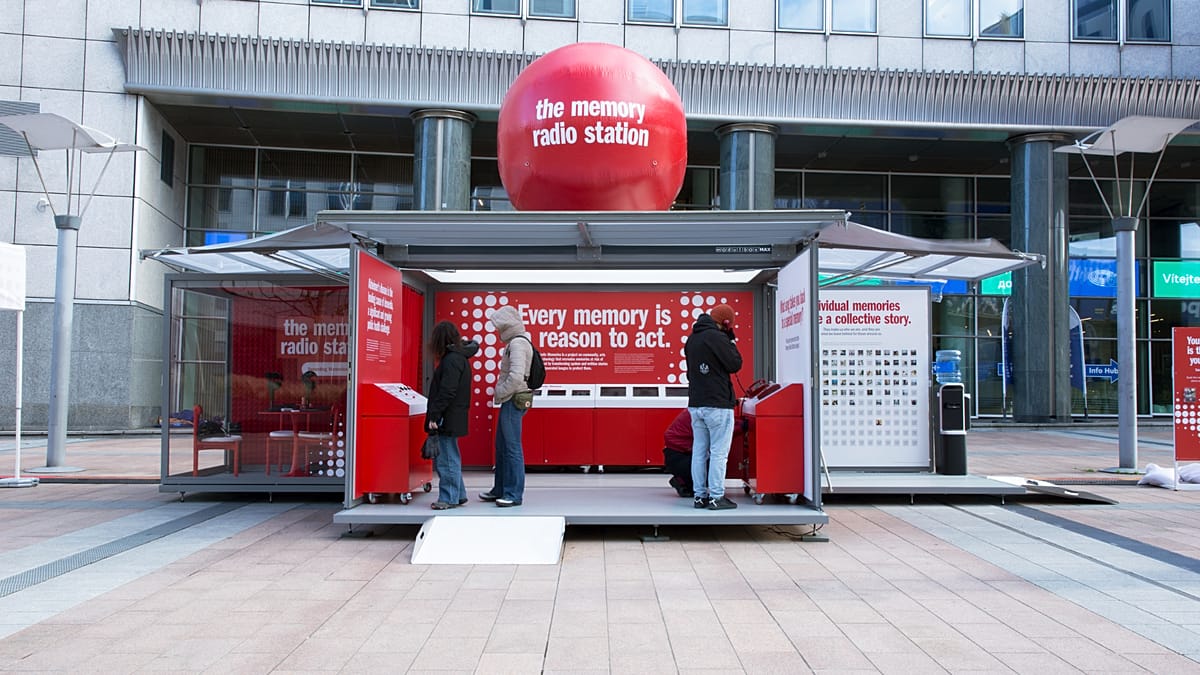
Synthetic Memories has now hit the road as part of The Memory Radio Station, a travelling exhibition developed with pharmaceutical company Eli Lilly. It has toured European cities, bringing conversations about memory loss into public spaces. In November, the exhibition landed at the European Parliament in Brussels, where MEPs and visitors were invited to share their own memories and see them turned into AI-generated art.
Vautmans took part, recalling childhood trips with her father to the cow market in Sint-Truiden, the Belgian town where she grew up. “Those were wonderful moments with my father when I could go with him to the market and try to sell the cows and then put them on the scale,” she told the radio station. Her AI-generated image now hangs alongside others, a personal tribute to a shared past.
Why early diagnosis matters
The exhibition also aims to address a critical gap in public knowledge. A recent Europe-wide survey of 681 people in 12 countries found that fewer than half knew Alzheimer’s is the most common form of dementia, and many mistakenly believed it is a normal part of ageing. Such misconceptions delay diagnosis and treatment.
“Without adequate knowledge, it can be difficult to spot the signs of different dementia subtypes,” the survey authors wrote. They argue that raising awareness could help people recognise symptoms sooner and seek medical advice earlier.
Evidence from the Alzheimer’s Society shows that early and accurate diagnosis improves psychosocial outcomes, reducing anxiety and helping people maintain independence. Some treatments are most effective in the early stages of the disease, making timely intervention crucial.
Vautmans knows the cost of delay firsthand. “In our case, it took a long time. It was a whole search; it was a denial,” she said. “It’s not Alzheimer’s; it’s just stress, it’s just too much work. Like we all say when we see somebody forgetting things.”
Frederic Destrebecq, executive director of the European Brain Council, spoke at the Brussels opening. “This is an engagement opportunity that demonstrates what is making us unique as human beings; that's the power of our brain,” he said. The exhibition, he added, is a reminder that memory is not just a personal treasure but a collective European concern.
As the travelling show continues across the continent, it invites everyone—not just those affected by dementia—to reflect on the fragility and importance of memory. For more on how lifestyle factors influence cognitive health, see how smoking intensity drives dementia risk. And for a broader look at cultural events shaping Europe, check this week's cultural highlights.