The race toward artificial general intelligence has created a labor market unlike any since the dot-com era. But this time, the pool of elite researchers and engineers capable of building frontier AI systems at scale is astonishingly small—perhaps only a few hundred individuals worldwide.
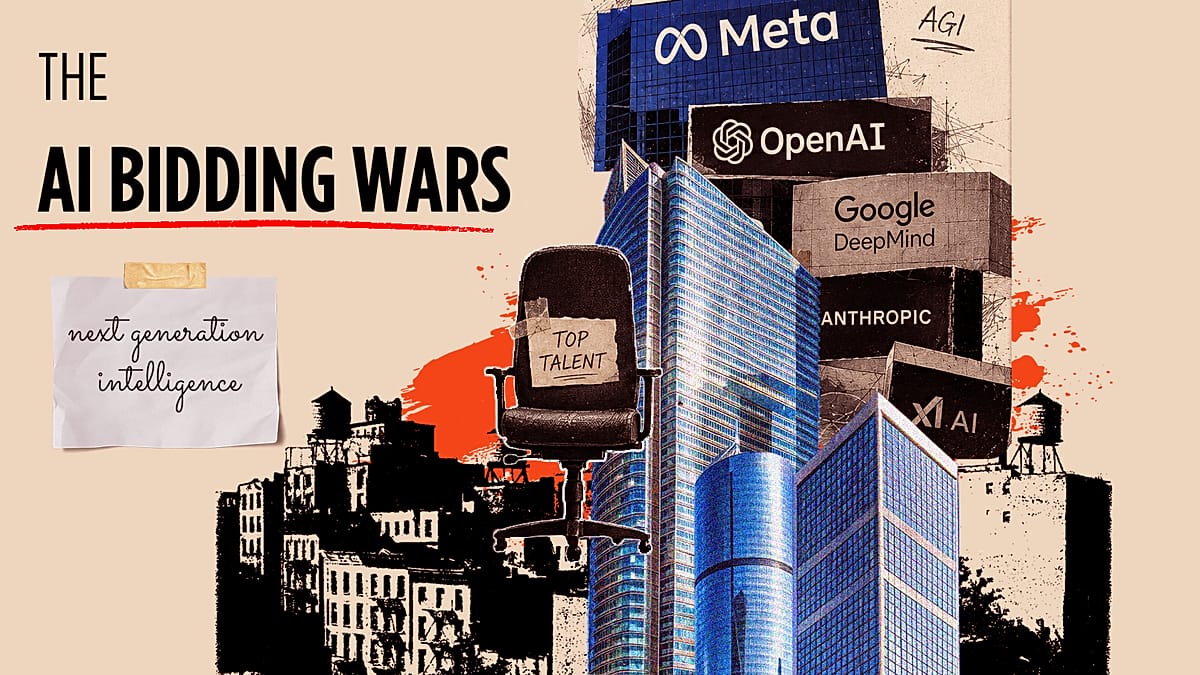
Tech giants including OpenAI, Meta, Google DeepMind, Anthropic, and xAI, along with a wave of new startups, are locked in a fierce competition for this talent. Reports over the past two years have described nine-figure compensation packages, massive equity grants, and personal recruiting efforts by CEOs like Mark Zuckerberg and Sam Altman. While some figures remain unverified, credible reporting and insider accounts have shed light on the market value of the most sought-after individuals.
Here are five of the most renowned AI figures whose stories illustrate the bidding wars reshaping the industry.
Ilya Sutskever: The Architect of Generative AI
Israeli-Canadian computer scientist Ilya Sutskever is widely regarded as one of the key intellectual forces behind the generative AI boom. As a co-founder and former chief scientist of OpenAI, he drove breakthroughs behind the GPT models. Before that, he worked at Google Brain, contributing to foundational advances in deep learning.
After OpenAI’s governance crisis in 2023—when Sam Altman was briefly ousted as CEO—Sutskever left the company and co-founded Safe Superintelligence (SSI) in 2024. Despite having no commercial product, SSI was privately valued at around $32 billion (€27.5 billion) in 2025. Meta reportedly explored acquiring SSI and aggressively recruited its talent during Zuckerberg’s AI hiring push.
Last week, Sutskever testified in the Elon Musk versus OpenAI trial, revealing he holds a $7 billion (€6 billion) stake in OpenAI. His unique combination of scientific credibility, frontier-model experience, and leadership ability makes him one of the few individuals investors believe can lead an AGI-scale research organization.
Mira Murati: From OpenAI CTO to Startup Founder
Albanian-American engineer Mira Murati left OpenAI in 2024 after serving as chief technology officer, where she oversaw the launches of ChatGPT, DALL-E, and GPT-4. She previously worked as a senior product manager at Tesla.
Murati founded Thinking Machines Lab, which quickly attracted former OpenAI researchers and achieved a valuation exceeding $5 billion (€4.3 billion) shortly after launch. The startup focuses on human-AI collaboration rather than fully autonomous systems. Last week, it previewed “interaction models” that users control entirely by voice, with native access to the user’s screen for a seamless experience.
Meta has also tried to recruit researchers connected to Murati’s lab, which has gathered engineers from ChatGPT, Character.ai, Mistral, and PyTorch. Murati’s ability to attract top-tier talent at scale has become a competitive advantage in itself.
Alexandr Wang: From Data Infrastructure to Meta’s AI Labs
Second-generation Chinese-American engineer Alexandr Wang founded Scale AI in 2016, building critical infrastructure for machine learning through data labeling and model evaluation. Scale AI became embedded in the generative AI ecosystem, working with governments and leading labs. In 2025, Meta acquired a 49% non-voting stake in the firm for $14.3 billion (€12.3 billion), valuing it at $29 billion (€25 billion).
Wang now holds a leadership role within Meta Superintelligence Labs. Leaked documents suggest his compensation is among the largest in the industry, though exact figures remain undisclosed.
The broader implications for Europe are significant. As the EU pushes forward with its AI Act and invests in homegrown talent through initiatives like the European Innovation Council, the continent risks being left behind in the global talent war. European startups such as Mistral AI in Paris and DeepMind’s London lab are competing, but the scale of compensation offered by US tech giants is hard to match. The outcome of this bidding war will shape not only the future of AI but also the geopolitical balance of technological power.