Before Germany's national team kicks off their World Cup campaign against Curaçao on Sunday, a different kind of spectacle has already unfolded thousands of kilometres from the host nation, the United States. On Friday, the tournament's latest oracle—a giant anteater named Taio—made his first prediction, and it may not please every DFB fan.
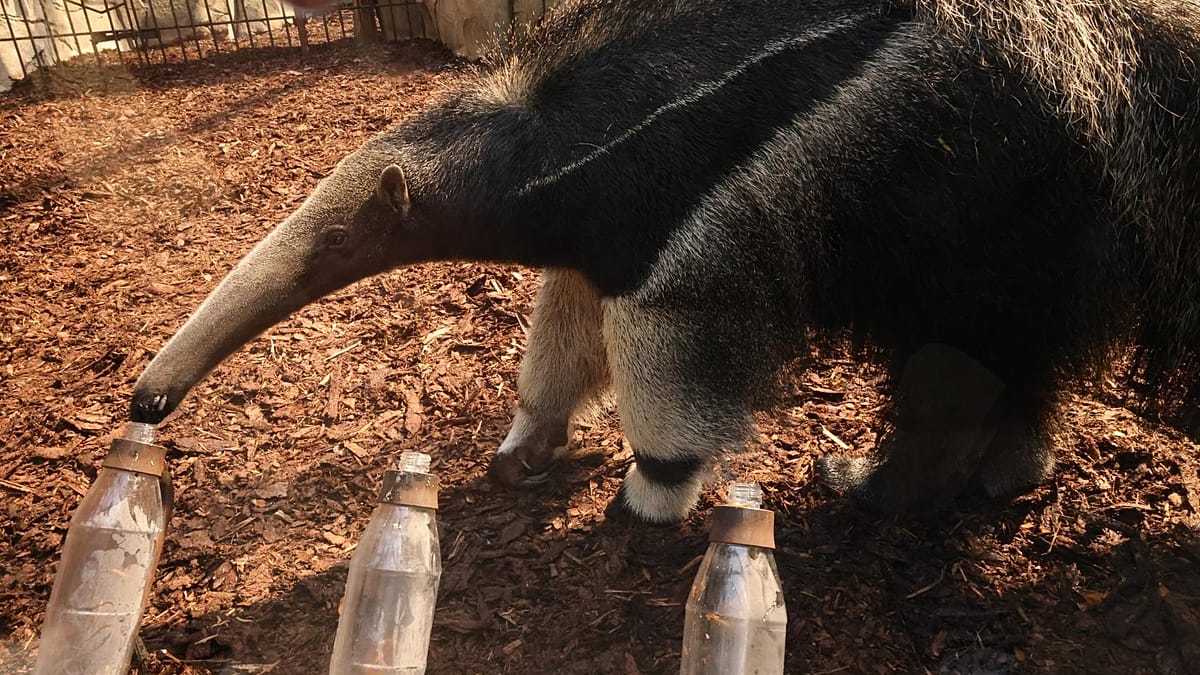
At Münster's Allwetterzoo, Taio took his time deciding between three bottles filled with mealworms, each representing a possible outcome: a German win, a draw, or a loss. After a suspenseful pause, he chose the bottle symbolising a draw. The zoo's staff noted that the mealworms in that bottle seemed particularly enticing to the anteater, whose snout, around 30 centimetres long, is believed to give him an exceptionally keen sense of smell.
Taio was born in 2024 at the Allwetterzoo, where his species is classified as endangered. He is the first giant anteater to be born at the zoo, according to its social media channels. Zoo director Simone Schehka explained the choice of Taio as oracle: "We keep and breed many endangered species here at Allwetterzoo. The anteater is one of them. Taio is one of our offspring and a good representative of the many other species that need protection." She added that a football World Cup attracts enormous attention, and the zoo aims to harness that interest to highlight its vital conservation work.
A Legacy of Animal Oracles
Taio steps into a tradition that peaked with octopus Paul from Oberhausen, who achieved cult status during the 2010 World Cup. Paul correctly predicted all eight of Germany's matches that tournament, including the final, earning a 100 percent success rate. His predictions were covered by international outlets such as The Guardian and Le Monde, and his semi-final forecast was broadcast live on television. Paul died a natural death a few months later at Sea Life Oberhausen.
Since Paul, numerous animal oracles have tried to replicate his success, but none have matched his record. At the 2008 European Championship, Paul had already shown fallibility, getting two out of six predictions wrong, including the final where Germany beat Spain despite his forecast of a loss. After Paul's death, Sea Life Oberhausen quickly introduced Paul II, who predicted results for the Women's World Cup a year later. Other German cities also attempted to crown a successor, with eight octopuses competing across Berlin, Hanover, Konstanz, Königswinter, Munich, Oberhausen, Speyer, and Timmendorfer Strand.
During the 2014 World Cup, a host of rival oracles emerged. Armadillo Taka from Erfurt Zoo was tasked with predicting the group match between Germany and Ghana, but his forecast was never made public before the 2-2 draw. Octopus Regina from Berlin's Sea Life correctly predicted Germany's 4-0 win over Portugal in the opening match but erred on the Ghana draw and struggled with the final group game against the USA, which Germany won 1-0. Brazil, the host nation, countered with a sea turtle named "Cabecao" ("Big Head") as their own oracle, a direct response to the Paul phenomenon.
Whether Taio's draw prediction proves accurate will be known on Sunday. For now, he carries the weight of a legacy that includes Germany's broader engagement with global events, from defence resolve to internal border checks. The anteater's role, however, is ultimately about more than football: it is a reminder of the endangered species that share our planet.