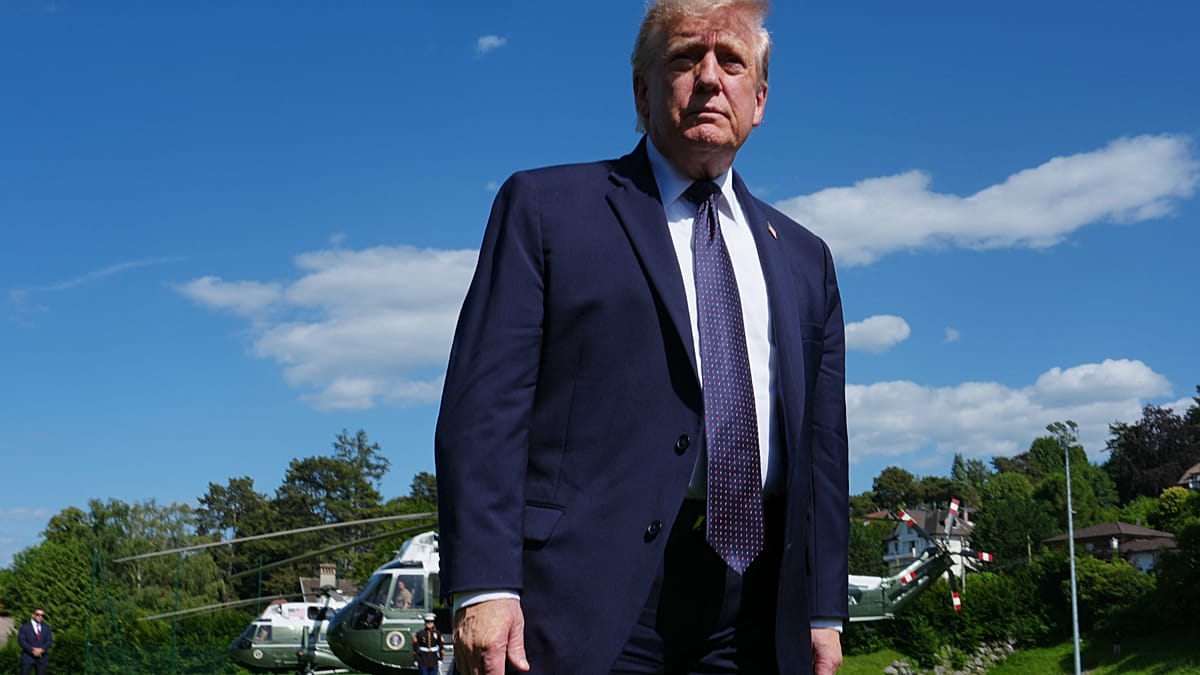
Speaking to reporters on the sidelines of the G7 summit in Évian, France, US President Donald Trump urged Israeli Prime Minister Benjamin Netanyahu to exercise greater restraint in Lebanon and suggested that Syria’s leadership is better placed to confront Hezbollah. The comments, made during a bilateral meeting with Qatar’s Emir Tamim bin Hamad Al Thani, underscore growing transatlantic unease over the scale of Israeli operations in the region.
Trump’s intervention follows an Israeli airstrike on a residential building in Beirut on Sunday that killed three people and wounded more than a dozen. The Israel Defense Forces said the target was a Hezbollah command centre, but Trump described the attack as excessive. “You don’t have to knock down an entire apartment building every time you’re looking for somebody, because there are a lot of people who live in those apartments and they are not all Hezbollah,” he told reporters.
Trump Suggests Syria as Alternative
Trump pointed to Syria’s President Ahmed al-Sharaa as a more capable actor in countering Hezbollah. “He is very capable of dealing with Hezbollah,” Trump said, adding that al-Sharaa “will do the job” if Israel cannot carry out operations without causing significant civilian casualties. The US president described al-Sharaa as “very good for me,” a remark likely to raise eyebrows in European capitals that have been cautious about engaging with the Syrian leader.
Trump’s comments come as the United States and Iran edge closer to a framework agreement to end the war, with Qatar playing a mediating role. The G7 summit in Évian has been dominated by discussions on the Iran deal, AI regulation, and trade tensions, including Trump’s threat of 100% tariffs on French wine over the digital tax. The US president acknowledged that Hezbollah remains a problem but questioned Netanyahu’s methods. “Israel has been fighting Hezbollah for too long, and too many people are being killed,” he said.
When asked if he was frustrated with Netanyahu, Trump demurred. “We have a great relationship. I didn’t like that he carried out an attack based on minor drones (on Lebanon)... it was vicious. That was too much,” he said. He added that “Bibi has to be more responsible with respect to Lebanon,” and noted that of all the countries affected by the conflict, Lebanon “has been treated the worst, and they can’t defend themselves.”
The remarks reflect a broader shift in US messaging as Washington seeks to stabilise the region ahead of a potential deal with Tehran. European leaders, who have long advocated for a more measured Israeli approach, may find common ground with Trump’s call for restraint. However, his suggestion that Syria should take the lead on Hezbollah is likely to be met with scepticism, given the Assad regime’s own history with the group.
The situation on the ground remains fragile. UNIFIL’s deputy has warned that no quick peace is possible between Israel and Hezbollah without political will, while a Lebanese MP has stated that no real ceasefire exists as disarmament talks loom. The European Union, which has troops in the UNIFIL mission, is closely monitoring developments.
As the G7 summit continues, the focus will remain on whether the US-Iran talks can yield a framework deal and how Israel’s military strategy in Lebanon will evolve. For now, Trump’s message to Netanyahu is clear: show restraint, and let others handle the fight.