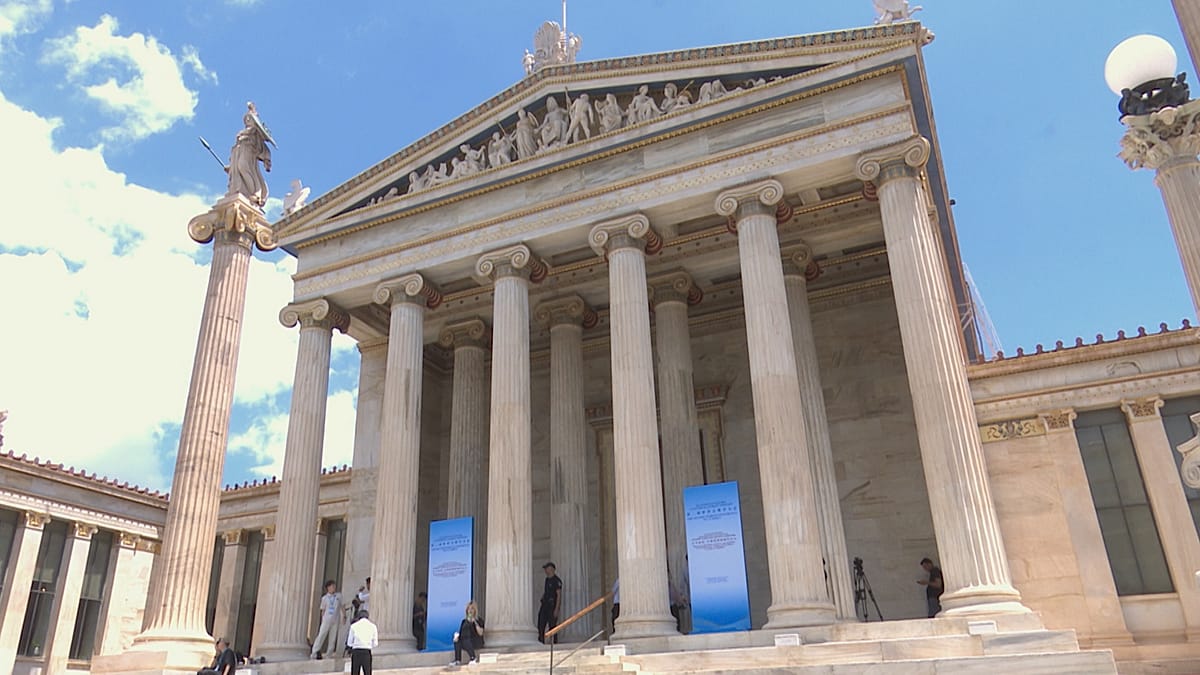
The Second World Conference of Classics concluded in Athens this week with a joint declaration that aims to apply Greco-Roman and Chinese philosophical traditions to contemporary challenges, from geopolitical rivalries to the ethical dilemmas of artificial intelligence.
Held over two days in the Greek capital, the summit brought together more than 200 scholars from 20 countries. The central outcome was the adoption of an initiative titled "Illuminating Humanity's Future with Classical Wisdom," which calls for human-centred parameters in technological development and ethical international relations.
Ancient Lessons for Modern Rivalries
Researcher He Fangying drew a direct parallel between the Peloponnesian War and today's great-power competition, arguing that ideological confrontation can lead to structural decline. The reference to the ancient conflict between Athens and Sparta resonated strongly in a city that still bears the marks of that era.
The declaration does not prescribe specific policies but establishes a framework for dialogue. It encourages policymakers to consider classical concepts of justice, moderation, and the common good when navigating issues such as AI governance, climate change, and regional conflicts.
The conference also highlighted the relevance of Chinese philosophical traditions, particularly Confucian ideas about harmony and social order. This cross-cultural approach reflects a growing recognition that no single intellectual tradition holds all the answers to global problems.
European participants noted that the initiative aligns with ongoing efforts to regulate technology and manage geopolitical tensions. The G7 Summit in Évian earlier this year also grappled with AI regulation and geopolitical rivalries, though without the classical lens.
The Athens declaration is non-binding but carries symbolic weight. It positions classical studies as a practical resource for contemporary governance, rather than a purely academic pursuit.
Organisers plan to follow up with regional workshops and an online platform for sharing classical insights with policymakers. The next world conference is scheduled for 2028, likely in a Chinese city.
For now, the summit has reaffirmed Athens' role as a crossroads of ancient and modern ideas, even as the city itself faces the pressures of tourism, climate change, and economic uncertainty.