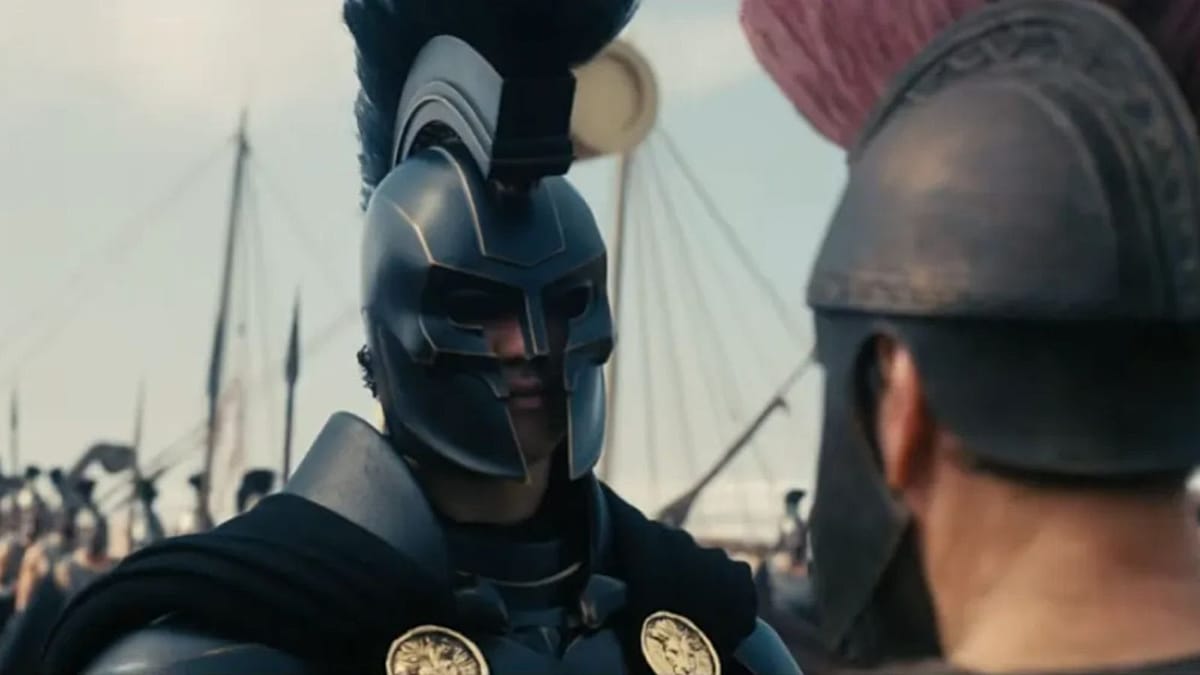
Christopher Nolan's The Odyssey has become a cultural flashpoint across Europe and beyond, sparking debates about adaptation, language, and artistic intent. The film, which has grossed over $700 million worldwide in just over two weeks, has drawn both praise and criticism for its modern take on Homer's ancient epic.
British-American translator Emily Wilson, whose 2017 verse translation was the first by a woman into English, published a review in the London Review of Books that was sharply critical. She argued that Nolan's film lacked “psychological, emotional, political and ethical depth” and had “nothing convincing to say.” Wilson concluded: “I would be ashamed to have written any part of this script.”
Now, Pulitzer Prize-finalist Joyce Carol Oates has entered the fray, defending Nolan and taking issue with Wilson's tone. Writing on X, Oates described Wilson's language as one of “dismissal & haughty superiority” and compared it to “the crude language of MAGA folks attacking someone with ideas that differ from hers.” She added: “One would expect a translator, of all people, beholden to a text, in service to a text, to be just a wee bit more thoughtful & respectful of others who are acting in good faith just as (she would claim) she is.”
Oates, known for novels such as Blonde and We Were Mulvaneys, also expressed her own preference for other translations. She wrote that Wilson's version was “not for me,” describing it as “deliberately written to appeal to an audience comfortable with YA (young adult) directness & spareness of vocabulary.” She suggested that Wilson's translation was aimed at marketability, particularly for high school classes. “With a more poetic, elevated speech, you are naturally limiting your audience,” Oates noted, adding that there was nothing wrong with a commercial approach. “Why not profit from a classic work not protected by copyright? A graphic novel of The Odyssey could be terrific, too.”
Oates also addressed criticism of the film's contemporary dialogue. She pointed to Daniel Mendelsohn's translation as the most elegant and poetic, but argued that if Nolan had used it, critics would have complained it was too elevated. “I do not think that Nolan's film will be considered a great classic but really, it seems that whatever Nolan did, it would disappoint hordes of people,” she wrote. She called the level of anger directed at Nolan “chilling” and “dampening for any creative artist,” adding: “To attack a creative artist as if he were a criminal, had done something to harm, hurt, kill–this is alarming.”
Broader cultural impact
The debate over Nolan's film has also reignited interest in Homer's work and Greek culture across Europe. Sales of Homer's epics have surged, and Greek language courses have seen increased enrollment. Greek Prime Minister Kyriakos Mitsotakis has praised Nolan for filming on location in Greece, boosting tourism to ancient sites.
Meanwhile, Elon Musk's early criticism of the film's diverse casting and his announcement that his AI tool Grok Imagine would produce a “historically accurate” version have largely backfired. Musk's AI threat has been dismissed as a publicity stunt, while Nolan's film continues to draw audiences.
Despite the controversy, The Odyssey is on track to reach the $1 billion mark globally, though its box office may dip with the release of Spider-Man: Brand New Day, which features several of the same cast members, including Tom Holland, Zendaya, and Jon Bernthal.