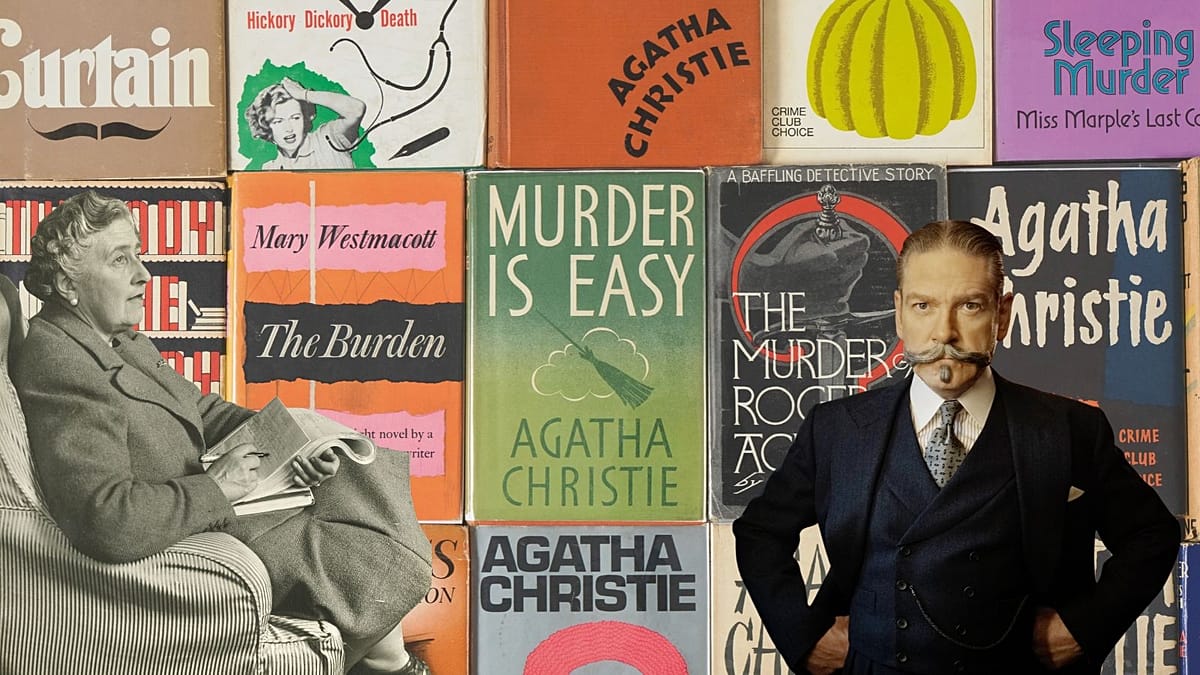
Agatha Christie was working as a volunteer at a hospital dispensary during World War I when the idea for her first crime novel took shape. The plot centred on a wealthy matriarch poisoned under mysterious circumstances, with the case solved by a fastidious but brilliant Belgian detective named Hercule Poirot. That book, The Mysterious Affair at Styles, was rejected by several publishers before finally appearing in 1921 in the United Kingdom, where it initially attracted little attention.
Five years later, Christie transformed the genre with The Murder of Roger Ackroyd, whose audacious twist shocked readers and cemented her reputation. A century on, she remains the world's best-selling female author, with more than 2 billion copies of her works sold globally. Over her lifetime she wrote 95 books, including 66 detective novels and around 15 short-story collections. Her final novel, Curtain: Poirot's Last Case, was published shortly before her death in 1976.
An exhibition worthy of a detective
To mark the 50th anniversary of her passing, the British Library in London has opened a major exhibition devoted to Christie's life, work and enduring legacy. For devotees and aspiring sleuths alike, stepping into the show is like entering a richly appointed manor study filled with tantalising clues. Nearly 100 rare artefacts are on display, including early manuscript drafts, exam notes and Christie's personal typewriter.
Visitors can also walk through life-sized replicas of a wartime dispensary and a 1920s Orient Express carriage, evoking the atmosphere of the Golden Age of crime fiction. The exhibition goes beyond the novels to reveal Christie's own colourful and often dramatic personal history—her childhood, the people she encountered and the places she travelled, all of which shaped her characters and creative imagination.
Christie's work continues to resonate across Europe and beyond, inspiring adaptations, homages and even academic study. Her Belgian detective, Poirot, remains one of the most recognisable figures in literature, and her plots have been translated into dozens of languages. The exhibition also highlights her lesser-known achievements, such as her archaeological expeditions to the Middle East and her work as a playwright, including the long-running stage hit The Mousetrap.
For those who cannot visit London in person, the British Library has also launched an online companion, offering a glimpse of selected items and interactive features. The exhibition runs until March 2026, giving ample time for fans to plan a pilgrimage. In the meantime, readers can test their own knowledge of Christie's oeuvre—from the identity of the murderer in Murder on the Orient Express to the fate of Miss Marple's village of St Mary Mead.
As the anniversary year unfolds, Christie's legacy shows no sign of fading. Her books continue to sell in millions of copies annually, and new generations are discovering her work through film, television and podcasts. The British Library's exhibition is a fitting tribute to a writer whose influence on crime fiction—and on popular culture—remains unmatched.
For those planning a cultural trip to London, the exhibition joins other recent highlights such as the British Museum's first major Korean art show in decades, which opened earlier this year. And for a broader look at the week's cultural offerings across Europe, including a nod to Christie's mysteries, see our cultural picks.