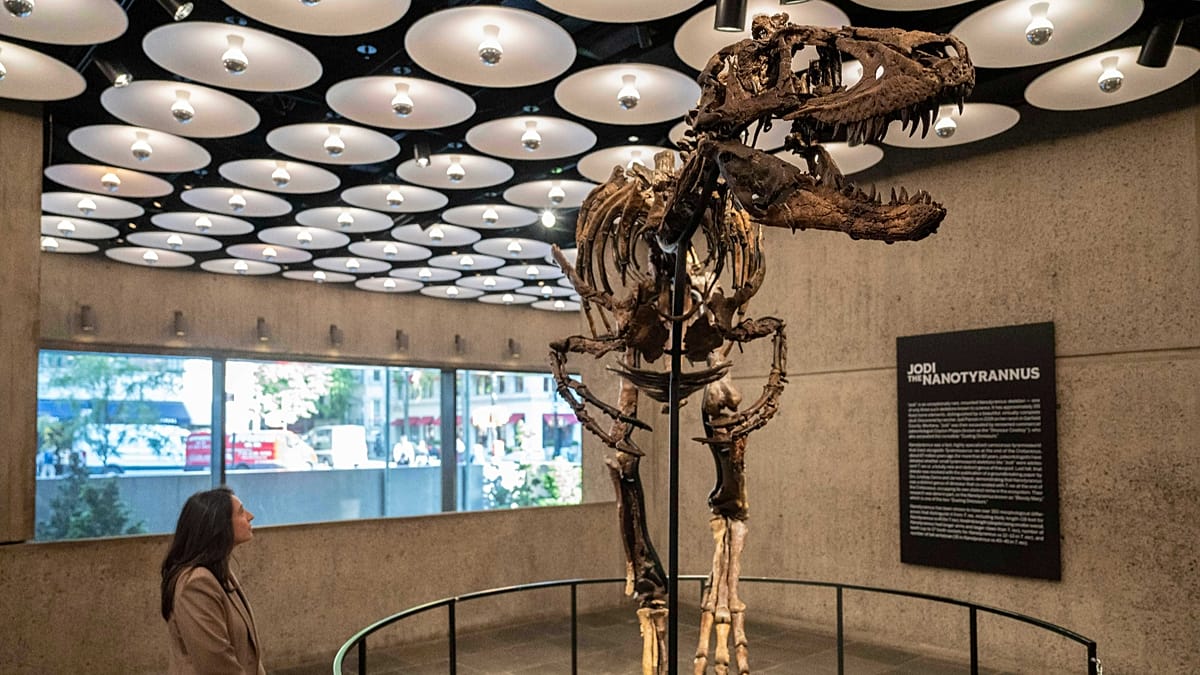
A diminutive but fearsome relative of the Tyrannosaurus rex has become one of the most expensive fossils ever sold, after a heated bidding war at Sotheby's in New York pushed its price to €42.6 million. The specimen, a Nanotyrannus nicknamed “Jodi” after the person who discovered it in 2019, was acquired by an anonymous buyer following a 12-minute contest that unfolded online and over the phone.
The auction house had estimated the skeleton would sell for between €4 million and €7 million, but the final price far exceeded expectations. Sotheby's confirmed that the sale ranks Jodi as the second most valuable dinosaur ever auctioned, trailing only “Gus,” a T. rex that fetched a record €44 million at the same auction house earlier this summer.
A rare and controversial fossil
Nanotyrannus lived alongside its larger cousin during the Cretaceous period, roughly 67 million years ago. Standing 2.9 metres tall and stretching nearly 6 metres in length, Jodi is one of only three known skeletons of this species. The fossil is considered almost 70% complete, making it an exceptionally rare find for paleontologists and collectors alike.
Jodi was displayed at Sotheby's headquarters in upper Manhattan earlier this month, drawing crowds of curious visitors. The skeleton's relatively longer forelimbs, larger hand claws, and slender, blade-like teeth distinguish it from the more robust T. rex, offering a glimpse into the diversity of predatory dinosaurs that roamed the ancient landscape.
However, the sale has reignited debate among scientists who argue that such significant fossils belong in public institutions rather than private hands. Critics contend that privately owned specimens are often inaccessible to researchers and the public, limiting scientific study and educational opportunities. Sotheby's, for its part, thanked the team of professional fossil hunters whose work was featured in the Discovery Channel documentary series “Dino Hunters” in 2020.
The auction comes amid a broader trend of high-profile fossil sales that have drawn both fascination and concern. While some see these transactions as a way to fund future excavations and raise awareness of paleontology, others worry that the commodification of ancient remains could hinder scientific progress. The debate is particularly relevant in Europe, where museums and research institutions have long been custodians of such treasures.
For now, Jodi's new owner remains a mystery, and the skeleton's future whereabouts are unknown. Whether it will eventually be loaned to a museum or remain in a private collection is unclear. What is certain is that the sale has cemented Jodi's place in the record books and sparked fresh conversations about the intersection of science, commerce, and heritage.
As the market for rare fossils continues to grow, questions about accessibility and preservation are likely to persist. For European readers, the story echoes broader debates about the stewardship of cultural and natural heritage, from the mysterious 7,000-year-old skeleton found in Lower Bavaria to the ongoing efforts to protect archaeological sites across the continent.
While the sale of Jodi may be a triumph for the auction house and its anonymous buyer, it also serves as a reminder of the delicate balance between private ownership and public good. As one paleontologist put it, “These fossils are not just objects of beauty; they are pages from Earth's history book, and we all have a stake in reading them.”