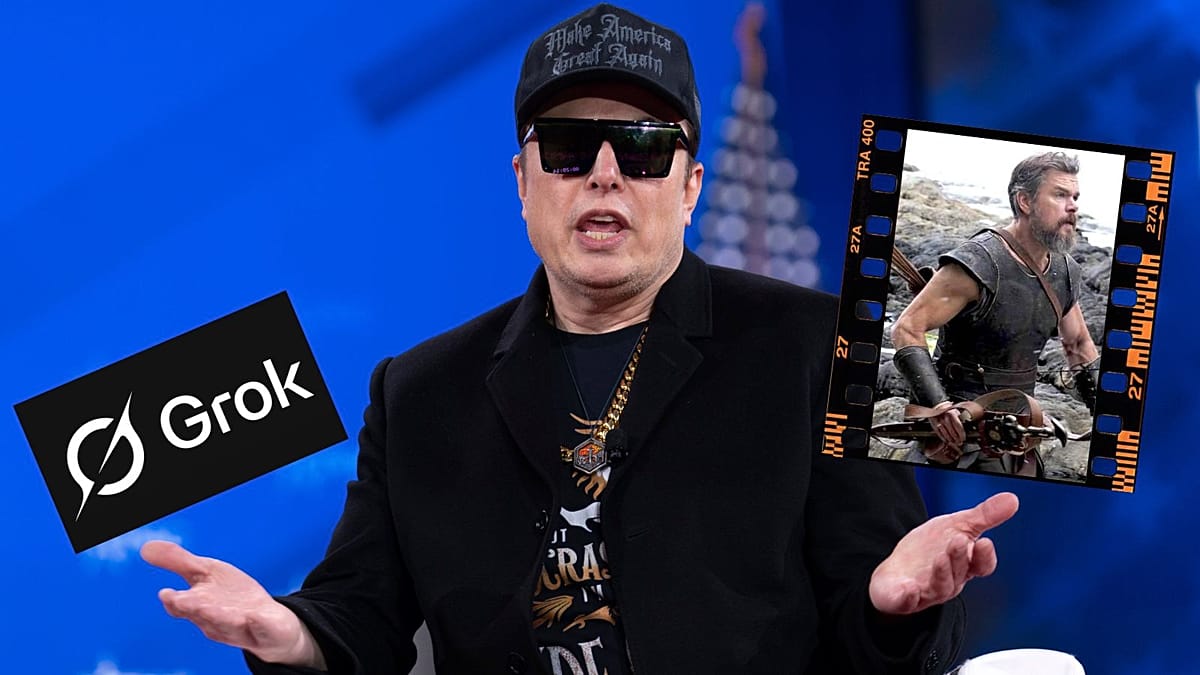
Elon Musk's months-long campaign against Christopher Nolan's The Odyssey has taken an ironic turn. After predicting the film would fail due to its diverse casting, the tech billionaire has watched it become a global box office phenomenon, grossing over $264 million in its opening weekend. Now, in a move that many see as a desperate attempt to save face, Musk has announced plans to produce an AI-generated version of Homer's epic using his Grok Imagine tool.
Musk's feud with Nolan began when the director cast Lupita Nyong'o as Helen of Troy and Elliot Page as Sinon, sparking accusations of "anti-White racism" from the X owner. The tech mogul also made transphobic jokes about Page's involvement. However, the film's critical and commercial success has rendered these attacks ineffective.
A Lesson in Historical Accuracy
Musk's latest gambit involves two proposals: first, offering Mel Gibson $100 million to direct a "historically accurate" adaptation with dialogue in Homeric Greek; second, promising that Grok Imagine will produce a full-length AI movie by the end of 2026. The announcement was accompanied by a three-minute AI-generated short posted by an X user.
The fundamental flaw in Musk's approach is that The Odyssey is a work of fiction from around 800 BCE, featuring mythical creatures like sirens, cyclopes, and witches. Demanding "historical accuracy" from such a text reveals a misunderstanding of both literature and history. As one X user quipped, Musk has become a "cyclops truther."
Furthermore, Musk's AI project is already behind schedule. Other AI-generated versions of The Odyssey have been widely panned online, with viewers describing them as unwatchable slop. The tech mogul's attempt to weaponize artificial intelligence against a beloved cultural artifact seems destined to fail.
The backlash against Musk's announcement has been swift and merciless. X users have called him a "moron" and mocked his obsession with Nolan's film. The episode underscores a broader trend: the limits of online outrage in influencing artistic appreciation. Nolan's film has become a cultural touchstone, inspiring travel to Europe's ancient sites and setting records that Musk's AI project is unlikely to match.
For European audiences, the saga highlights the tension between Silicon Valley's techno-utopianism and Europe's rich cultural heritage. While Musk's Grok Imagine may produce a technically proficient imitation, it cannot replicate the human artistry that makes Nolan's film resonate. As the continent grapples with the implications of AI-generated content, this episode serves as a cautionary tale about the limits of technology in the face of timeless art.