Good morning from Luxembourg, where EU foreign ministers are gathering for a day heavy with geopolitical significance. As the G7 summit gets underway in the Alpine town of Évian-les-Bains, the bloc’s foreign policy and enlargement agendas are moving in parallel.
Overnight, Russia launched a fresh wave of ballistic missile strikes on Kyiv, hitting the historic Assumption Cathedral within the Kyiv Pechersk Lavra—one of Ukraine’s most sacred Orthodox sites. The attack comes just as President Volodymyr Zelenskyy is expected to join G7 leaders for talks on Ukraine’s future. The cathedral, a UNESCO World Heritage site, suffered significant damage, underscoring Moscow’s continued targeting of cultural heritage.
G7 Summit: Iran Deal and Trade Tensions
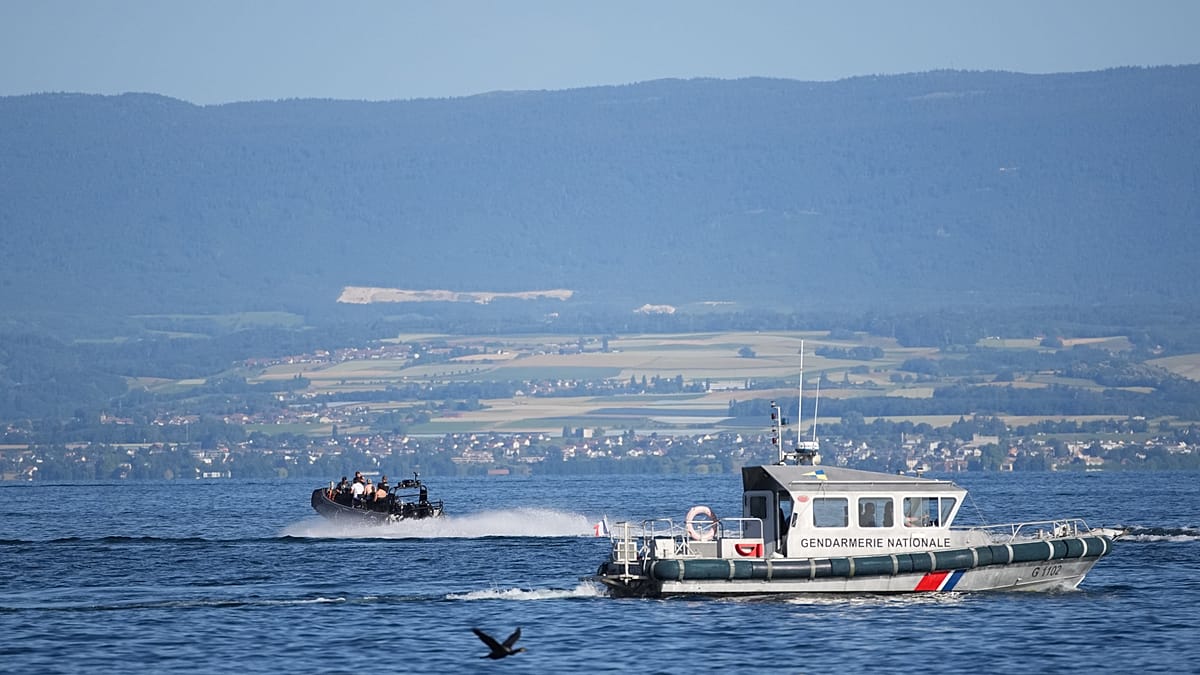
The G7 summit in Évian-les-Bains begins with a bilateral meeting between US President Donald Trump and French President Emmanuel Macron, followed by a leaders’ dinner. A major development emerged overnight: Washington and Tehran confirmed that a peace deal to end the war in Iran has been “completed” and will be signed on Friday. In response, the leaders of France, Germany, the UK, and Italy—all attending the summit—called for the immediate reopening of the Strait of Hormuz. Clearing mines and ensuring freedom of navigation will require a substantial military effort, with France and the UK expected to take leading roles.
Beyond geopolitics, the summit will address macroeconomic imbalances plaguing G7 economies. Leaders are expected to confront Chinese industrial overcapacity and explore ways to bring Beijing into negotiations on rebalancing trade relationships. The discussions come amid growing frustration in European capitals over China’s export-driven surplus and its impact on European manufacturing.
Later in the summit, AI and online safety will take the spotlight. Tech executives from Anthropic, OpenAI, Google, and Mistral AI will join leaders for talks. This follows the European Commission’s examination of US export controls on Anthropic’s most powerful models, Fable 5 and Mythos 5, over cybersecurity concerns. Commission spokesperson Thomas Regnier acknowledged the risks but warned that “contingency measures taken in this light should not be discriminatory against partners.” The episode reinforces the EU’s push for technological sovereignty.
Ukraine and Moldova Open EU Accession Talks
Today marks a historic milestone for Ukraine and Moldova: the formal opening of the first cluster of EU membership negotiations. The “Fundamentals” cluster covers human rights, the judiciary, and the rule of law—the first and last to be opened in the accession process. Hungary had blocked this step for nearly two years until April’s elections led to a breakthrough agreement between Budapest and Kyiv. Last Friday, EU ambassadors approved the common position without debate.
The Intergovernmental Conference (IGC) with Ukraine will take place at 18:00 CET in Luxembourg, followed by Moldova at 20:00 CET. Cyprus, holding the rotating EU Council presidency, will chair the sessions. European Commissioner for Enlargement Marta Kos will also participate. There is speculation that Cyprus may push to open Cluster 6 (“External Relations”) before handing over to Ireland on 1 July.
Earlier today, EU foreign affairs ministers met in Luxembourg to discuss Russia’s war on Ukraine, the fragile Middle East situation, and EU-China relations. Among the topics: potential sanctions on Israeli Minister Itamar Ben-Gvir, accused of humiliating European citizens on the Gaza flotilla, and trade restrictions on illegal West Bank settlements. While political momentum is building, unanimity remains elusive. The Czech Republic opposes blacklisting sitting ministers, and a legal dispute persists over whether trade restrictions require unanimity or qualified majority. Some member states are applying their own bans, with one diplomat noting, “Obviously, it is much better if we do this at a European level.” Another expressed frustration at the Commission’s reluctance to propose a plan, saying, “It is incumbent on the Commission to come up with a proposal. It should not be left to member states taking individual measures as they've been forced to.”
For more on the EU accession talks, see our coverage of EU ambassadors unlocking the first cluster. And for the latest on the conflict, read about Ukraine and Russia exchanging strikes as talks advance.