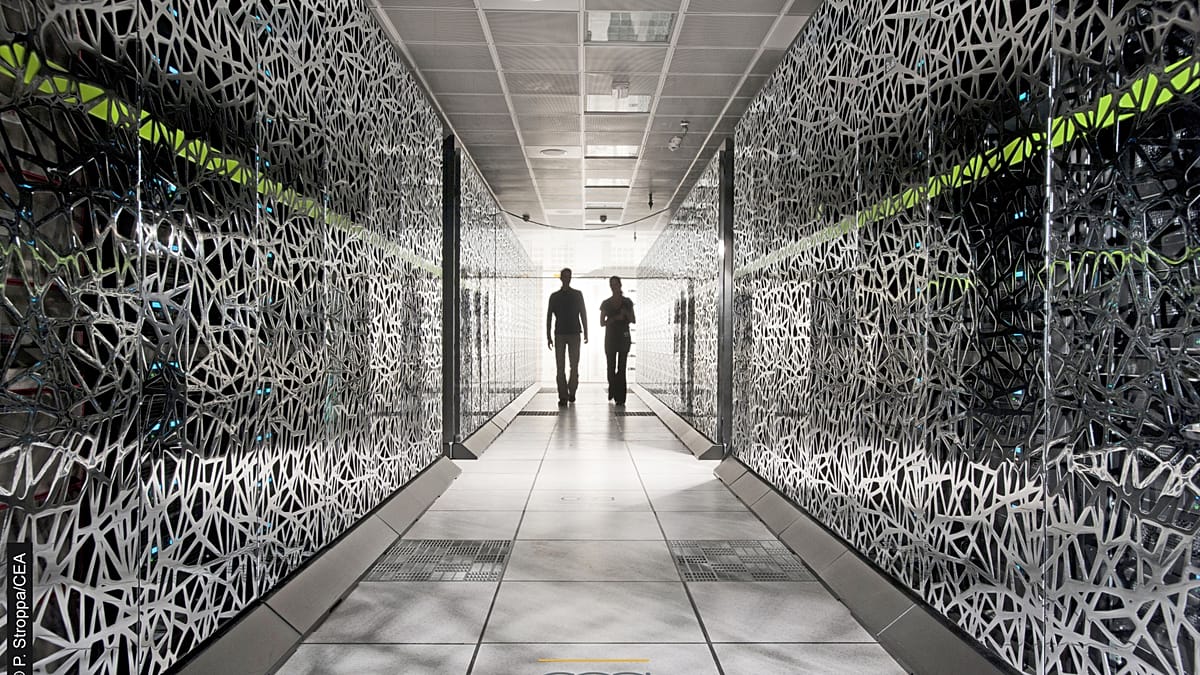
Spain and the European Union have inaugurated a new quantum computer at the Barcelona Supercomputing Center (BSC), a €9.8 million machine designed to accelerate research in artificial intelligence and complex problem-solving. The system, known as MareNostrum Ona, integrates classical supercomputing with both digital and analogue quantum computing, marking a significant step in Europe's push for technological independence.
The new quantum computer was developed by Qilimanjaro Quantum Tech, a company based in Barcelona, and funded jointly by the European Commission and Spain's Secretariat of State for Digitalisation and Artificial Intelligence. Unlike the two earlier quantum machines at the BSC, which are digital, this one is analogue—a distinction that allows it to handle certain types of calculations more efficiently.
How Quantum Computing Works
Classical computers process data using bits that represent either a 0 or a 1. Quantum computers, by contrast, use qubits that can exist in both states simultaneously thanks to the principles of quantum mechanics. This property enables them to solve problems that are practically impossible for conventional machines, such as simulating molecular interactions for drug discovery or optimising complex logistics networks.
The three quantum computers at the BSC are housed in the historic Torre Girona chapel, the same space that hosted the first four versions of the MareNostrum supercomputer between 2005 and 2023. The quantum partition, MareNostrum Ona, has already logged 4,200 computing hours since its first two machines came online in February 2025. That capacity has been shared among 53 research projects selected through official calls by the Spanish Supercomputing Network (RES).
This new machine will be integrated into the European quantum computing network promoted by the European High Performance Computing Joint Undertaking (EuroHPC JU), the EU body tasked with strengthening the continent's supercomputing capabilities. To date, EuroHPC JU has acquired six quantum computers distributed across Europe. Three of them—installed in Poland, the Czech Republic, and Germany—have already been inaugurated and are part of a future interconnected system for scientific research and technological development.
Núria Montserrat, the Catalan government's Minister for Research and Universities, emphasised the strategic importance of the project. “This reinforces the idea of European technological sovereignty in the face of US ‘big tech’ companies,” she said. “With technologies developed here, in the supercomputer, backed by Catalan and Spanish public policies and major partnerships with Europe, we are able to produce our own European technology in pursuit of strategic autonomy so as not to depend on third countries.”
The launch comes as Europe seeks to reduce its reliance on key infrastructure from non-European providers. The European Commission has made technological sovereignty a priority, and initiatives like EuroHPC are central to that strategy. The new quantum computer in Barcelona is a concrete example of how member states and EU institutions are collaborating to build homegrown capabilities.
Spain's investment in quantum computing also aligns with broader trends across the continent. For instance, Croatia recently launched Europe's first commercial robotaxi service in Zagreb, showcasing how European cities are adopting cutting-edge technologies. Meanwhile, the EU has been active in regulating digital markets, as seen in the €200 million fine imposed on Temu over unsafe products. These developments highlight the bloc's dual focus on innovation and consumer protection.
The Barcelona quantum computer is a milestone for the Spanish and European tech ecosystem. It represents another step on the path towards European technological sovereignty being pursued by EuroHPC and the BSC, in line with the European Commission's strategy to reduce dependence on third countries for critical infrastructure. As quantum computing matures, such investments will be crucial for maintaining Europe's competitive edge in fields ranging from pharmaceuticals to climate modelling.