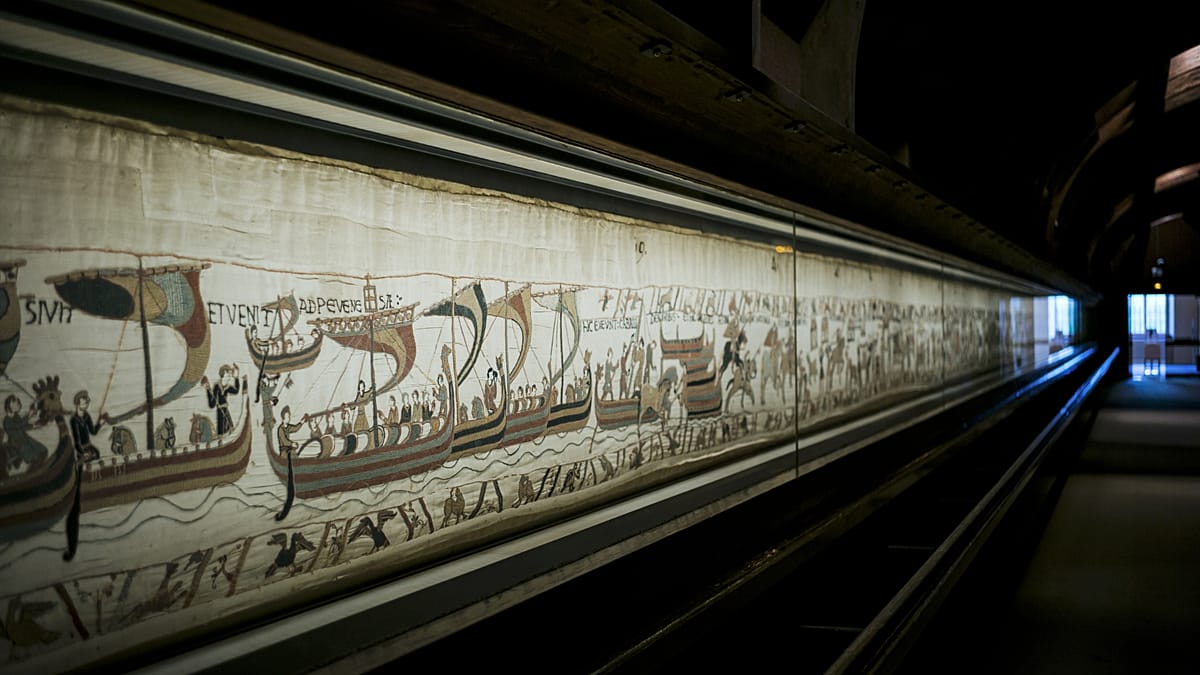
When ticket bookings opened on Wednesday 1 July for the Bayeux Tapestry's landmark exhibition at the British Museum, demand overwhelmed the museum's website. By mid-afternoon, the virtual waiting room showed more than 75,000 people in line, with estimated wait times stretching up to nine hours.
The museum had warned that its site would be "very busy," but the scale of interest still surprised many. At 11 a.m., when bookings officially opened, over 10,000 users were already waiting. The most expensive tickets cost £33 (€38.50) for the exhibition, which runs from September 2026 to July 2027.
A Once-in-a-Millennium Move
This is the first time in roughly 1,000 years that the tapestry has been displayed outside its permanent home in Bayeux, Normandy. It has left its usual gallery only twice before: during Napoleon's planned invasion of England and during the Second World War. The textile, which measures 68.38 metres in length, was produced in England, according to several historians, despite being a piece of Norman propaganda celebrating William the Conqueror's victory in 1066.
Curators have devised a strict transport protocol to move the fragile, thousand-year-old fabric. The tapestry is highly sensitive to vibrations and already shows signs of wear and tear, with weakened and torn sections. The move required careful planning to ensure its preservation.
The exhibition's popularity reflects a broader trend of high demand for cultural events in London, even as the city grapples with post-Brexit travel complexities for EU visitors. For many, the chance to see the tapestry in the British capital is a rare opportunity, given its historical significance and the logistical challenges of moving it.
The British Museum's website managed to cope with the surge, though many visitors reported long waits. The museum advised booking online despite the delays, as tickets are expected to sell out quickly. The exhibition is set to be one of the most anticipated cultural events in Europe this decade.