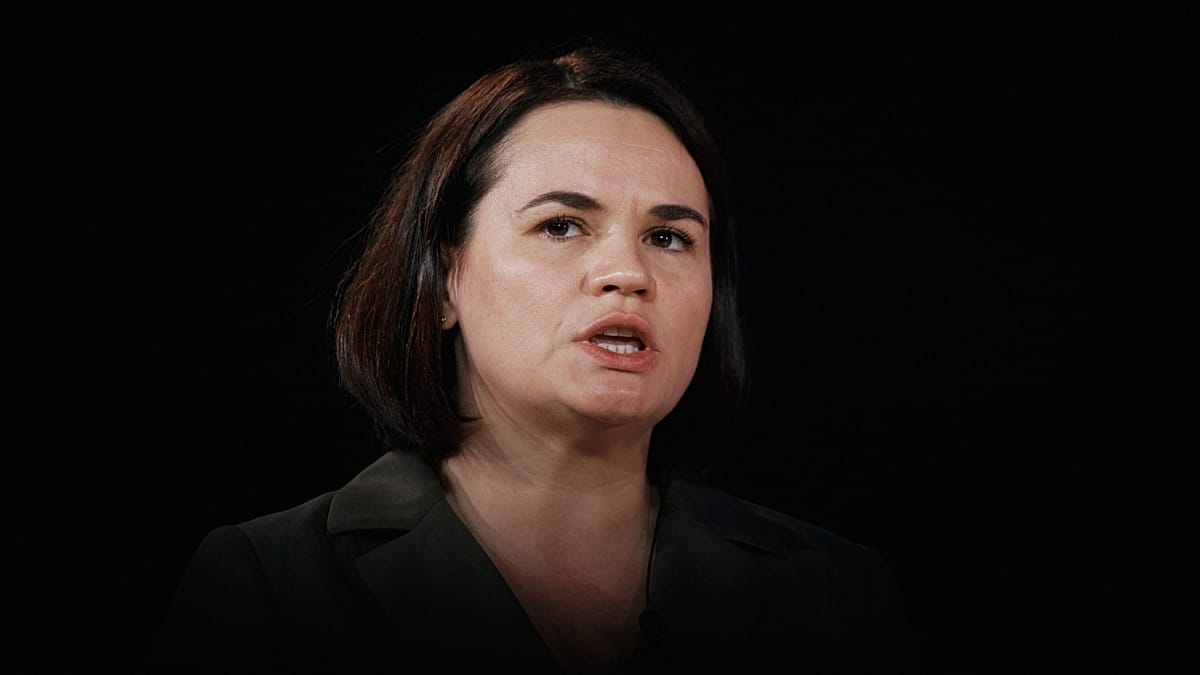
Belarus's exiled opposition leader Svetlana Tikhanovskaya arrived in Kyiv on Monday for her first visit to the Ukrainian capital, hours after the city began clearing debris from Russia's most devastating missile barrage of 2025. The attack, which killed at least one person and injured over twenty, has heightened international scrutiny of Minsk's role in Moscow's full-scale invasion.
Tikhanovskaya, who has been recognised globally as the de facto leader of Belarus's democratic opposition since her 2020 presidential campaign against strongman Aleksandr Lukashenko, began her trip by honouring Maria Zaitseva, a Belarusian dissident who joined Ukraine's armed forces and was killed in action. "For me, Maria is a symbol of a new generation of Belarusians," Tikhanovskaya wrote on X. "People who understand that the freedom of Belarus and the freedom of Ukraine are inseparable." She added: "She died a hero, but her name will live on. And it is our duty to do everything possible to ensure that the sacrifice of Maria and other heroes was not in vain."
The visit comes amid growing concern in Kyiv and among European allies about the extent of Belarusian-Russian military collaboration. Lukashenko, who has ruled Belarus with an iron fist for over three decades and repeatedly rigged elections, relies on the Kremlin for cheap energy, loans, and political support. Western countries have imposed multiple rounds of sanctions on Minsk for human rights abuses and for allowing Russian forces to use Belarusian territory to launch attacks into Ukraine.
Macron's Call and European Warnings
Tikhanovskaya's trip followed a phone call on Sunday between French President Emmanuel Macron and Lukashenko — their first conversation since the invasion began. Speaking to the press, Tikhanovskaya said France's primary objective was to deliver a clear warning to the Belarusian regime. "Lukashenko's regime knows well what needs to be done to improve ties with the European Union, but it isn't happening — instead hybrid attacks, nuclear blackmail and threats to the entire region continue," she told the Associated Press.
The call signals that European leaders are increasingly uneasy about the potential for Belarus to escalate its involvement in the war. While Lukashenko has recently sought to improve relations with the West, his government has not halted its support for Moscow's military operations. Russian overnight strikes on Kyiv have become a near-daily occurrence, and the Kremlin has warned that further attacks on the capital are imminent.
For Tikhanovskaya, the visit to Kyiv is also a reminder of the personal stakes for Belarusians fighting alongside Ukraine. Many Belarusian volunteers have joined the Ukrainian military, viewing the conflict as a shared struggle against authoritarianism. "The freedom of Belarus and the freedom of Ukraine are inseparable," she reiterated, echoing a sentiment that resonates among the thousands of Belarusian exiles now living in Ukraine and across Europe.
As the war grinds on, the question of how much support Lukashenko will provide to Moscow remains a key concern for European capitals. The EU has repeatedly called on Minsk to cease its collaboration, but the Belarusian leader has shown little sign of altering course. Tikhanovskaya's presence in Kyiv underscores the enduring hope among opposition figures that a democratic Belarus can one day emerge — but only if Ukraine prevails.