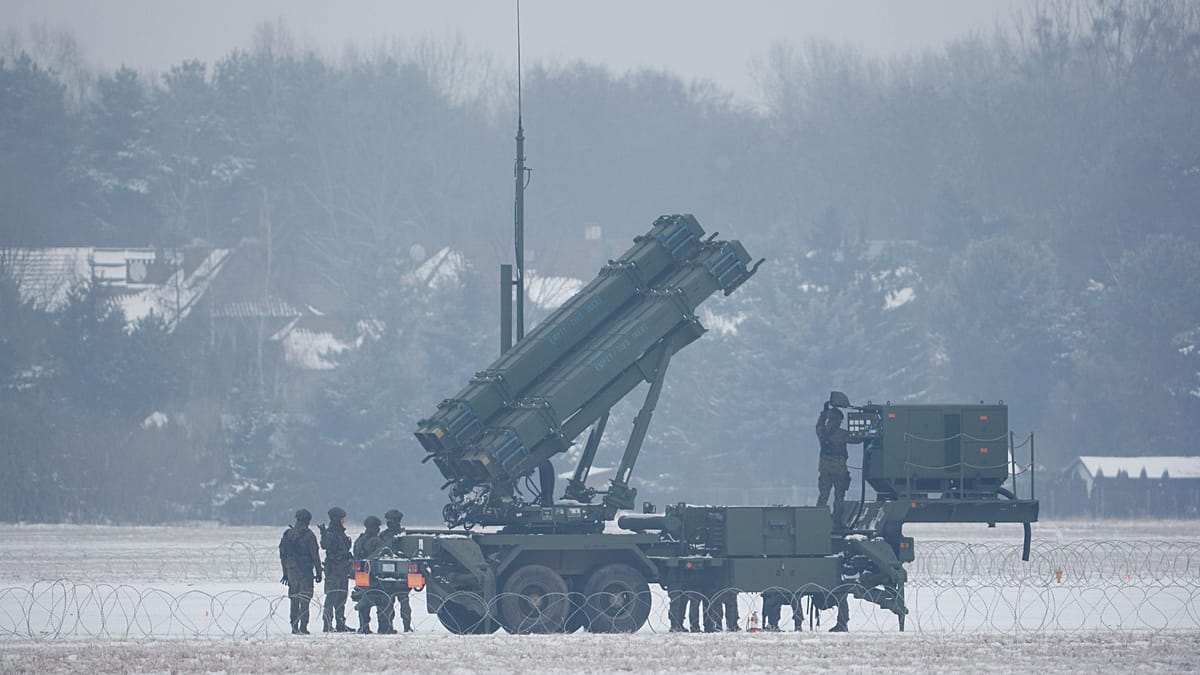
Ukrainian President Volodymyr Zelenskyy said on Thursday that technical details still need to be resolved with the United States before licensed production of Patriot interceptor missiles can begin on Ukrainian soil. Speaking during a WhatsApp briefing with journalists, Zelenskyy noted that while an agreement in principle had been reached with US President Donald Trump, the work is far from complete.
“And now, after our agreement with the president, our teams… must agree on all the remaining technical aspects,” Zelenskyy said. He added that Kyiv continues to work with European partners to secure additional missiles, as Ukraine does not yet have its own production capacity. “We are working with our European partners to obtain additional missiles, as we do not yet have our own system, of course.”
Trump’s Offer and Its Implications
Trump announced on Wednesday, during a NATO summit in Ankara alongside Zelenskyy, that Washington would grant Kyiv “the right to make Patriots.” The long-range air defence missiles have been a persistent request from Ukraine to protect its cities and energy infrastructure from Russian strikes. “We’ll show them how to do it,” Trump said, acknowledging the system’s complexity but expressing confidence that Ukraine would “figure out the complexity quickly.”
Trump claimed that US industry was already building “four plants” and that “all of our companies will be able to do this in two to three months,” a stark contrast to the lengthy delivery times currently faced by allies ordering new Patriot systems. He suggested the licensed production would deflect criticism that Washington is not supplying enough high-end air defence systems. “This way you can’t complain that we’re not giving them enough and instead, make them yourself,” he said.
However, Trump also indicated that the US manufacturer involved—likely Raytheon or Lockheed Martin, which jointly produce the Patriots—had not yet been informed. “We haven’t informed the company of that yet, but that’ll work out all right. I’m sure they’ll be thrilled,” he said.
Kyiv has been pressing Washington for over six months to grant a production license, but the US had previously refused. The Patriot system remains Ukraine’s only effective defence against ballistic missiles, but officials warn that interceptor stocks have fallen critically low. According to Zelenskyy, Lockheed Martin produces roughly 600 interceptors annually, or about 60–65 per month. In contrast, Ukrainian officials say Russia is manufacturing around 120 ballistic missiles each month, alongside other systems, and has increasingly tailored its strikes to exploit gaps in Ukraine’s air defence—recently launching around 30 ballistic missiles in a single night.
The global stockpile of Patriot interceptors has been further depleted by the US and Israel’s war on Iran, which, according to some estimates, has consumed nearly a third of available units. Gulf states alone have collectively fired more than 1,100 interceptors in recent months.
For Europe, the development carries significant weight. The ability of Ukraine to produce its own Patriots would reduce dependence on foreign supplies and could reshape the continent’s air defence landscape. The issue also intersects with broader European debates on defence spending and industrial capacity, as highlighted by the funding dilemmas facing EU farmers amid competing priorities. Meanwhile, the NATO summit in Ankara saw other contentious discussions, including Marine Le Pen’s 2027 presidential bid and Trump’s Greenland dispute.
As technical talks proceed, the clock is ticking for Ukraine’s air defence. The outcome of these negotiations will not only affect Kyiv’s ability to protect its population but also signal the depth of US commitment to European security under Trump’s leadership.