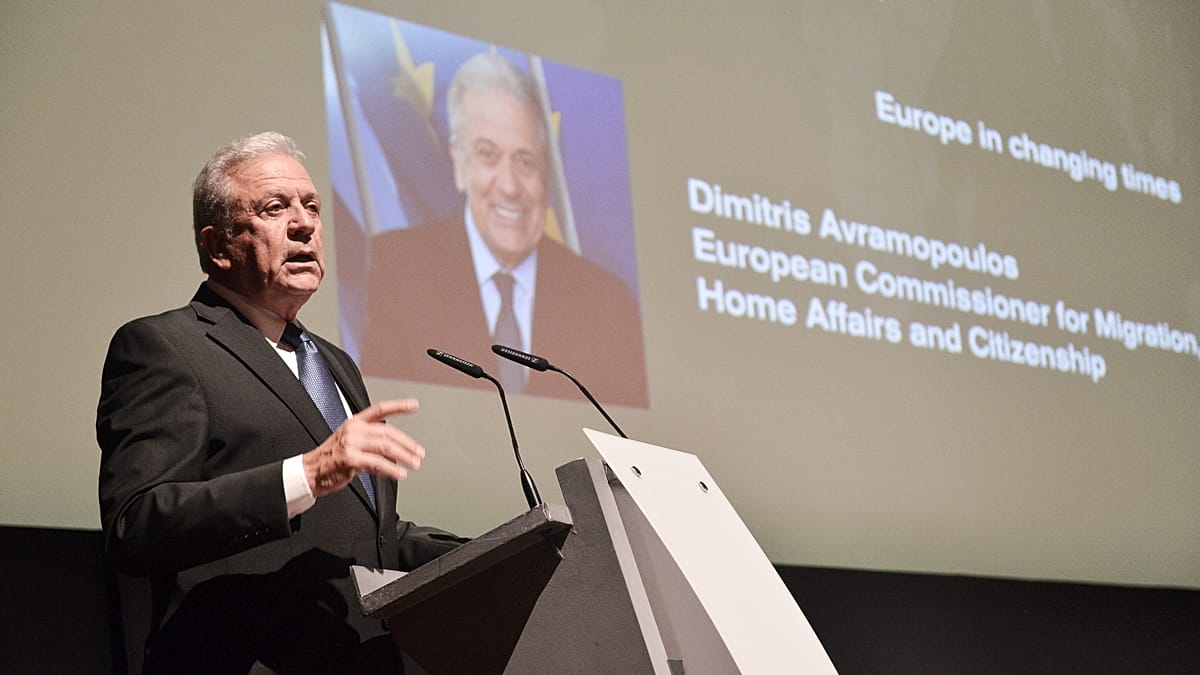
The Belgian judiciary has escalated its investigation into the Qatargate scandal by issuing an arrest warrant for Dimitris Avramopoulos, the former European commissioner for migration, home affairs and citizenship. The warrant, confirmed by Belgian prosecutors, seeks to lift Avramopoulos's immunity so he can be questioned over allegations that he received payments from a network accused of bribing European Parliament members.
Qatargate, which has shaken EU institutions since late 2022, centers on claims that Qatar and Morocco sought to influence decision-making in the European Parliament through payments and gifts to current and former lawmakers. Both countries have denied any wrongdoing. The investigation has already led to the detention of former Greek MEP Eva Kaili and the cooperation agreement of Antonio Panzeri, the former MEP who founded the NGO Fight Impunity.
Avramopoulos's Role and Denials
Avramopoulos, a Greek national and member of the conservative New Democracy party, served as EU commissioner under Jean-Claude Juncker from 2014 to 2019. He later joined the honorary committee of Fight Impunity, an NGO founded by Panzeri, which Belgian prosecutors describe as a vehicle for the alleged corruption scheme. According to prosecutors, Avramopoulos received money from what they term a “criminal network.”
In a written statement issued on 19 December 2022, Avramopoulos insisted his involvement with Fight Impunity was “entirely without executive or managerial responsibilities.” He said the committee, which included figures such as former EU foreign policy chief Federica Mogherini, former French prime minister Bernard Cazeneuve, and Italian senator Emma Bonino, was purely honorary. He added that he sought and received written approval from the European Commission before accepting the position, and that the Commission's Independent Ethical Committee issued a positive opinion on his participation on 10 December 2020.
Avramopoulos acknowledged receiving €5,000 per month between February 2021 and February 2022, but said these payments were declared in his official asset declarations and reported to the Greek tax authorities. He claimed he asked for the payments to stop in February 2022 because the organisation's activities had diminished, and that his involvement effectively ended the following month. Following the Qatargate revelations, he said he immediately resigned from the organisation and requested that his name be removed from its website.
Legal Process and Next Steps
Belgian authorities have informed their Greek counterparts of the arrest warrant. Under the prescribed procedure, the case will be transmitted from the Athens Court of Appeal Prosecutor's Office to the Supreme Court Prosecutor's Office and, through the Ministry of Justice, to the Greek parliament. The Greek parliament will then decide whether to lift Avramopoulos's immunity as a sitting member of the Hellenic parliament.
The development adds a new layer to the Qatargate investigation, which has already exposed vulnerabilities in EU ethics rules and prompted calls for stricter transparency measures. The case also highlights the challenges of prosecuting cross-border corruption involving former high-ranking EU officials. As the investigation continues, European institutions face pressure to demonstrate that they can hold their own members accountable.
For more on EU institutional responses, see our coverage of the EU Commission's stance on Russia's participation at the Venice Biennale, which underscores the bloc's broader approach to international engagement. Meanwhile, the Qatargate probe remains a test of the EU's ability to police its own ranks.