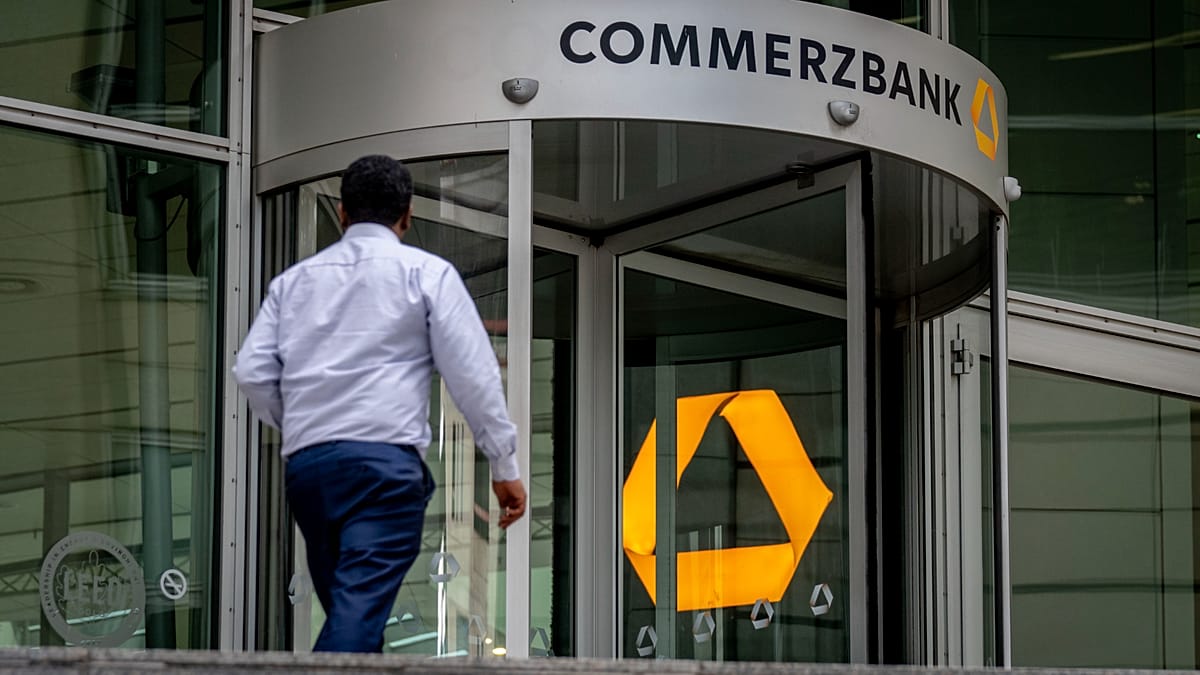
The German government, which holds a 12% stake in Commerzbank, has formally rejected the hostile public exchange offer (OPS) launched by Italy's UniCredit, opting to preserve the Frankfurt-based lender's independence. In a statement, the German Finance Agency (Finanzagentur) described the bid as "economically out of the question" because it lacks an adequate premium over Commerzbank's current share price.
Berlin's decision underscores the political sensitivity of the deal. Commerzbank, a legacy of the 2008 financial crisis, remains the second-largest shareholder in the bank. The government emphasized that the lender "plays a key role in financing the German economy and the Mittelstand, the backbone of small and medium-sized exporting companies, and is a major employer and a crucial pillar of the Frankfurt financial centre."
UniCredit's Strategy and Market Reaction
Despite the German government's rejection, UniCredit shares posted one of the strongest gains on the FTSE Mib, rising 3.71% to €77.34. The Italian bank has already surpassed the 30% threshold it had set for the OPS, having launched the offer when it held almost 27% of Commerzbank's capital. Total potential exposure, including derivatives, stands at 55.09% of the capital (57.47% of voting rights).
UniCredit has proposed slimming down Commerzbank's international network, which it considers overly complex and inefficient, to refocus on German operations. The bank has also threatened to replace Commerzbank's supervisory and management boards if it secures sufficient shareholder support, according to the German business daily Handelsblatt.
Commerzbank has involved the financial watchdog, the Bundesanstalt für Finanzdienstleistungsaufsicht (Bafin), accusing UniCredit of relying on shares from banks with commercial ties via derivatives rather than independent shareholders. UniCredit has firmly rejected these criticisms.
The Frankfurt prosecutor is now investigating alleged market manipulation related to the bid, adding a legal dimension to the already tense standoff. For more on the broader context, see our analysis of UniCredit's Hostile Bid for Commerzbank Nears Expiry Amid Political and Legal Tensions.
Timeline and Next Steps
UniCredit will publish the latest daily update on acceptances on Tuesday 16 June, followed by final figures for the first offer period on Friday 19 June. A supplementary period runs from 20 June to 3 July, during which shareholders can change their minds. Final figures are due on 8 July. As of yesterday, acceptances had reached 11.91% of the capital.
The standoff highlights broader tensions in European banking consolidation, where cross-border deals often clash with national interests. Germany's stance mirrors concerns seen in other sectors, such as the push for tech autonomy amid US restrictions on AI models, as covered in US Blocks Anthropic's Top AI Models for Non-Citizens, Spurring European Calls for Tech Autonomy.
Meanwhile, UniCredit's share price surge suggests investors remain optimistic about the bank's strategy, even as Berlin digs in. The outcome will have implications for the future of European banking, particularly for the Mittelstand's access to financing.