Across the United Kingdom, a Nordic wellness tradition is gaining remarkable traction. From floating pods on the River Thames to urban wellness centres, the ritual of sauna followed by cold immersion is being adopted by Britons seeking respite from modern pressures. This surge comes as official data reveals work-related stress, depression, and anxiety have reached record levels, affecting nearly one million UK workers.
A Ritual of Heat and Cold
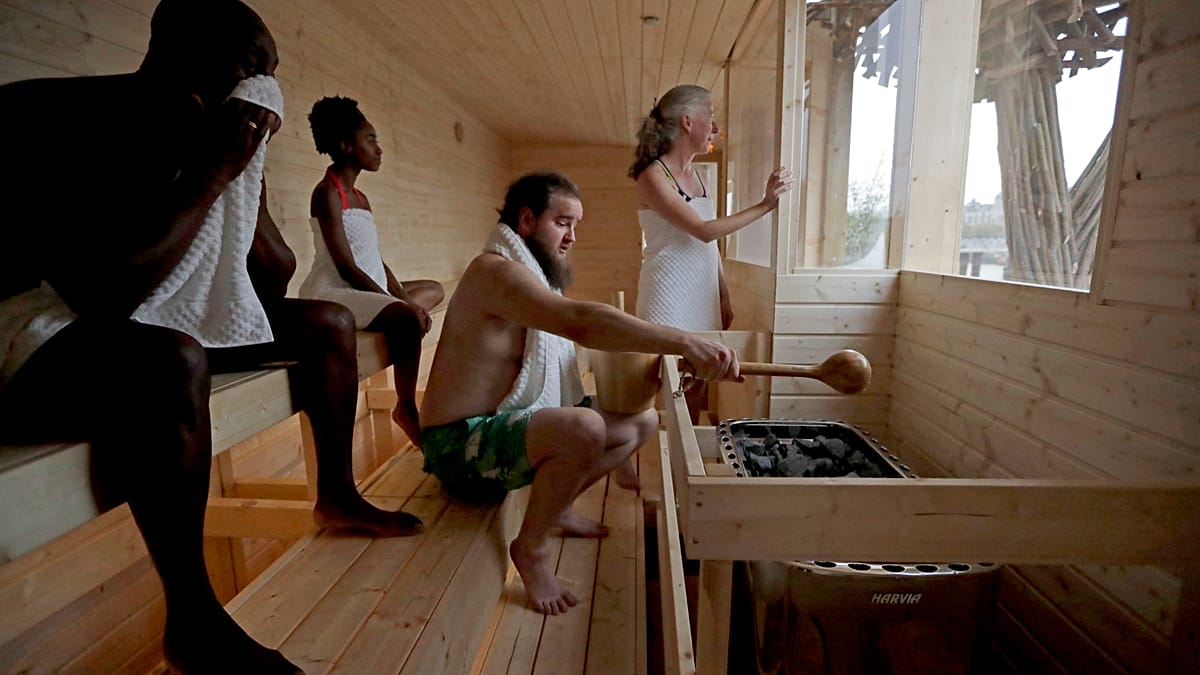
The experience at venues like Temz, a floating sauna in London, follows a simple but demanding protocol. Participants alternate between intense dry heat and brief, shocking plunges into cold water—a practice known as contrast therapy. "It's a way to treat yourself to fifty minutes of calm and serenity," says Amy Wilson Hardy, co-owner of Temz. "People often arrive stressed and leave with a relaxed glow. It's brilliant to see."
This practice is deeply rooted in Finnish culture, where there is roughly one sauna for every two people. Its contemporary spread, however, is partly driven by the global biohacking movement, which promotes using controlled stressors like extreme temperatures to optimise physical performance. For visitors like recruitment executive Keah O'Reilly, the immediate effect is undeniable. "I was still buzzing two or three hours later. It was really uplifting," she notes, contrasting the experience with the enclosed feeling of a typical gym sauna.
The Science Behind the Sensation
Despite compelling personal testimonials, scientists are urging a more measured perspective on the health claims. Heather Massey, an associate professor in extreme environments and physiology at the University of Portsmouth, has studied the body's response to thermal extremes. She confirms the immediate physiological impact: "The initial cold shock response causes a big gasp, rapid breathing, and an increase in heart rate and blood pressure."
However, Massey highlights a significant evidence gap regarding long-term benefits. "We just don't have that evidence in terms of what the benefits could be, and also how that benefit might come about," she cautions. This scientific uncertainty stands in stark contrast to the confident marketing of many wellness enterprises capitalising on the trend.
Massey suggests the context of the practice may be as important as the thermal exposure itself. "Qualitative research suggests being in a social group of like-minded individuals, engaging in a moderate challenge, and being outdoors in nature may be significant contributing factors," she explains. This social and environmental dimension echoes aspects of the original Finnish tradition, where the sauna serves as a communal space for relaxation and conversation.
"We just don't have that evidence in terms of what the benefits could be, and also how that benefit might come about."
— Heather Massey, University of Portsmouth
The trend's commercial potential is substantial. According to market research, the UK is projected to lead Europe in sauna market revenue by 2033, indicating this is more than a passing fad. This growth occurs against a backdrop of heightened societal stress, a factor also influencing other sectors. For instance, global defence contractors like Thales are seeing order surges amid geopolitical uncertainty, while households contend with energy price volatility linked to international conflicts.
A European Wellness Exchange
The British embrace of sauna culture represents a fascinating cross-continental exchange of wellness practices. While Finland exports its centuries-old tradition, the UK adapts it, often blending it with other elements like ice baths and mindfulness. This reflects a broader European pattern where localised wellness trends—from the friluftsliv (open-air life) of Norway to the thermal baths of Budapest—gain international followings.
For now, practitioners seem less concerned with clinical validation than with subjective experience. Sue Harper-Clark, a physiotherapist and sauna visitor, appreciated the novelty: "The combination of the sauna and the ice bath was something just a little bit novel." As the market expands, the dialogue between enthusiastic adopters and cautious researchers will likely continue, examining not just temperature extremes, but the very nature of how Europeans seek well-being in an increasingly stressful age.