Internet access has become a cornerstone of daily life across Europe, with 94% of EU residents having used the internet in the last three months of 2025, according to Eurostat. Yet the cost of staying connected varies enormously from one member state to another, as a new analysis by broadband comparison site Broadband Genie reveals.
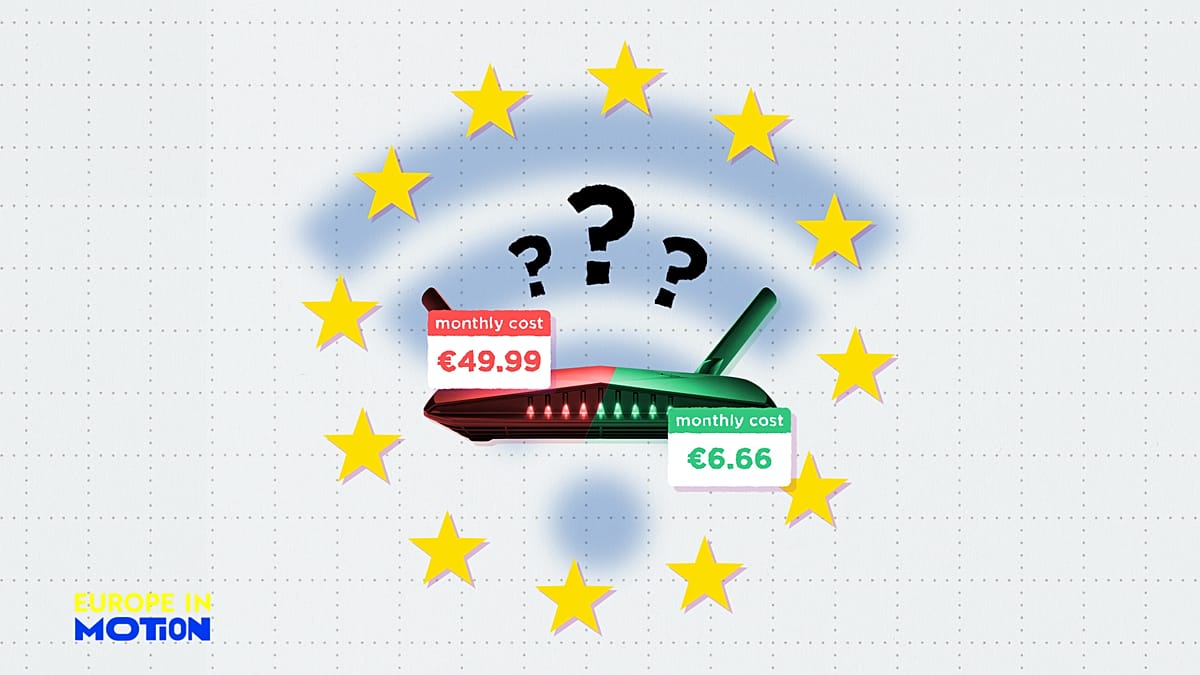
The study, which examined 2,631 broadband tariffs across 214 countries, found that Luxembourg tops the EU list for the most expensive internet service, with an average monthly cost of €49.99. The Netherlands and Finland follow closely, at €48.73 and €48 respectively. Despite these high prices, both the Netherlands and Luxembourg also report the highest levels of internet usage in the bloc, suggesting that affordability is not the only driver of connectivity.
Eastern Europe Leads on Affordability
At the other end of the spectrum, Romania offers the cheapest broadband in the EU, averaging just €6.66 per month — the seventh-lowest rate globally. Lithuania and Bulgaria follow, with average prices of €14.90 and €15 respectively. Between 2015 and 2025, household connectivity in Bulgaria and Romania surged by 34% and 28%, reflecting the rapid expansion of digital infrastructure.
The price gap is largely explained by geography and infrastructure. Eastern Europe has the lowest internet prices worldwide at a subregional level, thanks to the widespread deployment of fiber-optic networks. Fiber is widely recognized as the fastest and most stable connection, capable of supporting speeds up to 10 GB per second. Its prevalence in the region stems from the fact that many countries modernized their telecommunications infrastructure later, bypassing outdated copper systems.
Southern Europe ranks fourth in affordability among the 22 subregions analyzed, while Northern and Western Europe have the most expensive internet prices on the continent. The Broadband Genie study attributes this to the higher overall cost of living in those regions.
Urban-Rural Divide Persists
Price is not the only variable. Internet access also differs significantly between urban and rural areas. In Ireland, Denmark, the Netherlands, Luxembourg, and Finland, connectivity rates in cities exceeded 99%. Rural areas in Ireland, the Netherlands, and Denmark also reported rates above 99%, indicating that some countries have managed to bridge the digital divide effectively.
However, in many other member states, rural connectivity lags behind, highlighting the need for continued investment in infrastructure. The European Union has made digital inclusion a priority, with programs like the Digital Europe Programme and the Connecting Europe Facility aiming to expand high-speed internet access to all citizens.
As the EU pushes forward with its digital agenda, the disparities in broadband costs and access underscore the challenges of creating a truly connected continent. For now, consumers in Eastern Europe enjoy some of the best value internet in the world, while those in the wealthier north and west pay a premium for their connectivity.