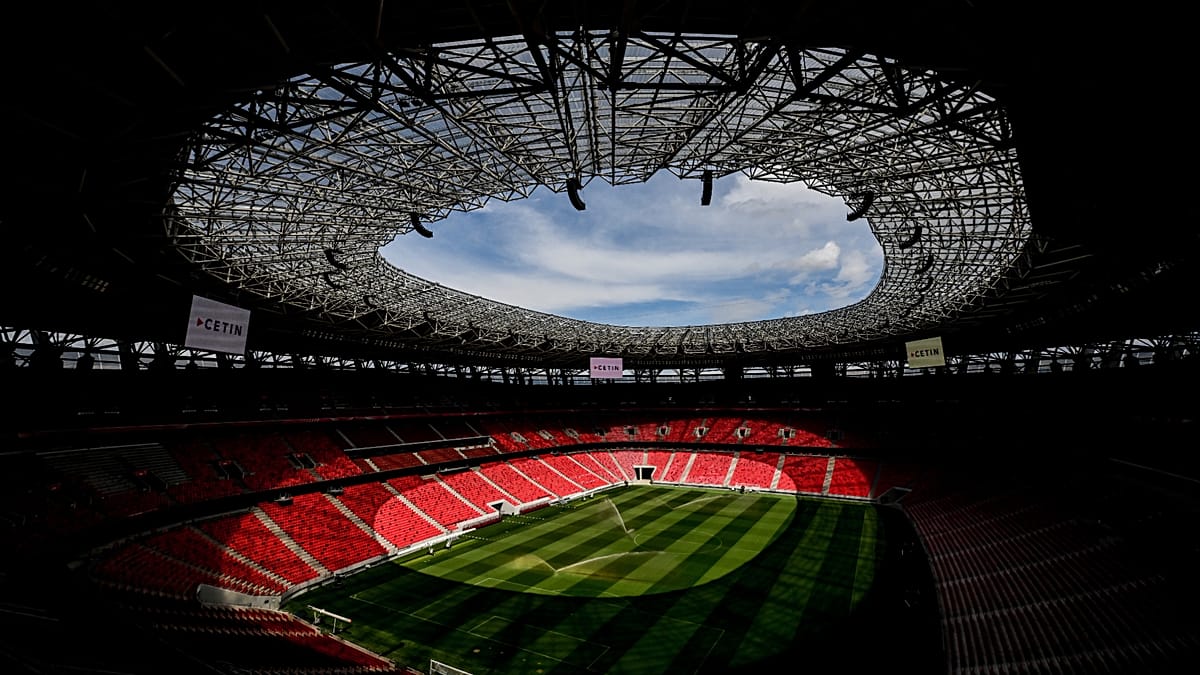
On Saturday, Budapest will host its first UEFA Champions League final, a milestone for the Hungarian capital and for Central European football. The match at the Puskás Aréna pits Arsenal, fresh from ending a 22-year Premier League drought, against Paris Saint-Germain, champions of Ligue 1. Kick-off is set for 18:00 local time, an unusually early slot that organisers say will ease transport and security demands.
The event is expected to draw more than 200,000 visitors, according to Gábor Bódis, a lecturer at Budapest Metropolitan University. “Budapest has hardly ever faced such pressure from a tourism point of view,” Bódis told European Pulse. “Booking data, prices, airport traffic all show an additional 200,000–250,000 people are coming for a few days. That will significantly affect everyday life and the revenues of those who live from tourism.”
Economic windfall and logistical strain
The influx is projected to generate around 20 billion forints (€55 million) in extra income for the city, though Bódis notes that organisers and the municipality also face substantial costs. Hotels in the city centre sold out weeks ago, with top-category rooms fetching over €2,800 per night. Even modest accommodation near the stadium is listed at €704. Weekend flights from London and Paris start at roughly €500 one way.
Local football fans received only 4,600 tickets, while the two clubs were allocated 17,000 each. Ticket prices ranged from €70 to €3,500. Arsenal midfielder Declan Rice has urged supporters to send at least 200,000 fans to Budapest, though the actual number may be lower.
The Puskás Aréna, built in 2019 at a cost of €563 million, has previously hosted the 2023 Europa League final and the 2020 UEFA Super Cup. No new infrastructure was required for this final, a rare feat for a host city. The 67,000-seat stadium will now stage club football’s equivalent of the Super Bowl.
UEFA’s financial machine
The Champions League final is a lucrative affair for UEFA. In the early 2020s, the organisation’s annual revenue exceeded €3 billion, with television rights alone bringing in €1.7 billion in 2017. Sponsors contribute hundreds of millions more. UEFA redistributes just over half of that money to participating clubs, retaining a substantial profit.
Beyond the match, UEFA has organised a week-long programme including fan zones on Heroes’ Square, trophy exhibitions, legends’ matches, concerts, and interactive football experiences. Central Budapest will effectively become a football carnival.
The early kick-off time—18:00 instead of the traditional 21:00—reflects a broader trend in European football to improve accessibility for families and international broadcasters. It also aligns with security considerations and urban transport capacity.
For Budapest, the final is a test of its ability to host mega-events. The city has already proven itself with the 2023 Europa League final and Euro 2020 matches, but the Champions League final represents a step up. As Bódis put it, “In a few very hectic days, venues in the right locations will generate takings worth several months of normal business.”
The match also comes amid broader European football developments. Earlier this year, Arsenal ended its 22-year Premier League drought, adding extra significance to their appearance. Meanwhile, debates over player welfare continue, with footballers demanding heat safety guarantees from FIFA ahead of the 2026 World Cup.
Budapest’s first Champions League final is more than a football match. It is a statement that Central European cities can compete with Western European capitals for the continent’s biggest sporting events. Whether the city’s infrastructure can handle the pressure remains to be seen, but the economic and cultural rewards are undeniable.