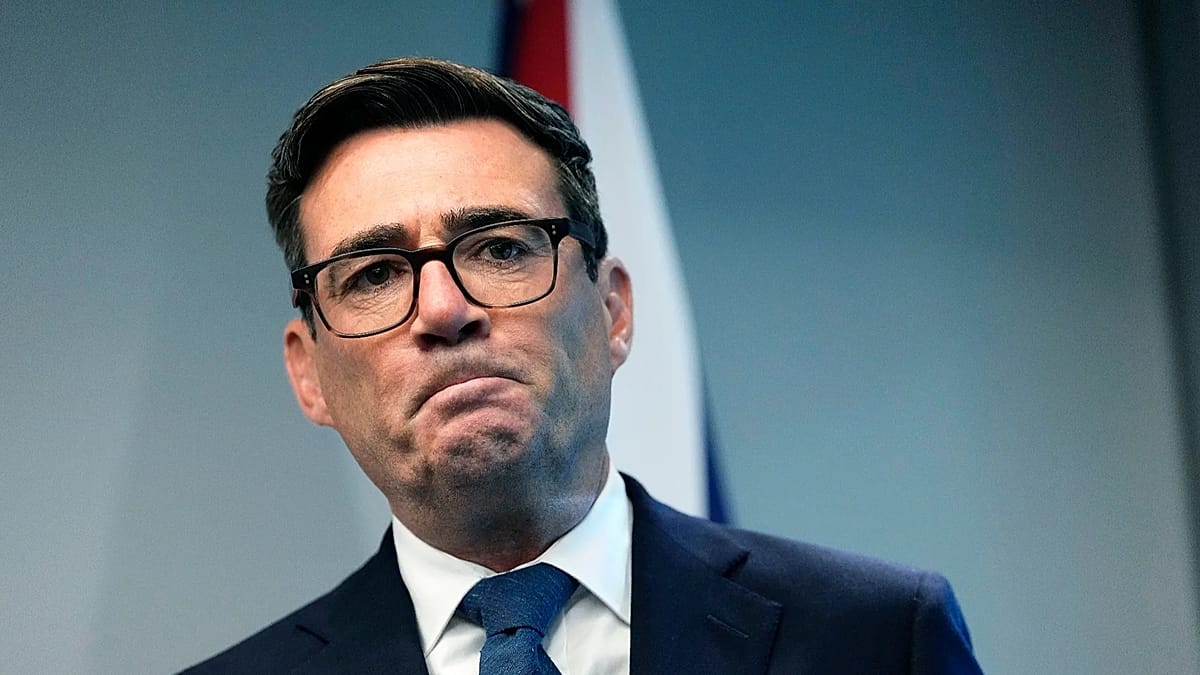
British Prime Minister Andy Burnham has declined to rule out including a commitment to rejoin the European Union in Labour's next election manifesto, according to UK media reports. Speaking to journalists en route to the United Nations General Assembly in New York, Burnham said that questions about rejoining the bloc were “for another day” and that his immediate focus remained the long-awaited UK-EU summit expected later this year.
“My immediate priority is to build on the good work that Keir did in rebuilding bridges,” Burnham said, referring to his predecessor Keir Starmer's “Brexit reset” efforts. “Because those bridges were broken in the early part of this decade. And Keir did a good job in re-establishing that relationship.”
Burnham, who took office in late July, added: “What we have got to do now is go to the next level in terms of reaching practical agreement that will further boost the British economy, and those issues are the substance of the summit alongside EU requests around youth mobility.” He is due to meet European Commission President Ursula von der Leyen on Tuesday.
A shift in tone
Burnham has previously called for the UK to rejoin the EU, though he softened that stance during his campaign for the Makerfield by-election in May. “My view is that Brexit has been damaging,” he said at the time. “But I also believe the last thing we should do right now is rerun those arguments.”
Since entering Downing Street, however, he has repeatedly signalled his intention to deepen ties with Brussels. Last week, speaking from No10 North after meeting Irish Taoiseach Micheál Martin, Burnham said his government was “looking forward” to the UK-EU summit and was “wanting to take further steps to deepen the relationship with Europe.” In August, he stressed that Britain must be “bolder” in seeking to rebuild relations with the EU.
The divisive nature of the 2016 Brexit vote has proved tricky to shake off for many in the UK, and the debate has once more been thrust under the spotlight this year. Following damaging local election results for Labour in May, senior party figures, including now-Defence Secretary Wes Streeting, pointed to the impact of Brexit on the UK as they positioned themselves ahead of what appeared an increasingly likely leadership contest.
Speaking at the time, Streeting called the decision to leave a “catastrophic mistake” and argued that it had left the country “less wealthy, less powerful and less in control than at any point before the industrial revolution.”
Britain's right has pushed back at the idea of revisiting Brexit. Conservative leader Kemi Badenoch has warned that Labour was risking “restarting the Brexit wars,” while the hard-right Reform UK party's Richard Tice, the MP for Boston and Skegness, has billed it as “a new Battle of Britain.”
Burnham's comments come as his government seeks to deepen EU ties amid a broader European push for closer cooperation. The upcoming summit is expected to address trade frictions, youth mobility, and security cooperation, with both sides eager to move beyond the acrimony of the post-referendum years.
For now, Burnham appears to be walking a careful line: embracing closer ties without reopening the wounds of the Brexit debate. Whether that balancing act holds until the next election remains to be seen.