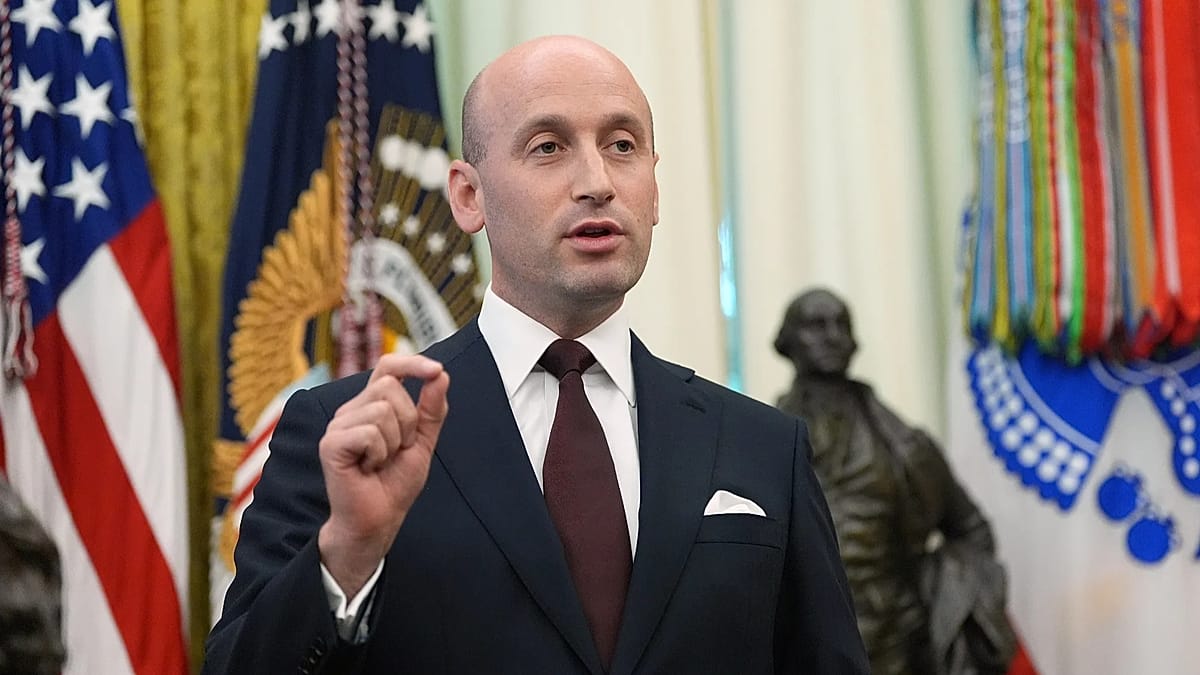
US President Donald Trump has appointed Stephen Miller, one of the most influential figures behind his hardline immigration agenda, as the new White House chief of staff. Miller, 41, currently deputy chief of staff and homeland security adviser, will take over from Susie Wiles on Monday, November 9, according to an announcement on Trump's Truth Social platform.
Trump praised Miller as "one of my most trusted advisors" and expressed confidence in his ability to lead the White House staff. Wiles, 69, the first woman to hold the position, will transition to Trump's political operation. In a statement on X, she described her tenure as "the honor of a lifetime" and highlighted the administration's achievements on border security, tax cuts, and economic policy.
Miller's promotion places a staunch advocate of restrictive immigration measures at the heart of White House decision-making. He has been a close adviser to Trump since the 2016 campaign and played a central role in shaping the administration's mass deportation efforts during Trump's second term.
The personnel change comes just days after the Republican Party suffered a significant defeat in the midterm elections, with Democrats securing control of both chambers of Congress. The result is a major political setback for Trump and is likely to intensify scrutiny of his domestic agenda. European observers are closely watching how a weakened president might recalibrate his foreign policy, as analysts weigh the implications for transatlantic relations.
Immigration enforcement under the spotlight
Miller's elevation coincides with growing criticism of the administration's immigration operations, particularly after the fatal shootings of two protesters by immigration agents in Minneapolis in January. Those incidents triggered widespread demonstrations and raised questions about federal enforcement tactics. Miller has been a vocal defender of aggressive measures, arguing they are necessary to maintain border security.
His new role is expected to give him even greater influence over policy, including the ongoing deportation drive. The appointment signals that Trump intends to double down on his signature issue, despite the electoral backlash. For European leaders, who have often clashed with Washington over migration policies, Miller's rise could mean a more confrontational stance on issues like asylum and visa reciprocity.
Wiles had been widely regarded as a stabilizing force within the administration, helping to manage competing interests and maintain discipline. Her departure follows weeks of speculation about potential reshuffles, though officials had previously denied reports of an imminent change. The timing, so soon after the midterm rout, suggests Trump is seeking to consolidate control and reward loyalists.
As the administration recalibrates, European capitals are assessing the potential fallout. A weakened president at home might turn more aggressive abroad, as some European officials have warned. The shift in the White House power structure could also affect ongoing diplomatic efforts, including talks involving Ukrainian and Russian envoys.
Miller's appointment is likely to be met with concern in Brussels, where migration policy has been a contentious issue. The European Union has often found itself at odds with Washington's approach, particularly regarding the treatment of asylum seekers and the use of detention. With Miller now at the helm of the White House staff, those differences may become more pronounced.
For now, the immediate focus is on the transition. Wiles leaves with a record of managing a turbulent administration, while Miller steps into a role that will test his ability to navigate both domestic and international challenges. The coming weeks will reveal how the new chief of staff shapes policy and whether he can help Trump recover from the electoral blow.