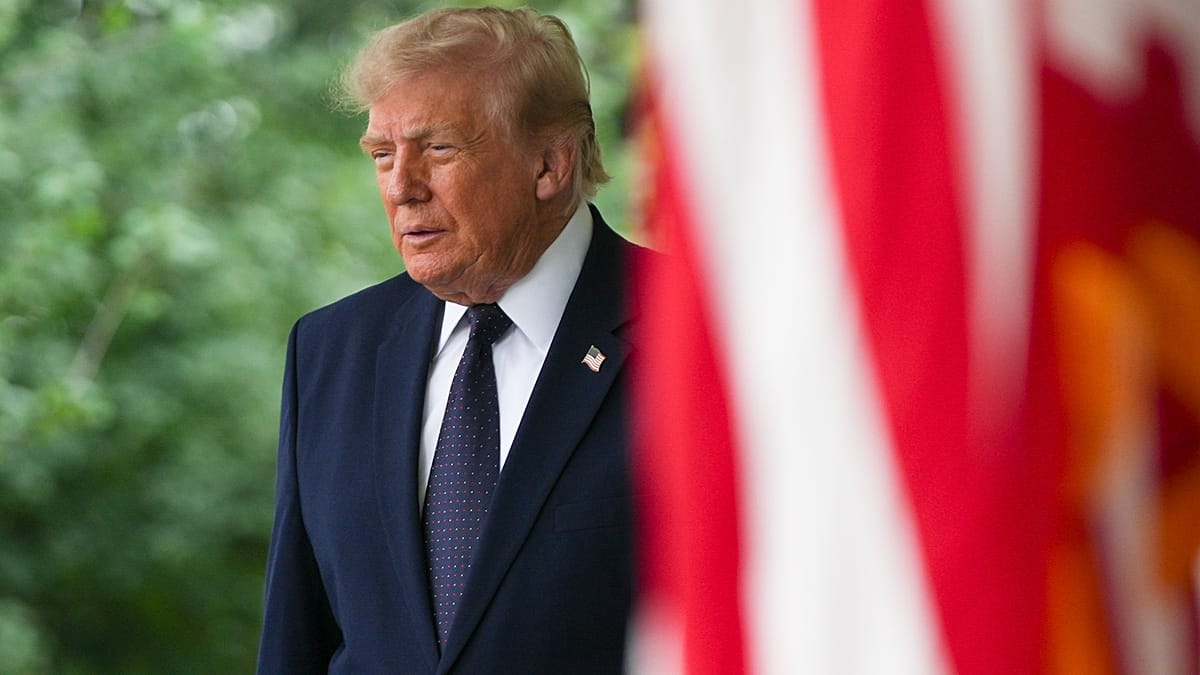
At a joint press conference following the NATO summit in Ankara on Wednesday, US President Donald Trump declared, "We no longer want to do any kind of business with Spain. I would like that to stop. Spain is a terrible partner in NATO. They don't pull their weight, they don't pay. I don't want anything to do with Spain. Cut off all trade with Spain, please, including visits." The remarks, reported by multiple outlets, have reignited debate over the extent of presidential power in trade matters and the resilience of the European single market.
EU Trade Policy: A Collective Competence
Since the creation of the single market in 1993, trade policy—including tariffs, agreements, and sanctions—has been an exclusive competence of the European Union, exercised through the European Commission. Any measure targeting one of the 27 member states would have repercussions for the entire bloc and could trigger a coordinated response from Brussels. Trade flows between EU countries are classified as "intra-EU supplies," not exports, meaning that goods like oranges grown in Valencia can be processed in another member state before reaching the US. This interconnectedness creates major practical and legal obstacles to a unilateral US move against Spain alone.
Teresa Ribera, the EU competition chief and former minister in Pedro Sánchez's government, addressed the issue last March after a similar threat. "The US federal government knows how the EU's trade relations are managed and is not interested in breaking off trade ties," she said.
Asymmetric Trade Figures
Data from 2025 shows that only 4.9% of Spain's goods exports go to the United States, worth around €18 billion—a share lower than Italy's 10.7% or Germany's 9.9%. Conversely, US exports to Spain amount to roughly €23 billion, giving the US a trade surplus on that route. However, exports to Spain represent only about 1.2% of total US exports. Key Spanish exports to the US include capital goods and semi-finished products like industrial machinery and chemicals (over half of the total), with food products—especially olive oil and other oils and fats—accounting for around 18%.
Legal Limits on Presidential Tariff Powers
Under US law, Section 122 of the International Emergency Economic Powers Act caps any tariff measure at 15% and limits its duration to 150 days, after which congressional approval is required. Sections 232 and 232 of the Trade Expansion Act and Section 301 of the Trade Act of 1974 require prior formal investigations, lengthening the process. These constraints mean Trump cannot unilaterally impose sweeping tariffs on Spain without navigating significant legal hurdles.
Other Unilateral Measures
Beyond tariffs, Trump could impose individual sanctions on Spanish entities or individuals through the Department of Commerce's Bureau of Industry and Security or the Treasury Department, bypassing congressional oversight. This could involve restrictions on banking services, travel, or technology sales. The Department of Commerce could also add Spanish companies to the "Entity List," restricting access to US semiconductors, software, and defence components. Historically, such listings have targeted entities linked to Russia or Iran, with the vast majority currently aimed at China. Spain, however, enjoys a privileged status under the US Export Administration Regulations (EAR), belonging to group A:5—alongside Germany, France, Italy, the United Kingdom, Japan, and South Korea—which grants the most favourable export-licensing regime.
The broader context of Trump's trade rhetoric includes recent escalations against Spain and tensions at the NATO summit in Ankara, where he also revived claims on Greenland. For now, the legal and institutional framework suggests that a complete trade cutoff remains unlikely, but the threat underscores the fragility of transatlantic economic relations.