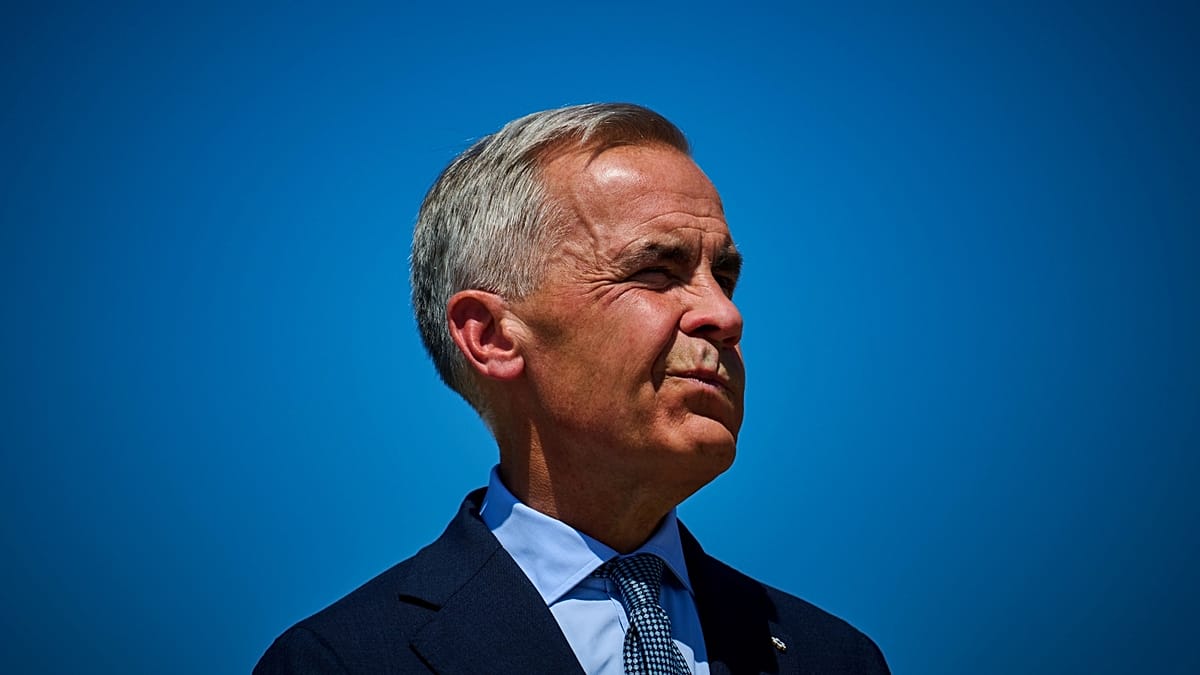
When Mark Carney, Canada's prime minister, walked away from trade negotiations with the United States, he sent a signal far beyond Ottawa. His decision to reject Washington's terms – which he said would have infringed on Canada's constitutionally protected use of French and its ability to strike trade deals with other nations – was a rare act of defiance from a close ally. "You're at war when you're attacked, and we got attacked," Carney said, vowing to retaliate "dollar for dollar."
The immediate costs are steep: tariffs on $20 billion of Canadian goods and an estimated 87,000 jobs at risk. President Donald Trump has already announced another round of tariffs, threatening to escalate the cycle. But Carney's stance has resonated in European capitals, where officials have watched with a mix of admiration and unease. Could the European Union ever do the same?
Brussels has its own red lines
The EU has been on the receiving end of Trump's aggressive trade tactics for over a year. Brussels has struggled to fend off demands to dismantle environmental, sustainability, and digital regulations, while trying to keep alive the lopsided trade deal struck last year in Turnberry, Scotland. In July, Trump threatened a "very big price" after the European Commission fined Google €890 million for anti-competitive practices. "We anticipate a substantial TARIFF to be placed on them at the earliest possible moment," he said, though the duty has yet to materialise.
For the EU, the core issue is regulatory autonomy. European officials see the right to set rules within their own jurisdiction as non-negotiable. Amending laws to satisfy Washington would be seen as capitulation. The bloc has already conceded a 15% tariff on EU goods, and diplomats say there is little appetite for further concessions. Trump's failed bid over Greenland and his unilateral decision to launch a war against Iran have only strengthened the resolve to push back.
Size matters. The EU's GDP is €18.8 trillion, nearly ten times Canada's $2.32 trillion. While Canada sends about 75% of its exports to the US, the EU's share is just 21%. That diversification gives Brussels more leverage and a larger cushion to absorb a trade war. During the Turnberry negotiations, the European Commission prepared a list of €93 billion worth of American goods to target in retaliation – a list that remains ready. The bloc could also invoke the Anti-Coercion Instrument, which allows countermeasures beyond tariffs, such as excluding US firms from public tenders or suspending intellectual property protections.
"If Washington follows through with new tariffs over European digital taxes or regulation, it would very much reopen Turnberry and put Europe in a similar position to Canada's," said Tobias Gehrke, a senior policy fellow at the European Council on Foreign Relations. "European governments could well conclude that there is no stable deal to preserve and walking away is the better tactical play."
But the calculus is complicated
Yet the EU is not Canada. Its member states are deeply divided on how to handle Trump. France, Spain, and the Nordic countries have urged Brussels to stand firm, while others, particularly those with closer economic ties to the US, prefer a more conciliatory approach. The bloc's decision-making is slow and consensus-based, making a dramatic walkout harder to orchestrate.
Gehrke also points to China. Trade tensions between the EU and China are rising ahead of an October deadline. "There is a growing view in Europe that China represents the more systemic economic security challenge, and few want to fight simultaneous trade wars with Washington and Beijing," he said. If Trump pressures Europe precisely when Brussels is trying to manage a confrontation with China, Washington may calculate that Europe has limited escalation options.
Moreover, the EU's relationship with the US is not just about trade. It is also about security, with NATO and intelligence-sharing ties that Canada, despite its proximity, does not have in the same way. Walking away from Washington would have profound geopolitical consequences that go far beyond tariffs.
So while the EU has the tools and the economic weight to pull a Carney, it lacks the political unity and strategic clarity to do so. The Canadian prime minister's bold move may inspire European leaders, but it is unlikely to be replicated anytime soon. As one EU diplomat put it, "We are not Canada. We have to play a longer game."