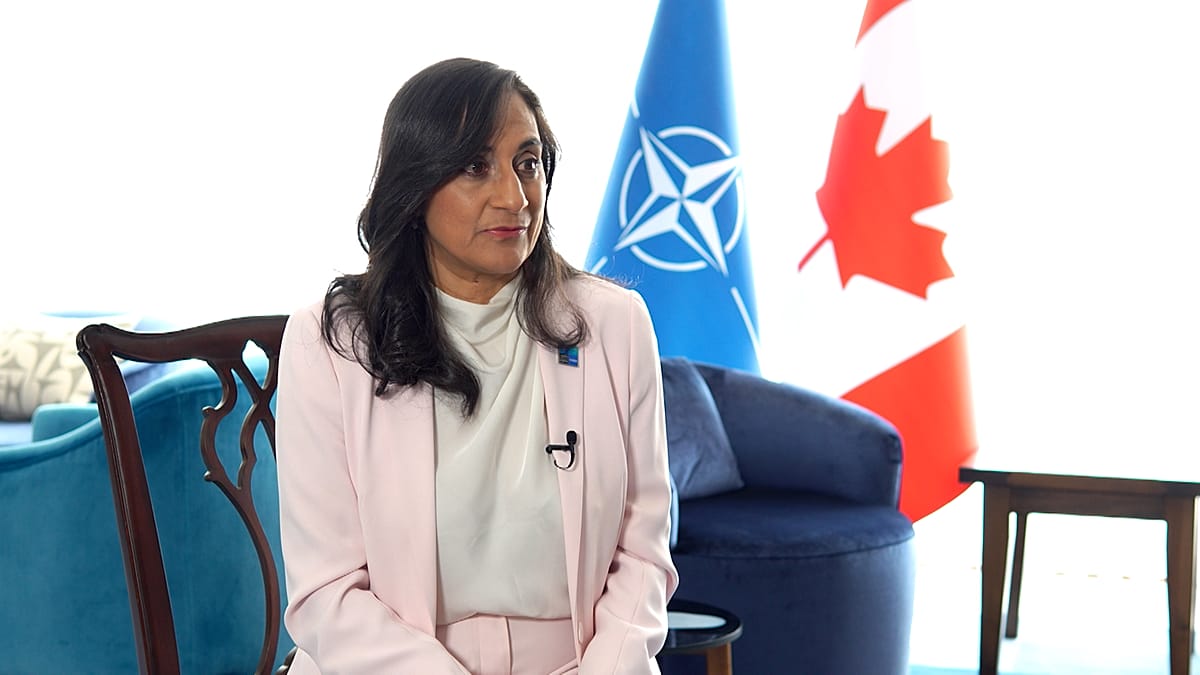
Canadian Foreign Affairs Minister Anita Anand has sounded an alarm about Moscow's expanding military ambitions in the High North, warning that the Russian threat is shifting toward the Arctic Circle. In an interview with Euronews, Anand stressed that NATO members must bolster their readiness across all operational domains, from naval patrols to surveillance infrastructure.
“The Russian threat is moving further and further north towards the Arctic Circle. We need to be prepared at all times across various domains,” Anand said, pointing to Canada's decision to acquire 12 new submarines as part of a broader effort to secure Arctic waters. The minister’s remarks come amid growing unease in European capitals about Moscow's increasing military activity in the region, including the reopening of Soviet-era bases and the deployment of advanced missile systems.
Arctic Security in a New Geopolitical Context
The Arctic has long been a zone of relative stability, but Russia's invasion of Ukraine and its subsequent isolation from Western institutions have reshaped the security landscape. NATO's northern flank, which includes Norway, Finland, and Sweden, now faces a more assertive Russian posture. Finland and Sweden, both recent NATO members, have already begun integrating their Arctic capabilities into the alliance's command structure.
Anand’s warning echoes concerns raised by Nordic allies. Norway, which shares a border with Russia in the Arctic, has increased its defense spending and conducted joint exercises with Canadian and American forces. The Norwegian government has also invested in new surveillance drones and anti-submarine warfare capabilities to monitor Russian naval movements in the Barents Sea.
Canada's submarine procurement is a key element of its Arctic strategy. The country currently operates four aging submarines, but the new fleet is intended to provide persistent underwater surveillance and deterrence. Anand emphasized that the submarines would be “multi-purpose” and capable of operating in extreme cold conditions, a requirement that has limited the pool of potential suppliers. European shipbuilders, including France's Naval Group and Germany's ThyssenKrupp Marine Systems, are expected to compete for the contract.
The Arctic dimension of the Russian threat also has implications for European energy security. The region holds vast untapped oil and gas reserves, and Russia has been expanding its Northern Fleet and icebreaker capacity to protect its economic interests. European Union officials have warned that Moscow could use hybrid tactics—such as disrupting undersea cables or sabotaging energy infrastructure—to exert pressure on NATO members.
Anand's comments come as NATO prepares for its next summit, where Arctic defense is expected to be a prominent agenda item. The alliance has already established a Joint Force Command in Norfolk, Virginia, to oversee Atlantic and Arctic operations, but member states have been slow to meet spending targets. The Dutch minister of defense recently warned that allies failing to meet the 2% GDP threshold would face increased pressure from Washington and Brussels.
For European readers, the Arctic is not a distant concern. The region's melting ice caps are opening new shipping routes that could transform trade patterns, while also exposing critical infrastructure to new risks. The European Union's Polar Strategy, updated in 2023, calls for enhanced cooperation with Canada and the United States on Arctic security, environmental protection, and sustainable development.
Anand’s warning also ties into broader debates about European defense autonomy. While NATO remains the primary security framework, some EU member states have pushed for a more independent European defense pillar, particularly in areas like Arctic surveillance and cyber defense. The European Commission has proposed a new fund for joint military projects, but progress has been slow due to disagreements over funding and procurement rules.
As the Arctic becomes a theater of great-power competition, the need for coordinated action between Canada, Europe, and the United States is more urgent than ever. Anand’s message is clear: the threat is real, and the time to prepare is now.