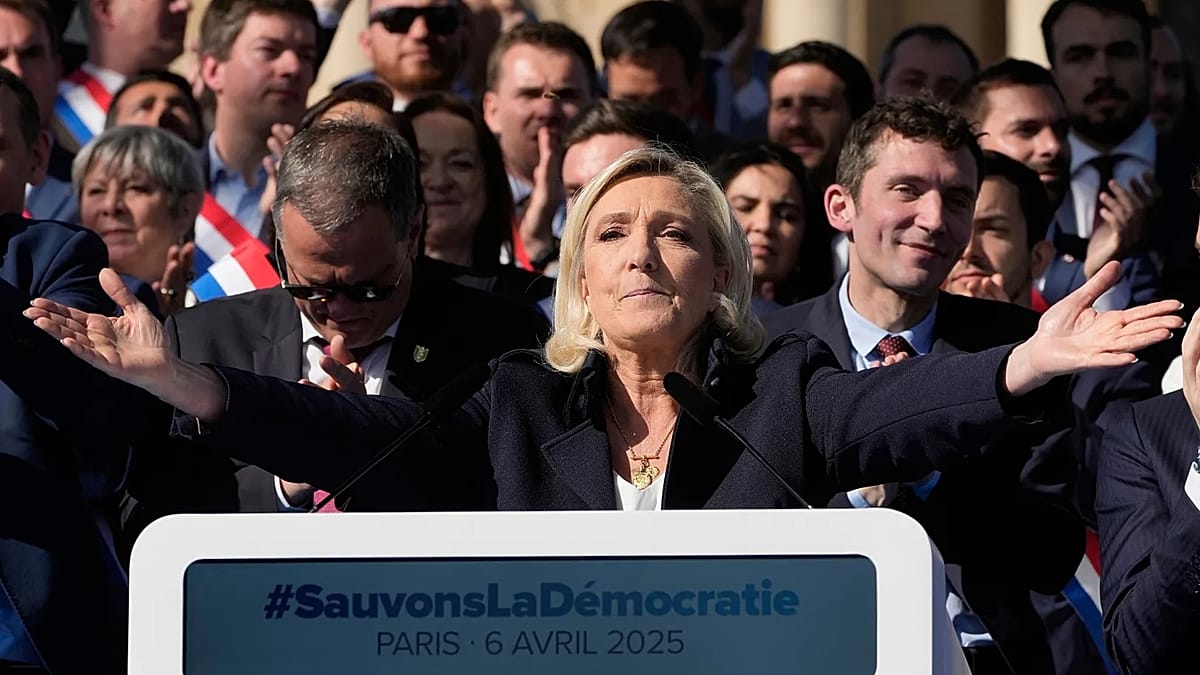
In the corridors of the European Parliament in Brussels, a consensus is emerging among centrist and left-wing lawmakers: Marine Le Pen, despite her recent fraud conviction, poses a greater threat to the French presidency than her younger protégé, Jordan Bardella. The veteran leader of the Rassemblement National (RN) has announced her intention to run in the 2027 election, positioning Bardella as a candidate for prime minister rather than the top job.
Polls suggest Bardella might attract broader support in the first round, but MEPs who have observed both figures closely argue that Le Pen’s experience and narrative of perseverance give her a decisive edge. “French voters are not looking for an adventure with a young candidate; they want to be reassured,” said Sandro Gozi, a centrist MEP from the Democratic Movement. Gozi believes Le Pen is better equipped to tap into voters’ anxieties about war, energy costs, and declining purchasing power.
Divergent Economic Strategies
Le Pen and Bardella differ on two key economic issues that resonate with French voters: lowering the legal retirement age to 62 and imposing exceptional taxes on energy companies’ excess profits. In both cases, Le Pen has adopted the more popular stance. Gozi argues that Le Pen has built her career on positioning herself as a champion of the people against the elite, even drawing accusations of having a socialist programme. Bardella, by contrast, appears to be courting the upper class, which may alienate the working-class voters who form the RN’s base.
“Everything in him is very well studied to open the door of the big industry, even his love story with the princess,” Gozi remarked, referring to Bardella’s relationship with Maria Carolina di Borbone delle Due Sicilie, a descendant of the former royal family of Southern Italy. This perceived alignment with elite circles could undermine his appeal among those who feel left behind by globalisation.
The Power of Personal Narrative
Le Pen’s personal story—three failed presidential bids and a legal battle that nearly barred her from the 2027 race—has cultivated an outsider image that generates empathy. “People admire her scars,” Gozi said. This resilience, combined with her experience in high-stakes debates, makes her a formidable opponent. Manon Aubry, head of the France Unbowed delegation in the European Parliament, noted: “She is more experienced and ready to stand presidential debates, while he would be very weak if you go beyond the talking points.”
A Renaissance Party MEP, speaking anonymously, agreed that Le Pen is the worst opponent to face, particularly because she has learned from past mistakes, including a disastrous debate against Emmanuel Macron in 2017. The Paris court ruling that could have ended her candidacy has only strengthened her narrative of persecution.
Demographic Realities
Socialist MEP Brando Benifei dismissed the idea that Bardella’s youth would give him an advantage. “He has maybe more followers, she has more appeal in a generation that is more significant in demographic terms,” he said, pointing out that older voters are more likely to turn out. Benifei also argued that young French people with immigrant backgrounds would not vote for the far right regardless of the candidate.
The broader European context adds another layer. The RN’s success in France could embolden far-right parties across the continent, from the AfD in Germany to the Lega in Italy. The European Parliament’s moves to strip AfD-linked parties of EU funding reflect growing concern about the far-right’s influence. For now, however, MEPs in Brussels are focused on the French race, where Le Pen’s determination and strategic positioning make her the candidate to beat.