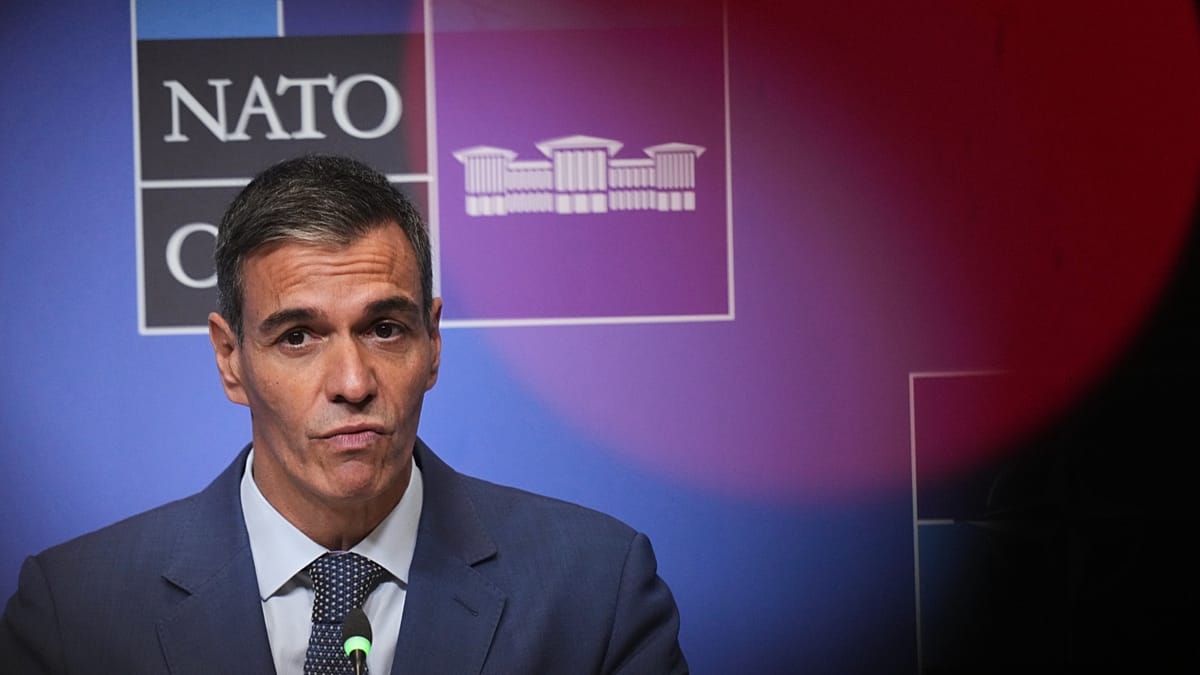
Spanish Prime Minister Pedro Sánchez struck a conciliatory tone on Wednesday, insisting that relations between Madrid and Washington remain "very positive" despite President Donald Trump's latest threat to sever all trade with Spain. Speaking after a NATO summit in Ankara, Sánchez sought to downplay the confrontation, which has escalated tensions between one of Europe's few leftist leaders and the Trump administration.
Trump, at the same summit, accused Spain of being a "terrible partner in NATO" and declared: "Spain is a wasted cause. We don't want to do any trade business with Spain anymore." The remarks follow a pattern of US pressure on European allies to boost defence spending, a key Trump priority.
Legal and EU Constraints on Trump's Trade Threat
Any attempt by Trump to unilaterally cut trade with Spain would face significant legal and practical obstacles. The US Supreme Court has previously struck down his use of emergency powers to impose arbitrary tariffs, limiting his ability to act without congressional approval. Moreover, Spain's membership in the European Union complicates matters: goods move freely across the bloc's 27 member states, meaning any trade restrictions targeting Spain would effectively target the entire EU single market.
As explored in a recent analysis, the legal and practical limits on Trump's power to cut trade with Spain are substantial, making the threat more rhetorical than actionable.
Sánchez, for his part, emphasized the broader context of US-Spain relations. "Relations between the United States and Spain are very positive relations in social, cultural, economic and also political terms," he told reporters. He also revealed that he had an "informal chat" with Trump in Ankara about football, adding: "There was absolutely no kind of tension. On the contrary, everything was kind words and friendliness."
The Spanish leader used the occasion to list his country's contributions to NATO and Ukraine, including raising defence spending to 2% of GDP. This move, he argued, demonstrates Spain's fulfilment of its commitments—a rebuttal to Trump's repeated criticism that Madrid is not pulling its weight.
This is not the first time Trump has threatened to cut trade with Spain. In March, he made a similar threat after Madrid refused to allow US planes to use its bases for strikes against Iran. That incident, along with Sánchez's condemnation of Israel's war in Gaza as a genocide and his criticism of the US military operation that captured Venezuelan President Nicolás Maduro in January, has made him a target of the Trump administration.
At last year's NATO summit, Sánchez also found himself in US crosshairs for refusing to join allies in a pledge to boost defence spending to 5% of GDP, as demanded by Trump. His stance, combined with his open leftist politics, has made him a hero to progressives worldwide, even as Europe's political landscape shifts rightward.
The broader context of the Ankara summit included other flashpoints. Trump revived his controversial claim on Greenland, drawing a sharp rebuke from Danish Prime Minister Mette Frederiksen, who reiterated that the territory is "not for sale." The summit also saw Trump declare the Iran ceasefire over, threatening "hard" strikes, which sent oil prices surging and European markets tumbling.
For now, Sánchez appears to be betting on diplomacy and legal realities to defuse the trade threat. Whether Trump follows through remains uncertain, but the episode underscores the fragile nature of transatlantic relations under a second Trump term.