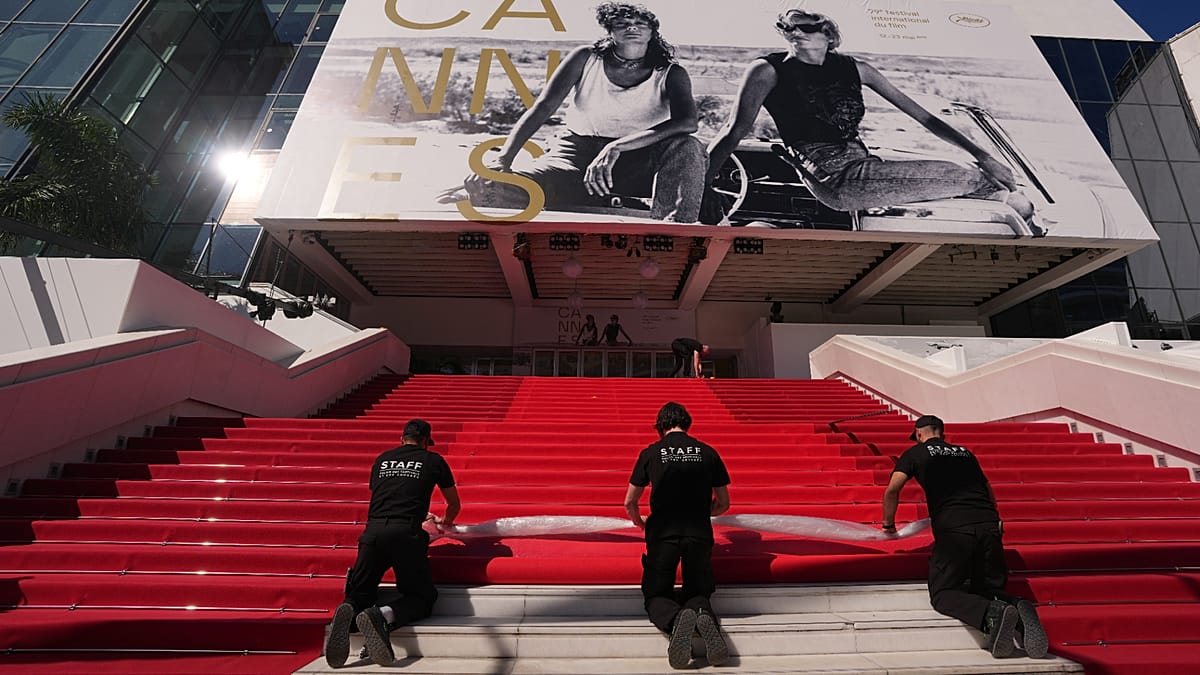
As the 79th edition of the Cannes Film Festival began on Tuesday, 600 prominent figures from French cinema—including directors, actors, technicians, and producers—published an open letter in the daily Libération condemning the growing reach of conservative billionaire Vincent Bolloré. The signatories, who have organized under the banner "Zapper Bolloré," argue that his expanding control over the film industry poses a direct threat to creative freedom.
The group includes well-known names such as actresses Adèle Haenel, Juliette Binoche, and Blanche Gardin; actors Swann Arlaud and Jean-Pascal Zadi; photographer and documentary filmmaker Raymond Depardon; and director Arthur Harari. Their statement focuses on Bolloré's influence through the Canal+ group, of which he is the principal shareholder. They note that Canal+ has acquired 34 percent of the capital of UGC, France's third-largest cinema chain, with plans to purchase the remaining shares by the end of 2028.
According to the signatories, this acquisition would allow Bolloré to "control the entire film production chain, from financing to distribution on the big and small screens." Canal+ is already a major investor in French cinema, having committed to invest a minimum of €480 million between 2025 and 2027. Many producers, distributors, and exhibitors now find it nearly impossible to mount certain projects without the group's financial backing.
A 'Civilisational Project' with Far-Right Overtones
The manifesto goes beyond economic concerns, accusing Bolloré of pursuing a "civilisational project" that is "reactionary and far-right," carried out through his television channels like CNews and his publishing houses. "We are not just risking a standardisation of films, but a fascist takeover of the collective imagination," the text warns. The authors add that while the ideological influence on film content has so far been subtle, they are "under no illusions: it will not last." They call for building a movement capable of defending independence.
The timing of the protest is deliberate. By choosing the Cannes Film Festival—an international showcase for cinema where creativity is celebrated—the signatories aim to make a lasting impression and take advantage of the presence of journalists from around the world. They see artistic freedom, a value the festival champions, as endangered. These fears are not confined to cinema; they echo a broader cultural battle playing out across France.
The protest at Cannes follows a similar revolt at the Grasset publishing house, part of the Hachette group and also under Bolloré's influence. In April, Grasset's CEO Olivier Nora was dismissed after more than 25 years and replaced by Jean-Christophe Thiery, a loyalist to the billionaire. The conflict reportedly centered on the rushed publication of La Légende by Boualem Sansal, against the advice of the historic publisher. More than 200 French authors, including Virginie Despentes, Dan Franck, Gaël Faye, Bernard-Henri Lévy, and Sorj Chalandon, have since left the publisher.
On 11 May, the majority of foreign authors in Grasset's catalogue—including American, British, Italian, and South Korean writers—announced they would no longer submit future manuscripts to the house. In a joint statement, they expressed "deep concern about the future of this publishing house, its editorial integrity, and the teams that bring it to life." They declared: "We refuse to allow our work to be used for political ends that we do not share. The extreme right acts beyond borders; it must be fought beyond borders." Among them is Han Kang, winner of the 2024 Nobel Prize in Literature, for whom Grasset "represented a certain idea of French cultural exceptionalism and editorial independence."
Bolloré has dismissed the protests as the "din of a small caste that believes itself above everything and everyone," as he wrote in the Journal du Dimanche in April. But for many in the industry, the rallying cry reflects a sector feeling the pressure of a major capital provider whose ambitions extend far beyond business. The debate now is whether Bolloré's influence on French culture has become irresistible—or whether the industry can still push back.