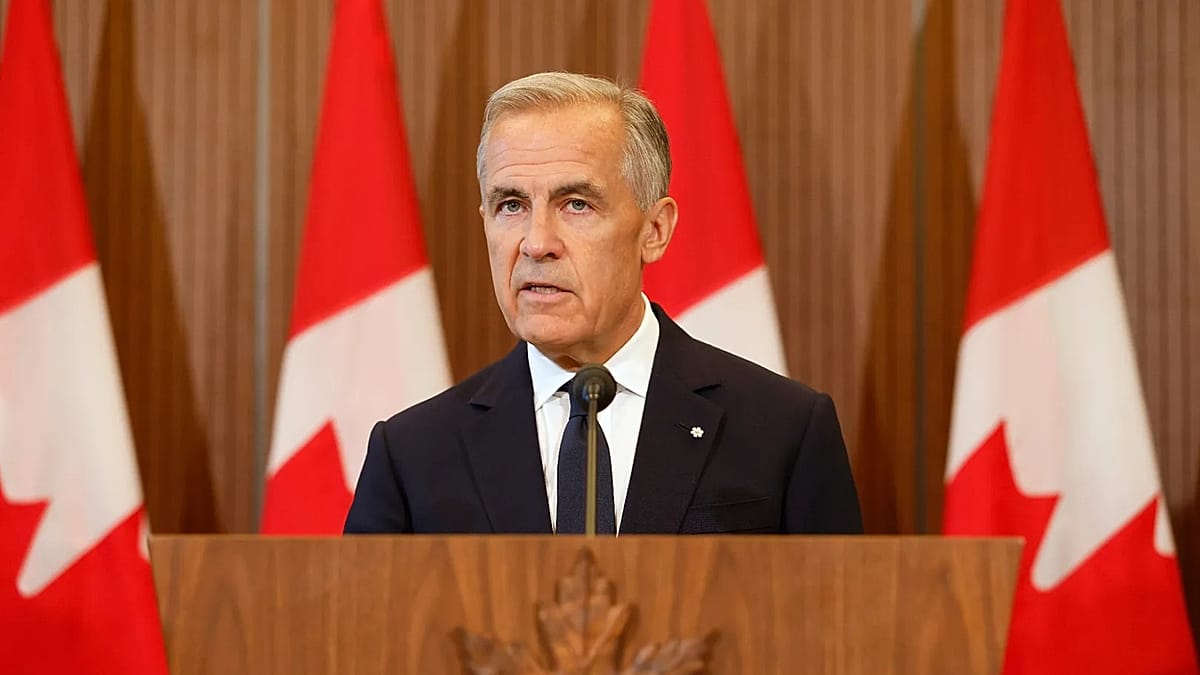
Canadian Prime Minister Mark Carney has sharply criticised the latest US tariffs on Canadian goods, describing them as deliberately crafted to inflict economic pain and sow political discord. Speaking after negotiations between Ottawa and Washington broke down on Friday, Carney said the measures were "designed to hurt us and divide us."
Carney, a former governor of the Bank of Canada and the Bank of England, offered a blunt assessment of the failed talks: "We cannot accept what they've offered, and we will not give what they've asked." His remarks came as duties affecting roughly $20 billion worth of Canadian exports took effect on Saturday, following the collapse of what both sides had hoped would be a breakthrough agreement.
Last-minute demands and a breakdown in trust
The prime minister accused Washington of introducing last-minute changes to the proposed terms, which he labelled "unfair" and "uneconomic." In a statement released on Friday, Carney warned that such tactics "called into question the reliability of any deal." He also reiterated Ottawa's commitment to match US tariffs "dollar for dollar to protect our workers and businesses."
The US Trade Representative's office, however, framed the outcome as a "missed opportunity" for Canada, claiming that Washington had offered Ottawa the most favourable treatment of any major exporter to the US market. "Despite the U.S. offer to Canada to receive the best treatment of any major exporter to our market, new demands and walk backs of other commitments by Canada have upended the careful balance reached in the past days," the office said in a social media post.
The breakdown came despite earlier optimism from President Donald Trump, who had postponed the original tariff deadline from Wednesday as a deal seemed close. Trump, who has repeatedly floated the idea of Canada becoming the US's "51st state," took to social media early Sunday to accuse Ottawa of wanting "the benefits of being a State, without being one." He also claimed that Canadian tariffs had long burdened American farmers, adding: "No more!!!"
Since returning to the White House in January 2025, Trump has pursued an aggressive tariff agenda, raising levies on trading partners worldwide. The administration argues that these measures will revitalise US manufacturing and create domestic jobs, while correcting what it views as unfair trade imbalances.
For Canada, the stakes are high. The United States is by far its largest trading partner, and the new tariffs threaten key sectors such as autos, lumber, and agriculture. Carney's government has signalled it will not bow to pressure, but the economic fallout could be significant, particularly for provinces like Ontario and Quebec that rely heavily on cross-border trade.
The dispute also resonates beyond North America. European policymakers are watching closely, as Trump's tariff policies have already targeted the EU, including recent duties on drones and other goods. The Canadian standoff offers a test case for how a close US ally responds to coercive trade tactics—a lesson that European capitals may need to heed.
Carney's rhetoric echoes the frustration felt in many European capitals, where Trump's tariffs have been seen as a challenge to the rules-based trading order. The Canadian prime minister's insistence on reciprocity—matching tariffs dollar for dollar—mirrors the EU's own approach in past disputes, such as the steel and aluminium tariffs imposed during Trump's first term.
As the trade war escalates, the immediate question is whether the two sides can return to the negotiating table. Carney has left the door open, but his conditions are clear: any deal must be fair, reliable, and free of last-minute surprises. For now, the tariffs stand, and the economic pain is beginning to spread on both sides of the border.