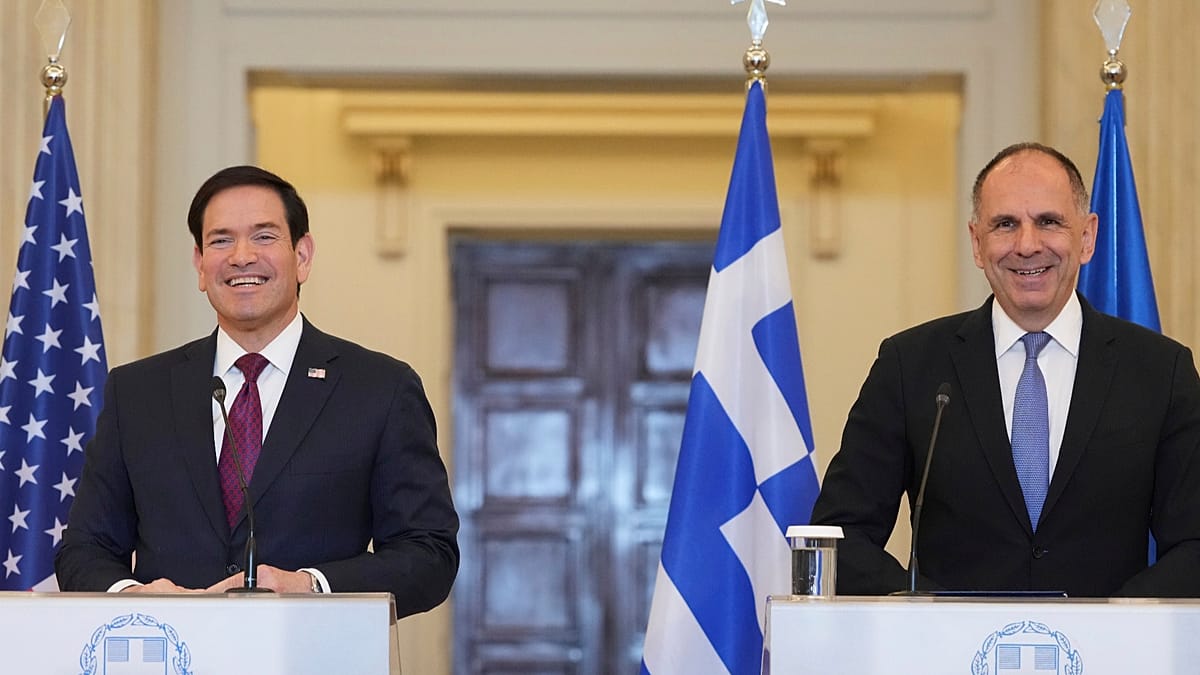
US Secretary of State Marco Rubio used a visit to Athens to press European allies to increase their defence contributions, pointing to Greece as an example of a nation that is already doing so. The trip marked the sixth round of the Greece-US Strategic Dialogue, a forum that has steadily expanded in scope since its inception.
Rubio met Greek Foreign Minister Giorgos Gerapetritis for roughly two hours on Wednesday, with discussions spanning defence, energy, technology, trade and investment. The talks unfolded against a backdrop of shifting security dynamics in the Eastern Mediterranean and broader European concerns about the reliability of US commitments under the current administration.
Energy cooperation takes centre stage
Energy emerged as a key pillar of the discussions. Gerapetritis highlighted Greece's role as a transit hub for US liquefied natural gas (LNG) destined for Central and Eastern Europe, describing bilateral energy ties as having reached "an unprecedented level." He also pointed to growing US investment in Greek energy projects, technology and shipyards.
Rubio echoed those remarks, noting that expanded US LNG exports and new gas and electricity interconnections could bolster regional energy security and deepen Greece's integration into the European energy system. The comments come as Brussels seeks to reduce reliance on Russian energy, a goal that has gained urgency since the full-scale invasion of Ukraine.
Defence modernisation and the F-35 programme
Defence cooperation was a major focus. Gerapetritis described the Mutual Defence Cooperation Agreement as a cornerstone of bilateral relations, while underscoring the strategic importance of the port of Alexandroupolis in northeastern Greece. The facility has become a vital logistics hub for US and NATO forces moving equipment into Eastern Europe.
Athens is also modernising its military, with upgrades to its F-16 fleet and the planned integration of F-35 fighter jets into the Hellenic Air Force. Gerapetritis framed these efforts not merely as national defence measures but as contributions to regional stability.
During the visit, a cooperation agreement was signed between the Hellenic National Defence General Staff and the Florida National Guard, in the presence of Defence Minister Nikos Dendias. Dendias said the pact adds a new dimension to military cooperation and aligns with Greece's "Agenda 2030" defence reform plan. The agreement will focus on knowledge transfer, training and interoperability, with potential collaboration on disaster response—Florida's experience with hurricanes and Greece's with earthquakes and wildfires.
Rubio calls for greater European responsibility
Rubio was direct about Washington's expectations. "The nations of Europe need to take on a greater share of the burden and defending their continent, and Greece is doing just that," he said. The statement reflects a recurring theme in US policy debates, where lawmakers and officials have long pressed European NATO members to meet the alliance's defence spending target of 2% of GDP.
Greece, which spends well above that threshold, is often cited as a model. But the broader message is aimed at the entire continent, where several countries still fall short. The call comes amid growing concerns about European security, particularly in light of Russia's aggression and the ongoing war in Ukraine. As Belgium's defence minister recently warned, Europe's reliance on soft power has left it exposed.
Rubio also praised Greece as "a source of stability in an unstable world," highlighting the historical and political ties between the two nations. He described the relationship as "historic and foundational" but also "critical" in today's international environment.
Border security and counterterrorism were also on the agenda. Rubio called Greece a "very close strategic partner" in addressing irregular migration, human trafficking and transnational crime—issues that have tested European unity and strained relations between member states.
The visit underscores a broader realignment in transatlantic relations, with Washington increasingly looking to regional partners to shoulder more of the security burden. For Athens, the dialogue offers a chance to cement its role as a key US ally in the Eastern Mediterranean, a region where tensions remain high over energy resources, maritime boundaries and the activities of regional powers.
As Europe grapples with its own defence challenges, the message from Washington is clear: the era of relying on the US umbrella is fading. Whether European capitals heed that call will shape the continent's security architecture for decades to come.