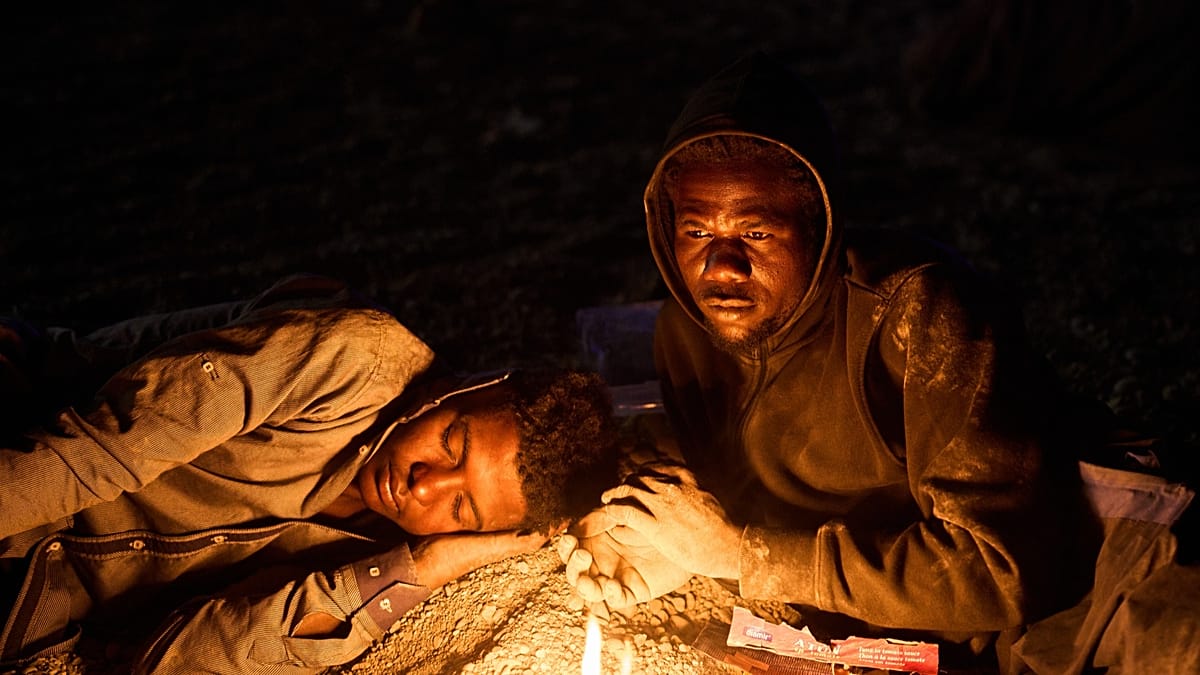
Two weeks after a wave of irregular crossings into the Spanish enclave of Ceuta, thousands of migrants remain in limbo, with reception facilities overwhelmed and many people, including children, sleeping on the streets. Local residents and volunteer groups have been distributing food around the clock, but the scale of the emergency has stretched humanitarian capacity to its limits.
Halima Ahmed, spokesperson for the Ceuta-based NGO Luna Blanca, described the situation as one of "complete vulnerability." On the first day of its response, the group handed out 3,500 food containers and has continued cooking daily with volunteer help. Yet many migrants still eat only once a day, relying on neighbours and charities for survival.
Children at risk
Among the most vulnerable are unaccompanied minors. While around 1,500 have been identified and placed within the child protection system, Save the Children estimates that more than 4,000 remain unidentified. Some are hiding, afraid to approach official centres, while others are simply beyond the reach of services.
Catalina Perazzo, director of advocacy at Save the Children, warned that every night a child spends on the street exposes them to serious dangers, including violence, trafficking, and exploitation. She noted that the organisation has received accounts of sexual assault through partner groups, though it has not handled such cases directly.
Unicef echoed these concerns. José María Vera, executive director of Unicef Spain, said protection centres are "totally saturated" and that not all children in Ceuta are safe. "They are in a situation of neglect," he told Euronews. The agency's immediate priority is to establish how many minors there are, who they are, and where they are staying.
The Spanish Commission for Refugee Aid (CEAR) also warned that unidentified minors cannot access psychological support or legal advice. Verónica Laorden, CEAR's national head of advocacy, said they are effectively in a state of abandonment.
Relocation or return?
The question of what to do with these minors has become a political flashpoint. Ceuta insists it lacks the capacity to care for them alone, but the transfer of minors to mainland Spain is dividing the country's autonomous communities. Some regions have expressed reluctance, while others have offered to help.
Amnesty International researcher Dani Canales argued that the debate should not be reduced to regional willingness. "The state must ensure the best interests of the child, and that takes precedence over migration status," he said. Save the Children similarly called for accelerating transfers to the mainland, where each child's case could be assessed individually, and for a shared responsibility among Spain's regions.
At the same time, the possibility of returning some minors to Morocco has raised concerns about safeguards. Unicef and other organisations stress that any repatriation must be voluntary, informed, and accompanied by proper family reunification procedures. The EU has sent experts to Ceuta to assess the situation, as fears of a new migrant surge grow.
NGOs working on the ground have also faced accusations of going beyond humanitarian aid and allegedly helping migrants leave Ceuta irregularly for the mainland. Five organisations contacted by Euronews denied these claims, insisting their focus remains on meeting immediate needs and protecting children.
The crisis has also reignited tensions over the sovereignty of Ceuta and Melilla, with Morocco renewing its claims amid the migrant abuse accusations. Spain has insisted that its sovereignty over the enclaves is non-negotiable.
As the situation drags on, humanitarian groups warn that the window for protecting these minors is closing. "Every day matters," said Perazzo. "We need a coordinated European response, not just a Spanish one."