On 2 November, a coordinated wave of suspected cyberattacks disrupted supermarket refrigeration systems across at least nine European countries, forcing some retailers to discard spoiled food and prompting the European Union to warn of a deliberate assault on the bloc's food supply chain.
Belgium, Estonia, Finland, Ireland, Italy, Luxembourg, the Netherlands, Portugal, and Sweden all reported incidents in which freezer and fridge temperatures rose unexpectedly overnight. The attacks came just three weeks after a similar incident in France, where hundreds of outlets had to throw away stock. No one has claimed responsibility for either wave.
European Commissioner for Agriculture and Food Christophe Hansen said the bloc was taking the situation "very seriously," describing the incidents as "a deliberate attempt to disrupt our food supply chain and undermine consumers' confidence in it — a warning that we must take seriously."
Italy: Sicilian supermarkets hit
In Italy, at least four Coop supermarkets in Sicily and one business in Tuscany were affected, according to local media and the national cybersecurity agency. The Italian government planned to hold a cybersecurity meeting with intelligence services on Tuesday.
Giuseppe Spadaro, head of the Radenza Group, which manages Coop-branded stores, told Italian news agency ANSA that the attack occurred at 4:00 am and targeted "our remote-control system for frozen food sections." He said the issue had since been resolved.
Belgium: Hardest hit
Belgium was among the most affected countries, with dozens of stores across several chains reporting failures. Federal prosecutors opened an investigation. Carrefour Belgium reported disruption in about 15 of its 700 stores. "It's a cyberattack, there is no other reason," said spokesman Mich Vergauwen. Ikea's outlet in Mons also experienced a cyberattack that raised freezer temperatures.
Belgian refrigeration company Sabcobel said it had begun securing its installations after the October attack in France, but some systems had yet to be upgraded and were among those affected on Monday. Delhaize, Colruyt, and Intermarché also reported problems, and four Delhaize outlets in Luxembourg were affected.
Ireland, the Netherlands, and Portugal
In Ireland, retailer Musgrave said 13 Supervalu stores were impacted by what it described as a cyber incident. A small number of corner shops in the Netherlands also suffered disruptions. In Portugal, the Mosqueteiros group confirmed incidents at seven Intermarché stores linked to a cyberattack, which "appears to have targeted an external service provider responsible for managing the refrigeration systems."
Sweden: 4G networks singled out
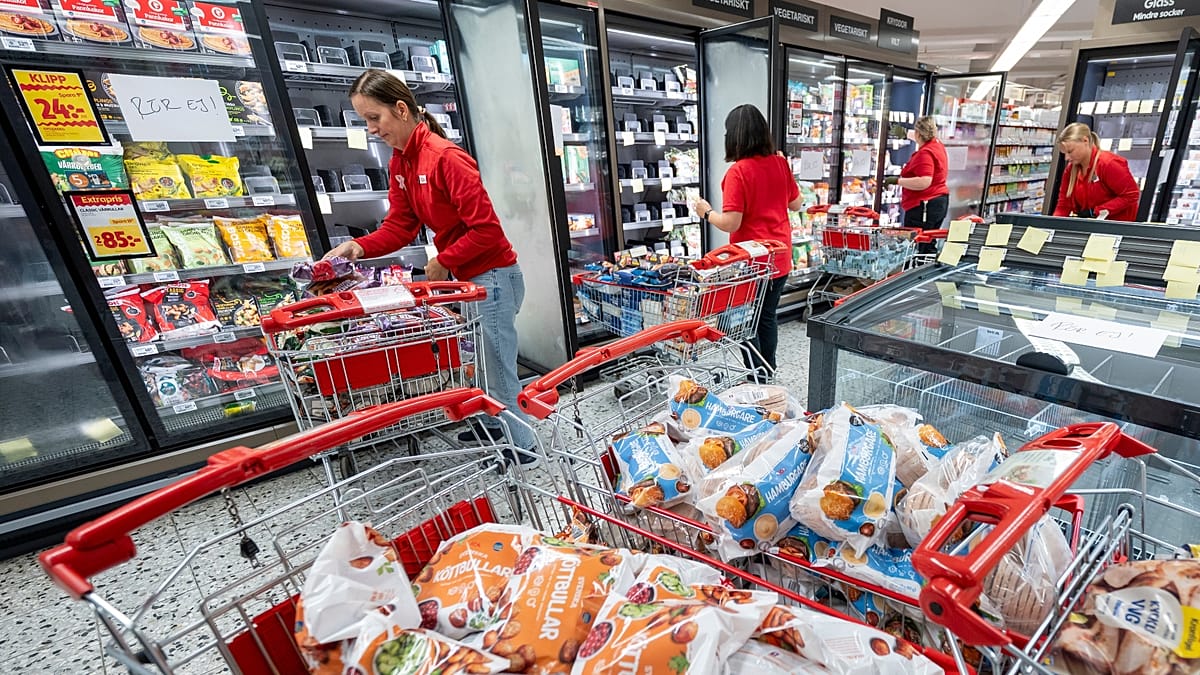
In Sweden, Coop confirmed that six of its roughly 800 stores had been hit. "We can confirm that it is a cyber incident. The problem has now been resolved and the fridges and freezers are working as normal," spokesman Carlos Cancino told AFP. He noted that the affected stores had been connected to a 4G mobile network, not the updated 5G system, which made them "more exposed" to hackers.
Swedish chain Ica also said "a limited number" of its stores experienced refrigeration problems, without confirming a cyberattack. According to spokesperson Helena Johansson, the affected stores were all connected to an external refrigeration control system provided by Danish manufacturer Danfoss — the same supplier targeted in the October 12 attack on French retailers. She referred all queries to Danfoss, which had not responded to an AFP request for comment.
Finland and Estonia: Similar patterns
In Finland, irregular temperatures were detected in a few smaller grocery stores belonging to the Kesko group. "We are currently investigating the cause, and interference via the network has not yet been ruled out," said Petri Kayhko, head of Kesko's corporate security. Roni Kokkola, an information security specialist at Finland's National Cyber Security Centre, said he would not rule out cyber interference. "We've seen this in Europe in the past few months, so it spreading beyond France to other countries has been expected," he told AFP.
In Estonia, at least one supermarket was attacked by hackers who raised the temperature in refrigeration units to 50°C, according to public broadcaster ERR. The units were older models delivered by Danfoss, similar to those targeted in France, said Jann Mutso, director of Kitman Coldtech, a manufacturer and distributor of advanced refrigeration systems.
Industry calls for stronger cybersecurity
Paolo Falcioni, Director General of the European home appliances association APPLiA, told Euronews: "In a supermarket, cyber resilience has a practical test. If remote access is disrupted, can staff still check temperatures and act to protect the cold chain? Manufacturers and retailers both have a role in making sure the answer is yes."
He added: "APPLiA supports a common European framework for the cybersecurity of connected products. Security starts at the design stage and continues throughout the product's life, with security updates and a clear process for dealing with vulnerabilities."
As Europe implements the Cyber Resilience Act, Falcioni stressed the need for "practical standards that reflect how products are used and what can happen if they are compromised."
The incidents highlight the growing vulnerability of internet-connected refrigeration systems in retail. Experts point to the increasing exploitation of such vulnerabilities, a trend that has also been seen in other sectors across Europe. The EU's warning underscores the need for robust cybersecurity measures to protect critical infrastructure, a concern echoed by international partners.