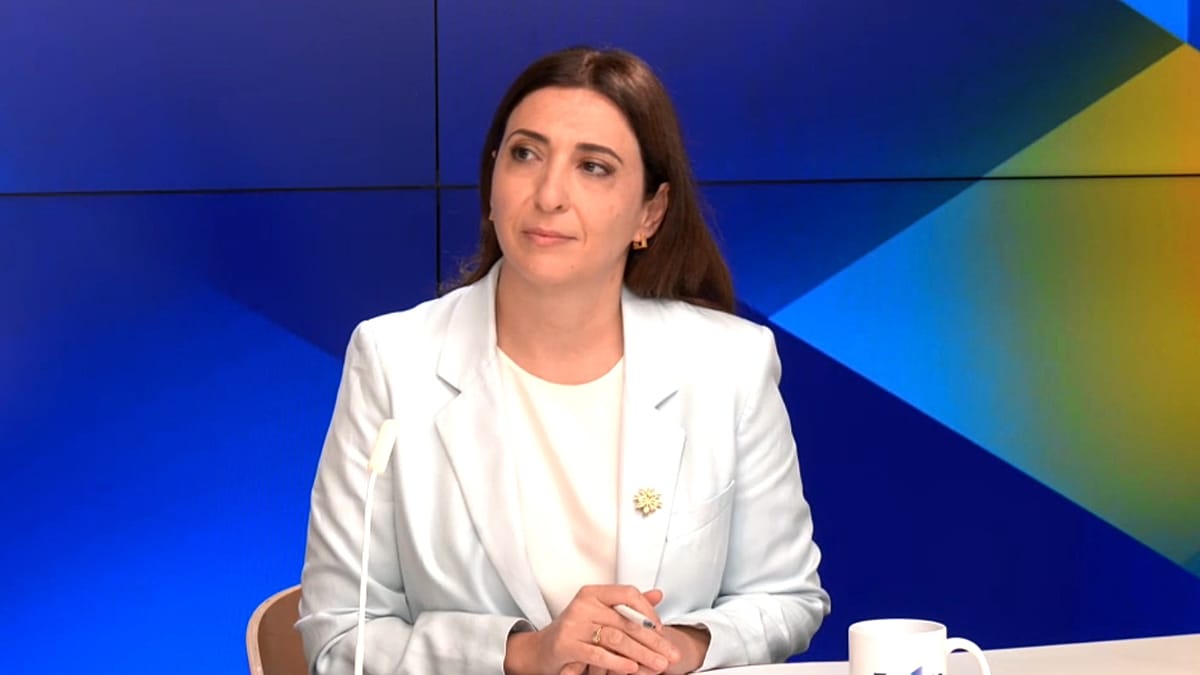
Nicosia has pushed back against criticism from the Turkish Cypriot side over the European Commission’s decision to appoint Executive Vice-President Raffaele Fitto as its special representative for Cyprus. Deputy EU Affairs Minister Marilena Raouna described Fitto as a “political personality” whose role would bolster efforts to reunify the island, the EU’s last divided member state.
Speaking on Euronews’ Europe Today programme, Raouna rejected accusations that the appointment was one-sided. “The Cyprus question is a European question, and reunifying the last divided member state of the European Union will not only be transformative for Cyprus,” she said. “It will also be transformative for the region of the Eastern Mediterranean.” She added that the initiative was not about taking sides but about supporting reunification, from which all Cypriots and EU-Turkey relations would benefit.
Turkish Cypriot Administration Condemns Appointment
The self-declared Turkish Republic of Northern Cyprus, which only Ankara recognises, issued a statement on Monday calling the appointment “entirely unacceptable” and a “provocative step” that exposed the EU’s “biased stance.” The statement alleged that the selection was made without consulting the Turkish Cypriot side and accused the Greek Cypriot-led government of maintaining a status quo that has blocked past settlement efforts.
Cyprus has been divided since 1974, when a Greek-backed coup prompted a Turkish military intervention. The EU executive announced Fitto’s appointment with the aim, according to Commission spokesperson Louise Bogey, of engaging stakeholders, building trust, and preparing for a potential resumption of UN-facilitated reunification talks. The goal is to find a “lasting solution” to the 52-year impasse within the UN framework.
The dispute comes at a delicate moment for EU-Turkey relations. Last week, European Commission President Ursula von der Leyen and European Council President António Costa joined Turkish President Recep Tayyip Erdoğan for a working dinner on the sidelines of the NATO summit in Ankara. In a post on X after the meeting, von der Leyen said the partnership between Ankara and Brussels matters “more than ever” and stressed the need to “seize the renewed momentum to advance a settlement of the Cyprus issue through the UN-led process.”
The dinner was part of a broader outreach by senior EU officials, including foreign policy chief Kaja Kallas, to strengthen ties with Turkey. The appointment of Fitto, however, risks complicating those efforts, as the Turkish Cypriot administration frames it as evidence of EU partiality.
Raouna’s defence of the appointment underscores the EU’s position that reunification is a European priority, not merely a bilateral Cypriot matter. The bloc has long supported UN-led negotiations and maintains that a settlement would enhance stability in the Eastern Mediterranean, a region of strategic importance for energy security and migration routes.
For now, the appointment adds another layer of tension to an already complex diplomatic landscape. While Brussels insists Fitto’s role is neutral, the Turkish Cypriot reaction suggests that rebuilding trust will require more than a new envoy. The coming months will test whether the EU can balance its relationship with Ankara with its commitment to a unified Cyprus.