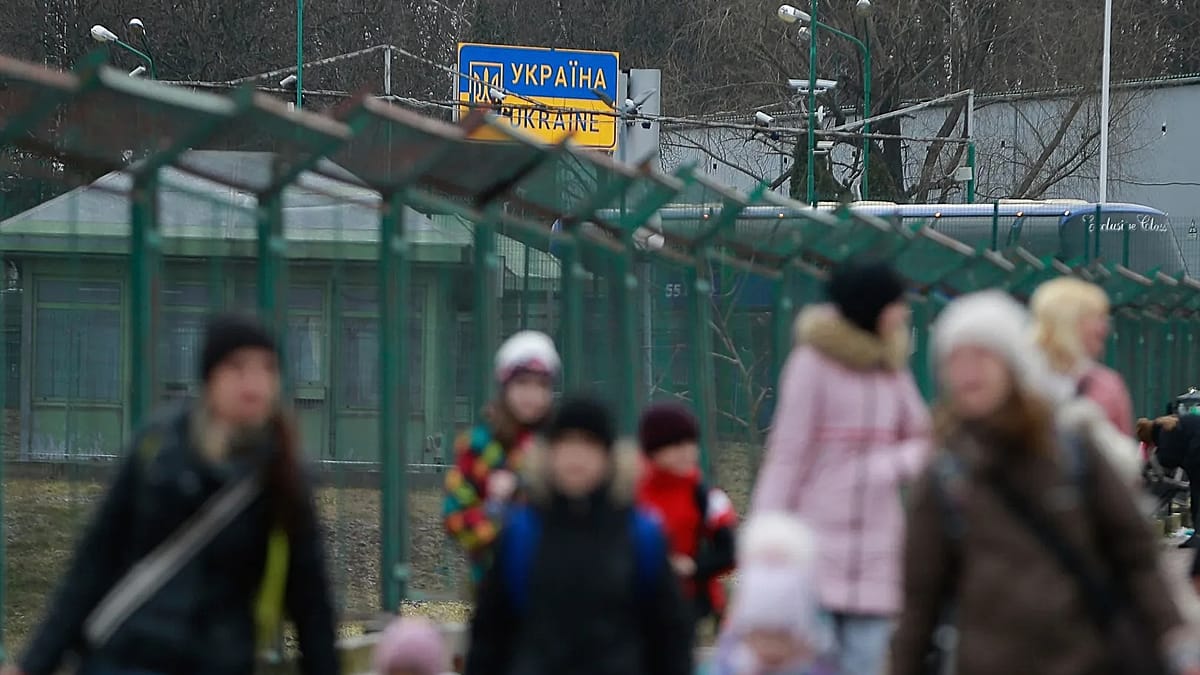
Ambassadors from the twenty-seven EU member states agreed on Wednesday to extend the bloc's temporary protection regime for Ukrainians fleeing Russia's full-scale invasion until 4 March 2028. However, from March 2027, the scheme will exclude men aged 23 to 60 who cannot prove they left Ukraine legally or are exempt from military service.
The decision responds to repeated requests from Kyiv to help strengthen its armed forces as the war enters its fourth year. Under Ukraine's martial law, most men over 23 are barred from leaving the country because they are subject to military service obligations. Exemptions exist for people with disabilities deemed unfit for service, fathers of three or more children under 18, and those providing full-time care to sick relatives.
New Proof Requirements
To obtain or renew temporary protection in the EU, Ukrainian men in the affected age group will need to present a passport bearing an official exit stamp from Ukraine or a document confirming their exemption from military service. The change is designed to close a loophole that has allowed some men of draft age to cross the border illegally and then claim protection in EU countries.
Frontex data show that nearly 1,000 people illegally crossed Ukraine's border into the EU this year, and more than 10,000 did so in 2025. Adult men account for 26.6 percent of Ukrainian refugees in Europe, though no precise figures exist on how many are of military age or arrived irregularly.
People already benefiting from temporary protection in the EU will not be affected by the new rules. The scheme, established in March 2022, has allowed Ukrainians to live, work, receive medical care, and access education in EU countries without applying for asylum. As of 31 May 2026, 4.38 million people were under this protection.
The decision comes amid broader EU efforts to support Ukraine, including the recent opening of the sixth accession cluster for Ukraine and Moldova, ending a deadlock linked to Hungarian Prime Minister Viktor Orbán. The EU has also advanced a drone pact with Kyiv and continued accession talks.
Ukraine's military mobilization remains a sensitive issue. In Lviv, a crowd recently attacked a military conscription vehicle, prompting a criminal probe. Meanwhile, the UN reported that June was the deadliest month for Ukrainian civilians since 2022, and Kyiv has accused Russia of executing hundreds of Ukrainian prisoners of war since the invasion began.
The formal adoption of the extended protection rules by EU member states is expected in the coming weeks.