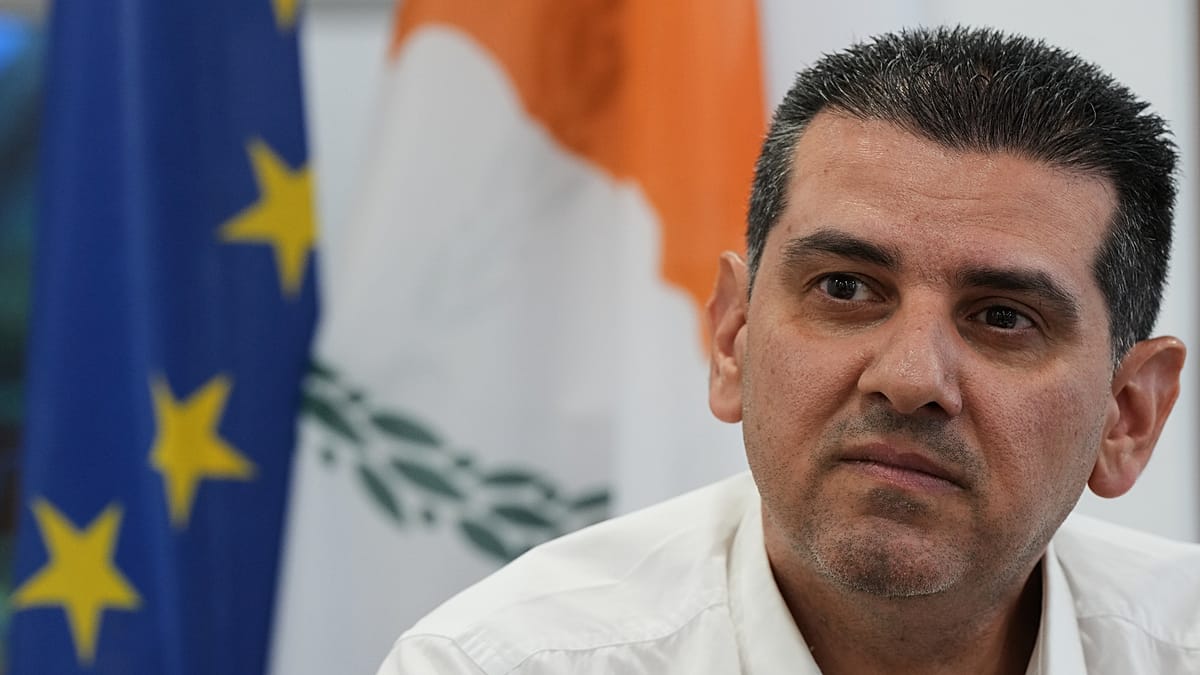
Natural gas from a deep-sea field off Cyprus could start flowing to European consumers as early as March 2028, according to the island nation's energy minister, Michalis Damianos. In an interview with the Associated Press, he said the development would help the continent diversify its energy supplies and stabilise prices, especially amid the ongoing war in Ukraine and instability in the Middle East.
Damianos confirmed that the consortium of France's TotalEnergies and Italy's Eni took the final investment decision last month to develop the Cronos field, located in Cyprus's exclusive economic zone. The project will be the first to bring Eastern Mediterranean gas to European markets, a milestone that Damianos described as "important for Europe right now."
Pipeline to Egypt, then on to Europe
Under the consortium's timetable, construction of a pipeline connecting Cronos to Egypt's giant Zohr field, about 105 kilometres away, will begin later this year and take up to 18 months. Once completed, the gas will be sent to the processing plant at Damietta on Egypt's northern coast, where it will be liquefied for shipment to Europe.
Damianos said this route was the most economically viable option, costing around $2 billion (€1.73 billion) — roughly half the estimated cost of developing other gas fields in Cypriot waters, thanks to the proximity of existing infrastructure. Although the agreement stipulates that all of the more than 3 trillion cubic feet (84.9 billion cubic metres) of gas from Cronos will go to Europe, a clause allows about one-fifth to be used to cover part of Egypt's domestic energy needs.
"It is a relatively small reserve," Damianos acknowledged. "Our revenues as a country will not be huge, so its importance does not lie in the money, but in the fact that we are starting to become producers and to bring our first natural gas on stream."
Other fields and exploration plans
Cronos is one of six gas fields discovered so far within Cyprus's exclusive economic zone. Two others, Glafcos and Pegasus, hold combined estimated reserves of 6.9 trillion cubic feet (195 billion cubic metres). ExxonMobil and QatarEnergy, which hold licences to exploit these fields, expect gas to start flowing by 2033. Damianos expressed confidence in ExxonMobil's track record, saying "Exxon is the kind of company that keeps to schedules and sometimes even delivers earlier." He added that ExxonMobil plans to expand its exploration activities and is expected to obtain an additional licence.
The first field discovered off Cyprus, Aphrodite, holds estimated reserves of 5.6 trillion cubic feet (158 billion cubic metres). Damianos said the Chevron-led consortium is expected to make a final investment decision by summer 2027. Under the agreement, a pipeline will link Aphrodite directly to facilities in Egypt to cover that country's domestic energy needs. Part of the field lies in Israeli waters, and an arbitrator is expected to decide Israel's share by next month.
Electricity interconnection and the IMEC initiative
Damianos also welcomed the entry of French investment company Meridiam as a financier of the Great Seas Interconnector, a power cable that will link Europe's electricity grid with Cyprus and, eventually, Israel. This project aims to end the energy isolation of both Cyprus and Israel and is a key component of the IMEC Initiative, a new energy and trade route to the Gulf and India that the European Union is pursuing.
However, the project has become mired in bureaucratic procedures because its actual cost exceeds the original estimate of $2.2 billion (€1.91 billion). A European Investment Bank report, expected in the coming months, will provide clarity on the price tag. Under the current agreement, Cypriot consumers would have to cover up to 63% of the construction cost, which would mean a significant increase in electricity prices. Damianos said additional private investment is being sought to offset that burden, and the possibility of further EU funding is also being examined. The EU has already committed €658 million ($760 million) to the project.
The push for energy diversification comes as Europe grapples with sanctions on Russian energy revenues and disruptions to traditional supply routes. The development of Cypriot gas is seen as a strategic step toward greater energy independence for the continent.