As the 2026 World Cup knockout stages approach, football fans are adjusting to a host of new regulations—eleven in total—ranging from time-saving measures and limited substitutions to expanded VAR usage. Among the more contentious changes is a rule allowing referees to send off players for covering their mouths during confrontations with opponents, aimed at curbing hidden insults. Paraguay's Miguel Almiron became the first recipient of such a red card during a match against Turkey, despite no evidence of offensive language.
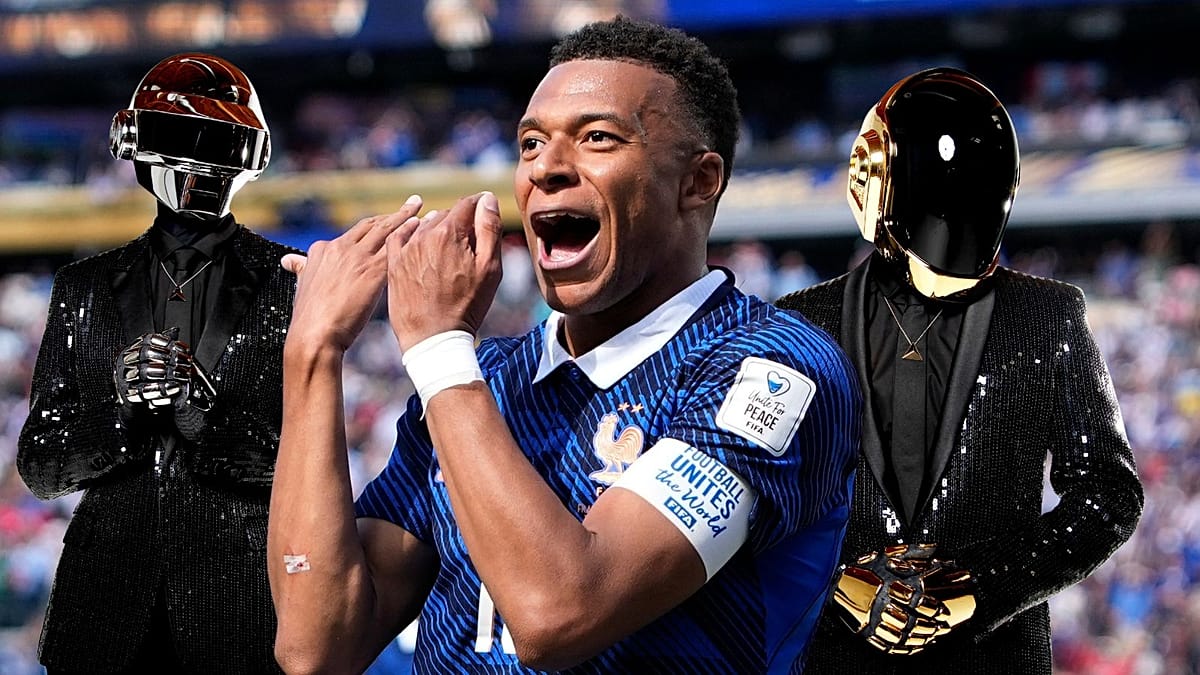
On a lighter note, a new policy permits competing nations to select personalized goal songs, adding a cultural dimension to the tournament. England has opted for Planet Funk's 'Chase the Sun', Scotland for The Proclaimers' 'I'm Gonna Be (500 Miles)', Brazil for traditional samba tracks, South Korea for BLACKPINK's 'JUMP', Australia for AC/DC's 'Thunderstruck', and Switzerland for Gala's 'Freed From Desire'. Yet one choice has captured global attention: France's selection of Daft Punk's 'One More Time'.
France's Electro Anthem
The iconic 2000 single from Daft Punk's album Discovery blared through stadium speakers three times during France's opening 3-1 victory over Senegal on 16 June. Fans of the French Touch genre are eager to hear it again tonight as Les Bleus face Iraq in Philadelphia at 11pm CET. The track, now 26 years old, still prompts full-stadium singalongs, and streaming numbers are expected to rise throughout the tournament.
France, currently ranked second in the world and among the favorites to win the final, has embraced the song as a symbol of national pride. The choice also underscores the enduring legacy of Daft Punk, whose influence extends beyond music. Earlier this year, Thomas Bangalter, one half of the duo, released a new ballet soundtrack titled Mirage – Ballet For 16 Dancers, described as a work of electronic minimalism.
The decision to use 'One More Time' reflects a broader trend of nations leveraging popular music to energize fans and players. It also highlights France's cultural soft power, as the track has become a global anthem. For context, France's football federation has previously faced scrutiny over other cultural matters, such as a controversy over a refugee play that ignited free speech debates.
As the tournament progresses, the song's role in France's campaign may become a defining feature. Whether it inspires further victories remains to be seen, but for now, it has already united music and football fans across Europe and beyond.