A federal appeals court in Washington has ordered the Trump administration to stop all work on the planned $400 million White House ballroom, ruling that the project cannot proceed without explicit congressional approval. The decision, handed down by the US Court of Appeals for the DC Circuit, reverses an earlier ruling that had allowed construction to continue while the case was under review.
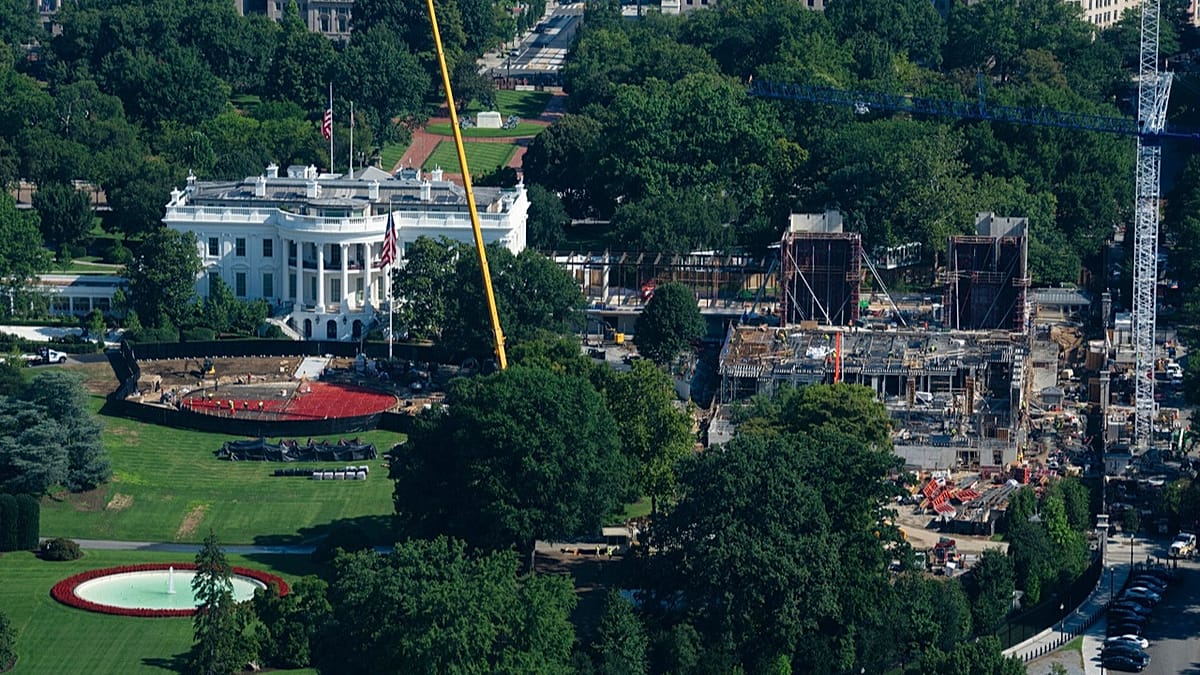
The 2-1 decision sided with historic preservation groups that had sued to block the massive structure, which has already begun to rise above ground on the east side of the White House, according to recent aerial photographs. The ballroom, covering 8,400 square metres, is being built on the site of the historic East Wing, which was demolished on President Donald Trump's orders last autumn.
Court: Congress must decide
In its ruling, the court stated: "Whether or not a massive ballroom should be constructed is for Congress to decide and is not a matter for Executive self-help." The judges emphasised that their decision was not a judgment on the ballroom's merits, but rather a constitutional requirement. "This holding has nothing at all to do with whether the proposed ballroom is desirable, or not, as a matter of policy," the court wrote. "This ruling does not even necessarily mean that the Defendants may not ultimately construct the ballroom. What it does mean is that the Defendants may not do so during the district court's expeditious litigation without securing Congress's authorisation, as the Constitution and laws require."
The court has stayed its ruling for two weeks to allow the administration to appeal to the US Supreme Court. President Trump reacted angrily, calling the decision "horrendous, politically motivated, and unlawful" and vowing to appeal.
The two judges in the majority were appointed by Democratic presidents, while the dissenting judge was nominated by Trump himself. The case highlights the ongoing tension between executive power and legislative oversight in the United States, a dynamic that European observers often watch with keen interest given its implications for democratic governance.
Trump has long complained that the White House lacks sufficient space for grand state dinners and other ceremonial events. He unilaterally ordered the ballroom's construction, insisting it would be privately financed. However, media reports in June revealed that significant taxpayer funds were being diverted to the project. Democrats have alleged that $350 million from a tax cuts law appears to have been redirected to the ballroom, raising concerns about fiscal accountability.
The ruling is a significant setback for the administration, which had hoped to complete the ballroom before the next election cycle. Legal experts note that the decision could set a precedent for future presidential projects, requiring congressional approval for major alterations to historic federal properties. The case also echoes broader debates about executive authority, similar to those seen in European democracies where constitutional courts often check government actions.
For now, construction has been halted, and the site remains a visible reminder of the clash between presidential ambition and constitutional constraints. The Supreme Court will now decide whether to take up the case, a move that could have far-reaching consequences for the balance of power in Washington.