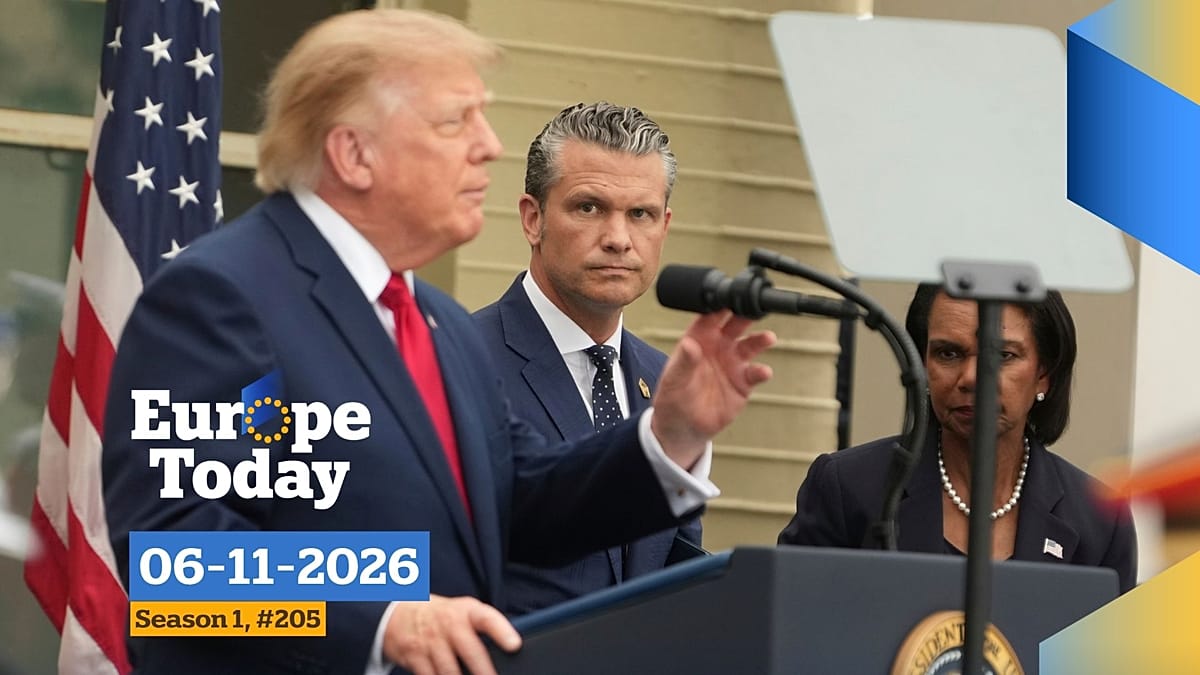
With the US midterm elections behind him, Donald Trump is turning his attention to Iran, and American officials have reportedly cautioned Gulf allies to brace for a new round of strikes. The warning has sent ripples through the region, where leaders are weighing how to respond to a president who may feel emboldened—or cornered—after a mixed electoral result.
From Doha, our correspondent Aadel Haleem reports that Gulf capitals are watching closely. The midterms have not resolved the uncertainty surrounding Trump's foreign policy, and there is a palpable anxiety that a military confrontation with Iran could destabilise the entire Gulf. Qatar, which hosts a major US military base, is particularly exposed. The Doha Forum's discussions on diversifying investment now take on added urgency as regional powers seek to hedge against American unpredictability.
Ukraine talks move to Abu Dhabi
Meanwhile, diplomatic efforts to support Ukraine are shifting to the Gulf. Next week's talks in Abu Dhabi will bring together key allies, with a focus on air defence. Shona Murray spoke to Finnish Defence Minister Antti Häkkänen, who stressed that Ukraine's need for interceptors is acute. "Every day of delay costs lives," Häkkänen said, urging European nations to accelerate deliveries of Patriot and other systems. Finland, which shares a long border with Russia, has been a vocal advocate for stronger support.
The Abu Dhabi meeting comes as Italian Prime Minister Giorgia Meloni has called for the EU to speak with one voice on any peace negotiations. European leaders are increasingly concerned that a fragmented approach could weaken Kyiv's position. The choice of Abu Dhabi as a venue is itself significant, reflecting the Gulf's growing role as a mediator and a hub for international diplomacy.
Bomb threats disrupt European flights
In a separate development, a wave of bomb threats has forced multiple European flights to divert or delay, causing chaos for travellers. Aviation expert Eoghan Corry explains that when a threat is received, airlines and authorities follow strict protocols: the aircraft is isolated, passengers are evacuated, and a thorough search is conducted. "The cost of a false alarm is high, but the cost of ignoring a real threat is unthinkable," Corry said.
The threats have hit several airlines, including flights from Paris, Berlin, and Madrid. While most have been hoaxes, the pattern has raised suspicions that a state actor may be behind them, possibly as a form of hybrid warfare. European security services are investigating, but no definitive conclusion has been reached. The disruption comes at a time when Europe is already assessing the implications of a weakened Trump on transatlantic security.
Macron's book and French politics
In France, President Emmanuel Macron has published a new book, offering a personal reflection on his time in office and his vision for the Cinquième République. The book, titled Réflexions, has sparked debate, with critics accusing Macron of self-aggrandisement and supporters praising his intellectual ambition. It arrives as France faces domestic unrest, including large protests in Lyon over wages, which have put pressure on the Élysée to respond to economic grievances.
Macron's book is unlikely to quell the discontent, but it does offer a window into his thinking on Europe's role in the world. He argues that Europe must become a more assertive power, capable of defending its interests independently. That message resonates in Brussels, where leaders are grappling with how to respond to a US administration that is increasingly unpredictable.
As the week unfolds, the interplay between these threads—Iran, Ukraine, and European security—will dominate headlines. For European policymakers, the challenge is to maintain unity in the face of external shocks, from Washington to Moscow to Tehran. The Abu Dhabi talks may provide a template for how Europe can engage with the Gulf and beyond, but the road ahead remains fraught.