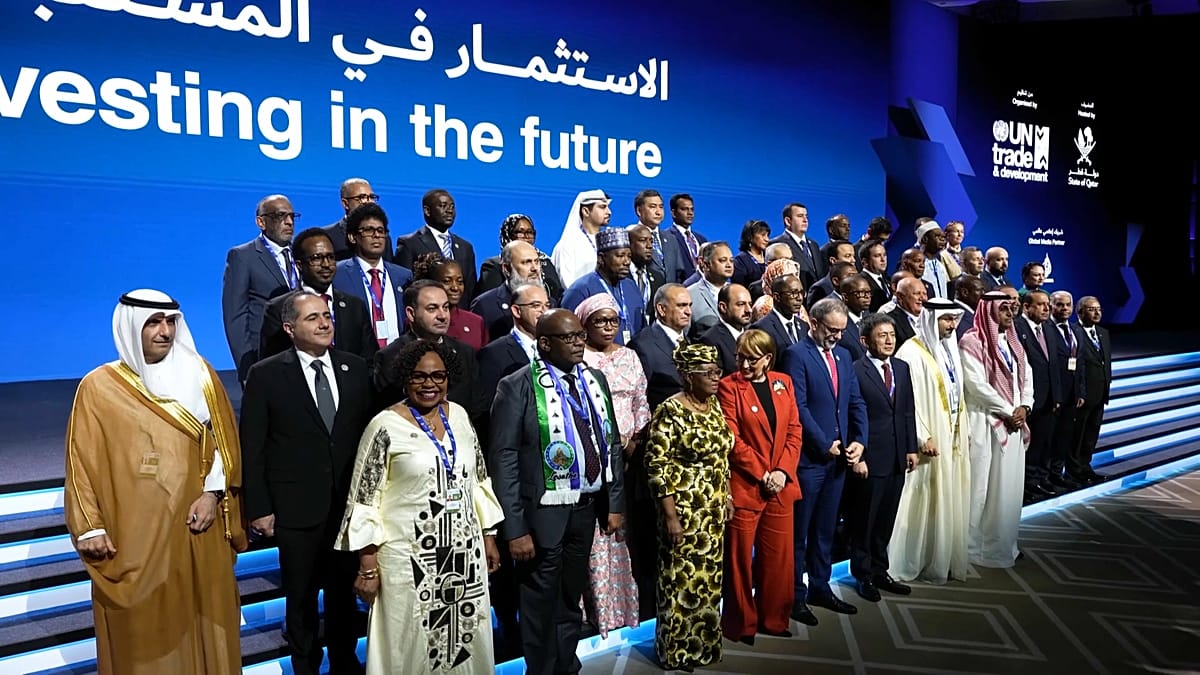
Foreign direct investment has long flowed to a relatively small group of countries, leaving many others on the sidelines. That imbalance was the central theme at the World Investment Forum in Doha, where government officials, investors and business leaders gathered under the auspices of UN Trade and Development to ask why capital is so unevenly distributed and what can be done about it.
The forum’s discussions went beyond abstract theory. Delegates focused on the practical conditions that make a country attractive to investors: functioning ports, reliable energy, skilled labour and predictable legal frameworks. Without these basics, even the most generous tax incentives are unlikely to lure sustained investment, several speakers argued.
Infrastructure and rules matter more than ever
Infrastructure was a recurring theme, with particular attention to the bottlenecks that have emerged in global supply chains since the pandemic. Rising transport costs and delivery delays have made investors more cautious about committing to projects in countries where logistics are weak. For smaller economies, the answer may lie in regional cooperation. By pooling resources and harmonising regulations with neighbours, they can offer investors access to a larger market than any single country could provide on its own.
Clear and stable rules were also highlighted as a prerequisite. Investors need to know that contracts will be honoured and that regulations will not change overnight. The forum heard that countries with transparent legal systems and independent courts tend to attract more long-term investment, even if their tax rates are higher than those of less predictable rivals.
De-risking for riskier markets
A significant part of the agenda was devoted to how public institutions can encourage investment in countries perceived as risky. One approach is the use of guarantees that cover part of the potential losses if a project fails. Another is co-financing, where development banks or other public bodies invest alongside private partners to share the risk. These mechanisms, speakers said, can unlock capital for projects that would otherwise be deemed too uncertain.
The debate echoed broader European discussions about investment and enlargement. As European Council President António Costa has argued, EU enlargement is an investment, not a burden – a view that resonates in the Western Balkans and beyond, where closer ties with the Union are often seen as a way to attract foreign capital.
Beyond attracting money: jobs and local benefits
Attracting investment is only the first step. The forum also examined how to ensure that foreign capital translates into decent jobs and supports local businesses. Several participants stressed the importance of measuring the real impact of investment on people’s lives, rather than simply counting the dollars or euros that cross borders.
This focus on outcomes is particularly relevant for European countries that have seen investment flows shift in recent years. The European Central Bank’s recent decision to hold rates at 2.5% while inflation remains near double the target has created a complex environment for investors across the continent. Meanwhile, energy price volatility continues to worry households and businesses alike, prompting EU ministers to seek ways to shield households from winter price spikes.
The Doha forum made clear that the challenge of spreading investment is not just a problem for developing countries. Even within Europe, there are significant disparities between regions that attract capital and those that do not. The lessons from Doha – about infrastructure, rules, risk-sharing and local benefits – apply as much to the poorer parts of the European Union as to emerging markets in Africa or Asia.
As the forum concluded, the consensus was that investment is not an end in itself. It is a means to create jobs, improve living standards and build resilient economies. The question is how to make that happen more widely, and the answers discussed in Doha will likely shape policy debates in capitals from Lisbon to Warsaw for years to come.