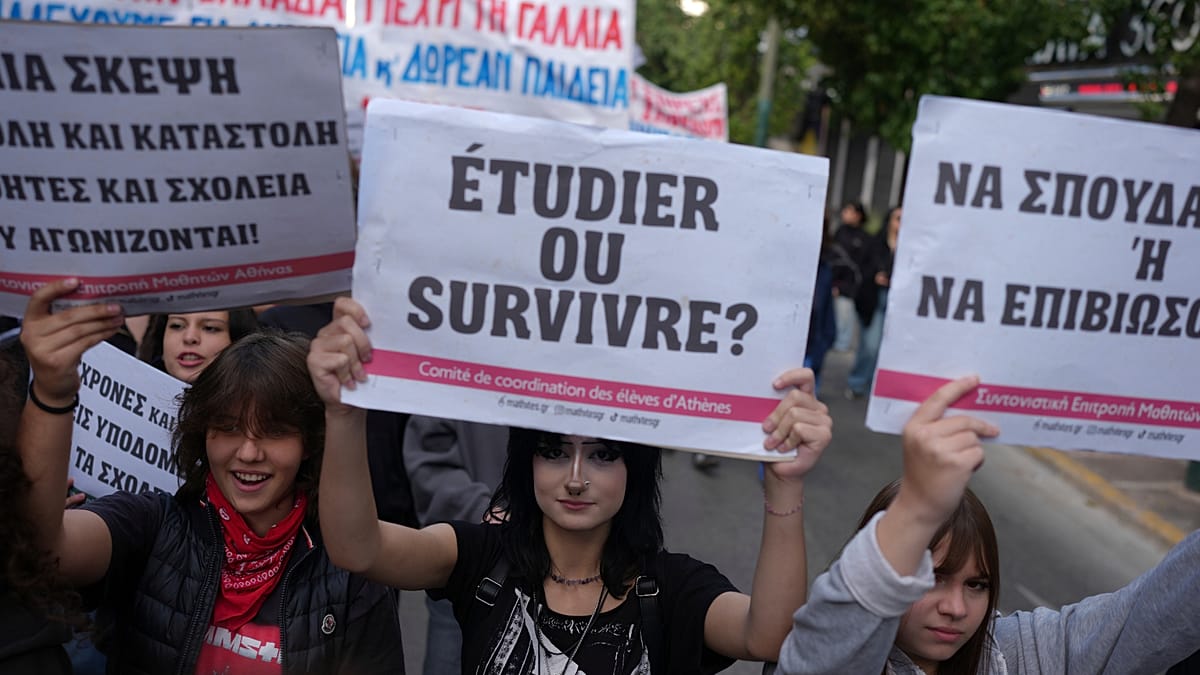
Thousands of pupils, students, and teachers took to the streets of central Athens on Thursday, demanding a significant increase in education funding. The demonstration, part of a nationwide push for better-resourced schools, reflects growing frustration with chronic underinvestment in Greece's public education system.
Protesters gathered outside the Ministry of Education in the morning before marching towards the Greek Parliament in Syntagma Square. Banners read "Fund our future" and "Education is a right, not a commodity," while chants echoed through the city centre. The rally was organized by student unions and teacher associations, with support from left-wing political groups.
Southern Europe's education discontent
The Athens march is the latest in a series of education-related protests sweeping southern Europe. In France, students have staged school blockades and joined forces with workers in cost-of-living demonstrations, while in Denmark, students have rallied against cuts to state education grants. The movement highlights a common grievance: governments across the continent are not investing enough in public education, leaving schools understaffed and outdated.
Greek teachers argue that decades of austerity measures, imposed during the debt crisis, have left schools with crumbling infrastructure, insufficient digital equipment, and a shortage of permanent staff. Many schools rely on temporary substitutes, and class sizes remain above recommended levels. "We are teaching in buildings that should have been renovated years ago," said Maria Papadopoulou, a secondary school teacher from the Athens suburb of Kaisariani. "Our students deserve better."
Student leaders echoed these concerns. "We are here because our education is being neglected," said Dimitris Koutsoubas, a 17-year-old high school student. "We want the government to listen and to act." The protest was largely peaceful, though a small group of demonstrators threw stones at police, who responded with tear gas. Most participants dispersed by late afternoon.
The Greek government has defended its education budget, pointing to recent increases in hiring and infrastructure projects. However, critics note that Greece still spends below the EU average on education as a percentage of GDP. According to Eurostat, Greece allocated around 4.5% of its GDP to education in 2023, compared with the EU average of 5.1%. The gap is even wider when adjusted for purchasing power.
Thursday's march was part of a broader campaign that has included strikes and school occupations in recent weeks. Organizers have vowed to continue protests unless the government commits to a concrete funding plan. They are calling for a substantial increase in the education budget, the hiring of more permanent teachers, and improvements to school facilities, including better access to technology and support for students with disabilities.
The protest wave has also drawn attention to the wider issue of youth dissatisfaction in southern Europe, where high unemployment and rising living costs have fueled social unrest. In Greece, youth unemployment stands at around 22%, more than double the EU average. Many young people see education as a pathway to a better future, but they feel the system is failing them.
Similar movements have emerged in other European countries. In Berlin, a youth rally combined education demands with broader political slogans, while in the Czech Republic, media workers have struck over state funding for public broadcasting. These protests reflect a growing unease across the continent about the state of public services and the priorities of governments.
As the sun set over Athens, the crowd slowly dispersed, but the message was clear: Greek students and teachers are not willing to accept the status quo. Whether the government will respond with meaningful investment remains to be seen, but the pressure is mounting.