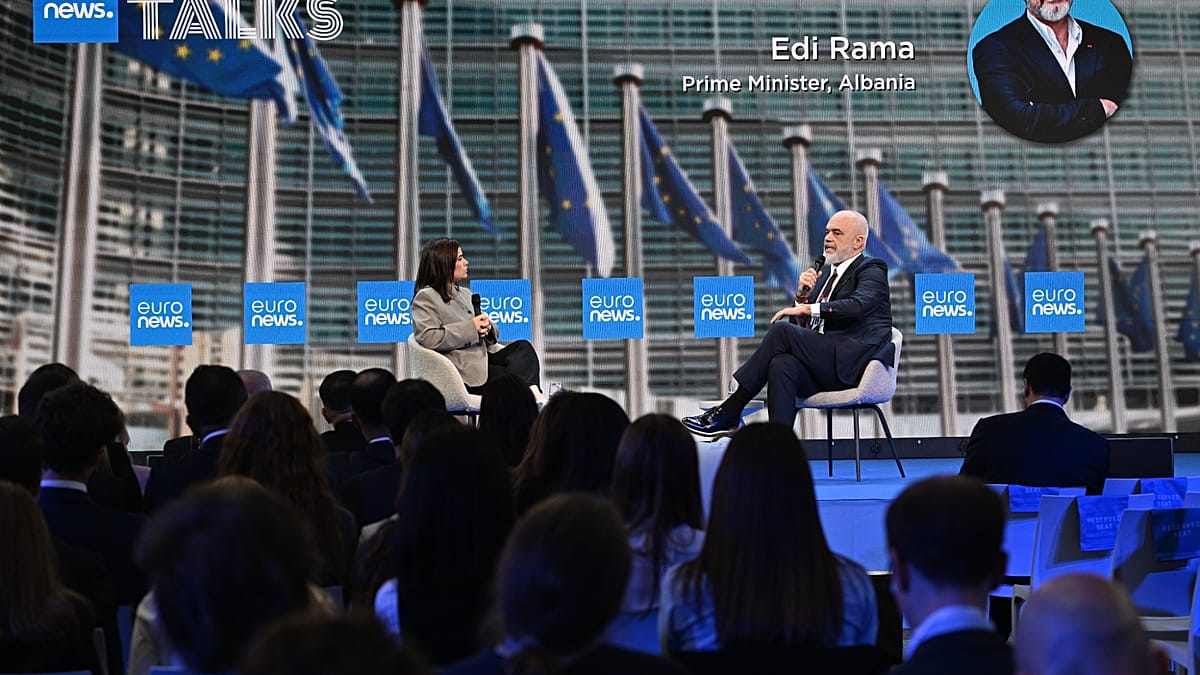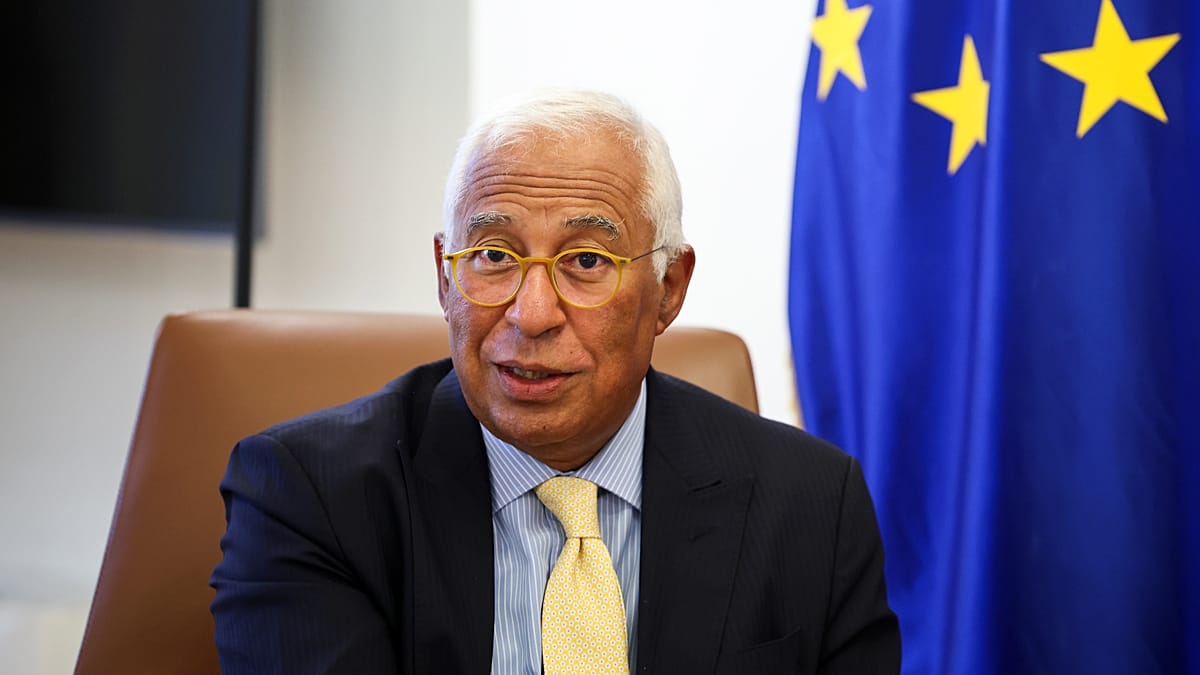
European Council President António Costa used his address at the Euronews Enlargement Summit to make a forceful case that bringing new members into the European Union is a strategic investment, not a burden. Speaking in Brussels, he pointed to the bloc's own history as proof that expansion pays off for everyone involved.
“The European Union was built on reconciliation and peace, and enlargement has been essential to advancing those goals,” Costa said. He described enlargement as “the best geopolitical investment Europe has made for peace, security, democracy, stability and prosperity.”
Costa, who has made enlargement a priority since taking office, has visited every candidate country multiple times. He stressed that the process is about more than aligning laws and institutions—it is about building trust and resolving disputes through diplomacy. “Overcoming the legacy of the past is a crucial prerequisite for integration,” he added.
Numbers that speak for themselves
The Portuguese leader cited the 2004 enlargement as a clear example of the benefits. Since then, more than 100 million people have joined the Union, and the shared economy has grown by more than €2 trillion. Countries from Central and Eastern Europe that joined two decades ago have more than doubled the size of their economies.
“The new member states have helped create 26 million jobs, more than 6 million of them in their own countries,” Costa said. He argued that these figures demonstrate that enlargement is not a burden to be managed but an investment in collective prosperity, expanding markets and strengthening Europe's ability to respond to global shocks.
Costa also emphasised that benefits should start before formal accession. Through gradual integration, candidate countries are already seeing tangible gains—participation in the Single Euro Payments Area, faster border crossings, better transport links, and lower roaming costs. The Western Balkans Growth Plan is supporting investment and economic convergence with the Single Market.
Montenegro leads the pack
In October, the EU held accession conferences with Montenegro, Albania, Ukraine and Moldova. Montenegro and Albania provisionally closed additional negotiating chapters, while Ukraine and Moldova opened negotiations on new clusters. This week, Montenegro is set to provisionally close another chapter, bringing it closer to completing all negotiations.
“I believe that Montenegro can be the 28th by 28,” Costa said, expressing confidence in the country's ability to finish the job. He noted that the EU stands ready to support Montenegro as it completes the remaining work.
Ukraine and Moldova have also benefited from closer cooperation, including visa liberalisation, energy support and infrastructure investment. Costa praised Ukraine's progress despite nearly five years of war, and said Moldova's reform momentum means it could advance rapidly once all accession clusters are opened.
These reforms, Costa stressed, are not just about meeting EU requirements. “They are fundamentally about building societies in which citizens can trust their institutions, corruption is confronted, the media can operate freely, and every person is treated with dignity and fairness.”
On Serbia, Costa noted that the recent election reflects citizens' desire for a stronger, fairer and more accountable society. The EU is ready to support the new government, with a focus on rule of law, media freedom and anti-corruption. He also expressed hope that North Macedonia, Bosnia and Herzegovina, and Kosovo can accelerate their reforms.
The next EU-Western Balkans summit will take place in three weeks, and Costa said he expects progress on all fronts. As the bloc prepares for a possible wave of new members, the debate over stricter membership rules continues, but Costa's message was clear: enlargement is not a concession—it is a shared opportunity.