For all the attention paid to the Zangezur Corridor as a geopolitical flashpoint, its real significance may lie in economics. The proposed route, which would connect mainland Azerbaijan with the Nakhchivan Autonomous Republic, has the potential to transform trade flows across the South Caucasus and beyond. As Dr Matin Mammadli of the Centre for the Analysis of International Relations in Baku argues, this is not merely a national transport project but a test of whether the region can turn a post-war agenda into lasting mutual benefit.
From political declaration to concrete investment
The legal basis for the corridor dates back to the 10 November 2020 Trilateral Statement, whose ninth paragraph called for restoring regional economic and transport links, including between Azerbaijan's western districts and Nakhchivan. Since then, Baku has moved beyond rhetoric. The Horadiz-Aghband railway and road projects, along with upgrades to onward connections, show that Azerbaijan has treated connectivity as a strategic priority rather than a diplomatic talking point.
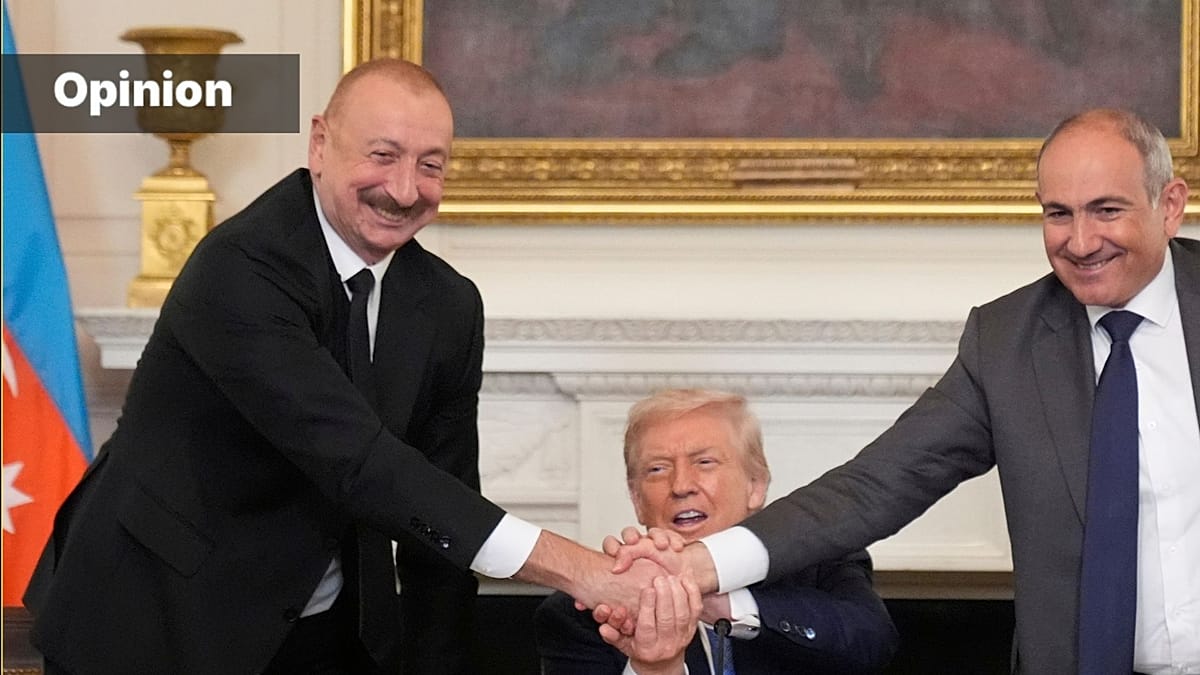
That groundwork gained fresh momentum in August 2025, when President Ilham Aliyev and Prime Minister Nikol Pashinyan met in Washington. The resulting Joint Declaration endorsed regional connectivity and the Trump Route for International Peace and Prosperity (TRIPP), while the initialled peace agreement reinforced the economic logic of normalisation. For Azerbaijan, the immediate prize is a direct link to Nakhchivan and, through Türkiye, to wider markets. But the broader opportunity is strategic: alternative freight routes, flexible logistics, and new service hubs could cement Azerbaijan's role as a Caspian hub, complementing existing assets like the Baku International Sea Trade Port and the Baku–Tbilisi-Kars railway.
The Middle Corridor and Europe's stake
The Zangezur Corridor sits within the larger Middle Corridor, which connects China, Central Asia, the Caspian, Azerbaijan, Türkiye, and Europe. Its appeal lies in diversification: businesses and governments want more than one viable route between Asian and European markets. World Bank estimates suggest that coordinated investment and reform could triple Middle Corridor freight volumes by 2030 while halving transit times. Those figures apply to the whole corridor, not just Zangezur, but the proposed route could add capacity and options—provided operational coordination is achieved.
Europe has a clear interest. The EU has been seeking more resilient supply chains and stronger ties with Central Asia; in 2024, it and partners announced commitments to mobilise €10 billion for Trans-Caspian connectivity. In January 2026, the EU and Azerbaijan put cooperation on a feasibility study for the Nakhchivan railway on their agenda. These steps do not guarantee TRIPP's success, but they signal that the project aligns with broader European priorities. Over time, energy transmission, digital connectivity, and investment could prove as important as freight traffic.
Beyond Azerbaijan: who else benefits?
The gains need not be limited to Baku. Armenia could become more integrated into international transport networks, Türkiye could expand overland links with Azerbaijan and Central Asia, and Central Asian exporters would gain additional route choices. China, too, would have another potential connection to European markets. This convergence is the project's greatest geoeconomic promise: it could make cooperation commercially sensible even where political trust remains fragile.
That political dimension is inseparable from the economics. Reopening long-closed links between Azerbaijan and Armenia could create everyday incentives for stability through trade, transit, and services. Such ties cannot resolve all differences, but they can make a peaceful relationship more useful and more durable. For Azerbaijan, it is particularly significant that an agenda it pursued after the war is now taking shape within a broader international partnership.
The real test: implementation
Implementation will require regular cooperation on customs, transit rules, technical standards, and infrastructure management. These practical obligations could mark a turning point for the South Caucasus. Rather than remaining only a theatre of geopolitical rivalry, the region could increasingly function as a space where neighbours have a shared interest in keeping connections open. More routes can also expand strategic autonomy by reducing dependence on any single transport option or external market.
Closer links among Azerbaijan, Türkiye, and Central Asian states could advance economic integration across the Turkic world, while growing European and Chinese interest—and active US involvement—underline the South Caucasus's international significance. Yet opportunity is not achievement. Commercial viability, transparent governance, effective border procedures, and consistent political commitment will determine whether TRIPP fulfils its potential.
Ultimately, the Zangezur Corridor is a test of whether the region can convert a post-war connectivity agenda into lasting mutual benefit. If implemented effectively, it can connect Azerbaijan with Nakhchivan, strengthen the Middle Corridor, widen exchanges between Europe and Asia, and lend peace a firmer economic basis. Its significance would then extend well beyond regional transport: from a geopolitical question, Zangezur could become a genuinely transregional geoeconomic opportunity.