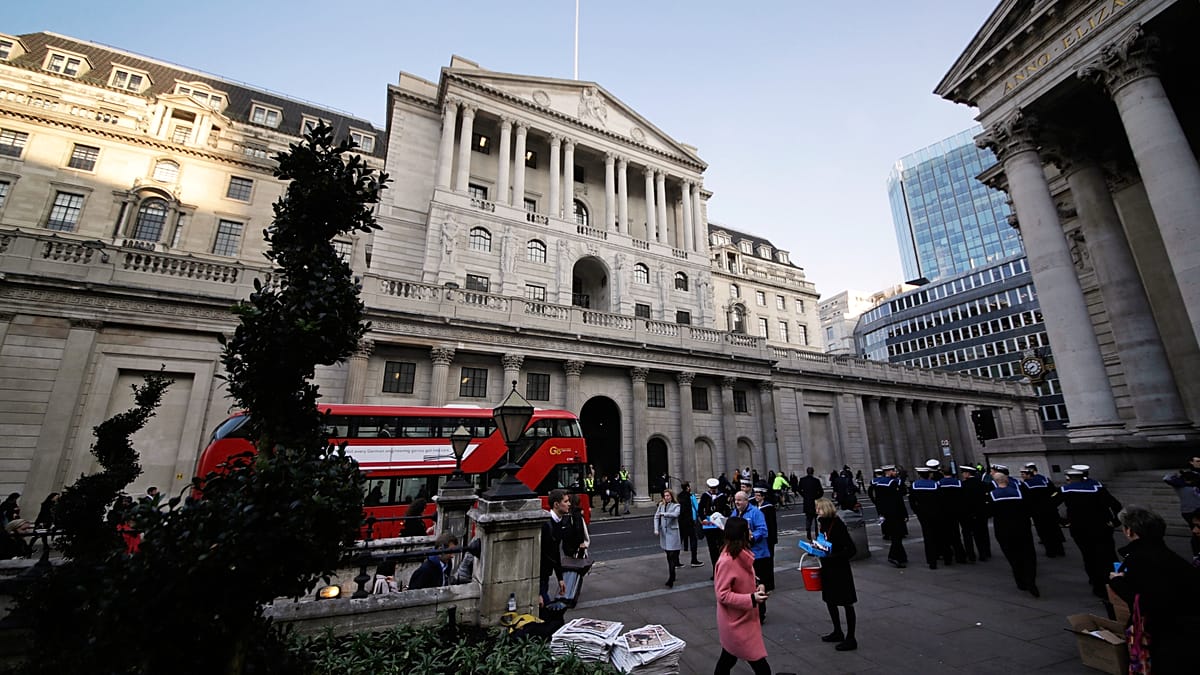
The Bank of England delivered its first interest rate increase in more than three years on Thursday, lifting its benchmark rate by a quarter of a percentage point to 4%. The decision, widely anticipated by markets, reflects growing concern over inflation driven by the conflict in the Middle East and its effect on global energy prices.
The rate rise comes after inflation in the UK reached 3.5% in September, its highest level in 11 months and well above the central bank's 2% target. The surge has been largely attributed to the sharp increase in fuel costs following the outbreak of the Iran war and the resulting bottlenecks in the Strait of Hormuz, a critical chokepoint for oil and gas shipments.
Split among policymakers
The Monetary Policy Committee voted 8-1 in favor of the quarter-point increase, with one member advocating for a larger half-point move. The decision marks a reversal from the previous stance, as the bank had kept rates unchanged since August 2023.
In its accompanying statement, the bank acknowledged that higher energy costs have not yet fed through broadly to other prices and wages, but warned that "the degree of inflationary pressure in the pipeline is now sufficient to warrant an increase in Bank Rate." It also noted that the economy had proven more resilient than expected, though growth is likely to slow in the coming quarters.
Ellie Henderson, an economist at Investec, said the move reflected dwindling patience among policymakers. "The longer energy prices remain elevated, the greater the risk that a temporary price shock becomes more permanent," she said.
Inflation forecast raised
Alongside the rate decision, the bank published its quarterly forecasts, projecting that inflation could reach around 5% by mid-2027, up from 3.5% in September, as higher energy costs filter through to household and business bills. The bank also upgraded its growth outlook, predicting the UK economy would expand by 1.6% this year and 1.3% in 2027, compared with its July forecast of 1.1% for both years.
Governor Andrew Bailey signaled that further rate rises were possible but not predetermined. "Today's increase shouldn't be seen as the first in an inevitable long sequence of hikes. But, unless the conflict in the Middle East is resolved, neither does it seem likely to be the last increase," he said. "The MPC will judge the outlook at each meeting, responding as necessary to bring inflation sustainably back to our 2% target."
Market interest rates have remained elevated since the conflict began, with benchmark two-year mortgage rates rising by nearly half a percentage point since early September. According to the bank's latest Market Participants Survey, respondents' median expectation is for Bank Rate to reach 4% in November and 4.25% in February.
The bank also expects the upcoming Budget to reduce inflation by a quarter of a percentage point by the second quarter of 2027, although fiscal policy is expected to weigh on growth over the medium term.
The Bank of England's decision follows similar moves by the US Federal Reserve and the European Central Bank, both of which have raised rates in response to inflation fueled by the Iran war. The conflict has also pushed up kerosene prices for European airlines, adding to cost pressures across the continent.
For households and businesses in the UK, the rate rise will translate into higher borrowing costs, particularly for those with variable-rate mortgages. The bank's move is likely to be watched closely by other European central banks as they grapple with similar energy-driven inflation pressures.