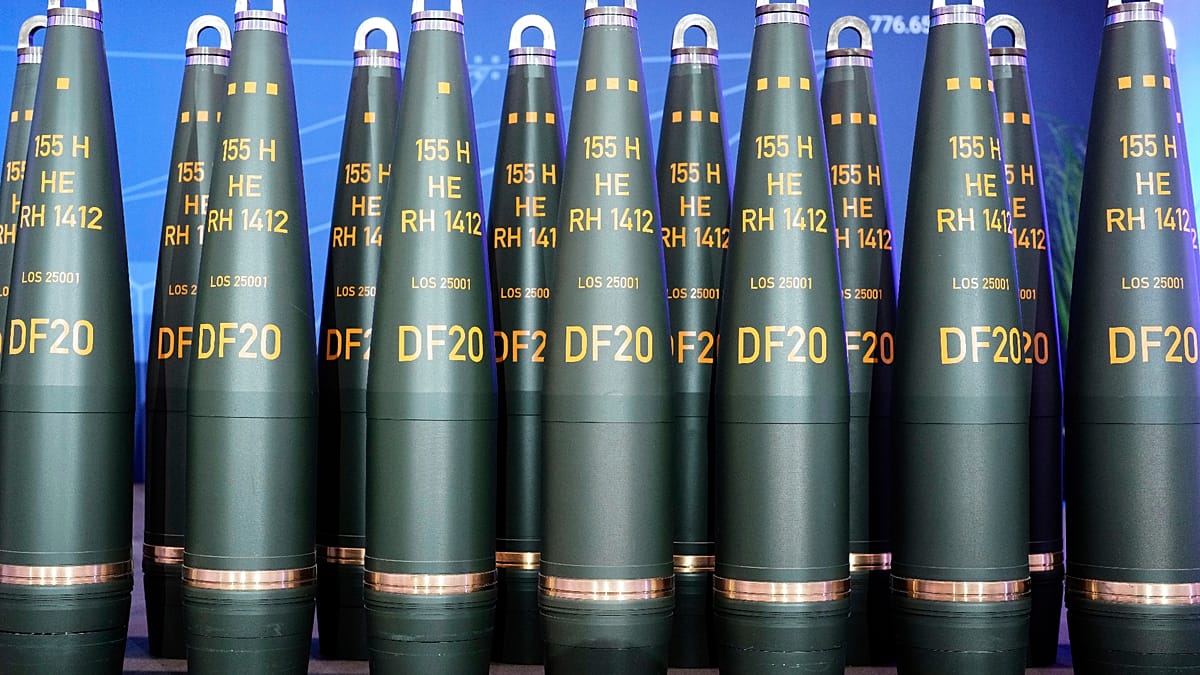
Shares in Düsseldorf-based defence group Rheinmetall dropped more than 17% in early trading on Thursday after the company cut its annual sales and profit forecasts, citing delays in military contracts and ammunition approvals. The warning rippled through the European defence sector, with peers such as BAE Systems, Leonardo, Thales, Babcock and Saab all trading lower.
In a statement released on Wednesday evening, Rheinmetall said it now expects revenue of around €13.2bn for 2026, down from its previous guidance of €13.7bn–€14.2bn. The operating margin is now projected at roughly 18.5%, compared with the earlier forecast of 19%.
Arminius project delay hits cash flow
The company said a major German military order under the Arminius project — Germany's planned large-scale purchase of Boxer wheeled armoured vehicles, built by Rheinmetall and KNDS — is now unlikely to be placed this year. That pushes associated advance payments and revenue into 2027, weighing on near-term cash generation.
Rheinmetall also expects less revenue than planned from newer activities in its weapons and ammunition business, particularly its cooperation with Dutch company Destinus. In addition, delays in acceptance checks for batches of artillery ammunition will shift some revenue into next year.
Despite the setbacks, the company still expects positive operating free cash flow for the full year.
Second forecast cut in 2026
This is the second time Rheinmetall has trimmed its sales outlook this year. In August, the group cut its forecast after Germany cancelled the F126 frigate programme, a project in which Rheinmetall had expected a major role. That cancellation reduced expected annual revenue by €300m, though the operating margin forecast was left unchanged at the time.
The latest warning underscores the fragility of Europe's defence supply chain, even as governments across the continent pledge to boost military spending. The delays also highlight the gap between political ambition and the practical realities of procurement and production.
Strong quarterly results mask challenges
For the third quarter, Rheinmetall said it met expectations, with sales up 32% to €3.149bn from €2.308bn a year earlier. Operating profit rose 62% to €553m, lifting the operating margin to 17.5% from 14.8%. Order intake stood at €2.893bn, which the company described as good, albeit slightly lower than the previous year.
For the first nine months, sales climbed 38% to €8.4bn, and operating profit jumped 69% to a record €1.339bn. Yet the shares have fallen more than 48% since the start of the year, reversing some of the sharp gains of the previous three years.
The broader European defence sector also faced selling pressure on Thursday. Around 10:00 CET, BAE Systems was down more than 4%, Leonardo lost 2.8%, Thales traded 0.9% lower, while Babcock and Saab fell 1.3% and 2.7%, respectively. The declines followed losses on Wednesday amid concerns about tighter scrutiny of US military spending after the Democrats' election victory. Robert Stallard, an analyst at Vertical Research Partners, predicted greater congressional oversight of defence policy and spending in a note to clients, as reported by MarketWatch.
The turbulence in defence stocks comes as European governments grapple with how to finance increased military outlays. Some analysts have suggested that a windfall tax on energy companies could help fund such spending, a proposal that has gained traction in Brussels. Meanwhile, Germany and the UK have announced plans to collaborate on military AI by 2027, signalling a push for innovation in the sector.
For Rheinmetall, the immediate challenge is to restore investor confidence. The company's order book remains robust, but the repeated delays raise questions about its ability to convert orders into revenue on schedule. As Europe's defence ambitions collide with bureaucratic and industrial bottlenecks, the coming months will test whether the continent can deliver on its promises.