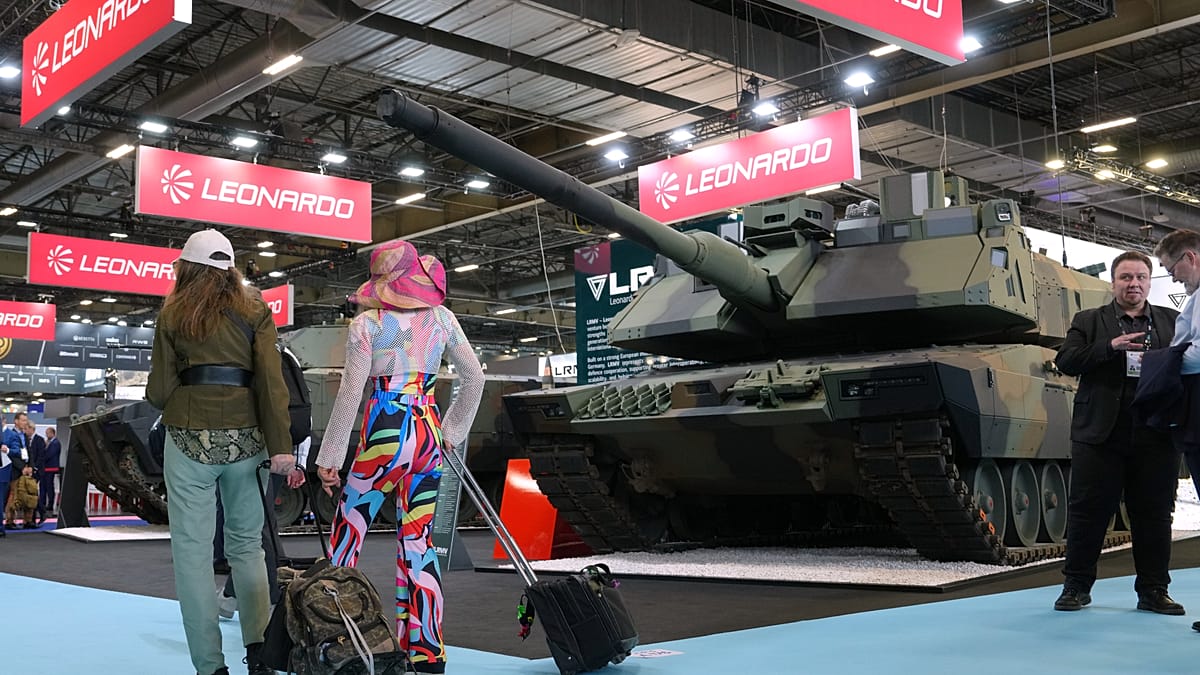
Leonardo, Italy's aerospace and defence champion, has broken through the €60 billion mark in orders for the first time, the company announced on Thursday. The Milan-based group reported a 28% jump in order intake for the first nine months of 2026, reaching €60.4 billion, with revenues rising across all its divisions.
Chief Executive Lorenzo Mariani framed the results as proof that the company's strategy is working. "The results for the first nine months of 2026 confirm the soundness of our development path, characterised by financial solidity, a strong commercial proposition, the breadth of our offering and the expansion of our production capacity," he said in a statement.
Mariani also stressed that the company is not resting on its laurels. "We are working to further improve our capabilities in order to translate the strength of the order backlog into greater production and delivery capacity, as required by the current reference scenario."
Defence, drones, and space drive growth
The order surge was broad-based, but defence electronics, unmanned systems, and space activities were particularly strong. Leonardo has been repositioning itself as a European leader in next-generation defence technologies, and the numbers reflect that ambition.
One of the key contributors was the acquisition of Iveco Group's Defence division, completed in March, which added around €6 billion to the backlog. That deal has bolstered Leonardo's land systems portfolio, complementing its traditional strengths in aerospace and electronics.
Mariani also pointed to several strategic initiatives that are shaping the company's future. These include the GCAP (Global Combat Air Programme) fighter jet project, joint ventures with Germany's Rheinmetall and Turkey's Baykar for new vehicles and drones, and an alliance with Airbus and Thales to create a European operator in space. The company is also developing the Michelangelo Dome, a space-based surveillance system.
These moves are part of a broader push to consolidate Europe's defence industry, which has been under pressure to increase production capacity and innovate in response to geopolitical tensions. Leonardo's strategy aligns with the EU's recent efforts to boost joint defence procurement, such as the €21.3bn defence loans reopened by Brussels.
The company's financial performance also reflects the wider European defence boom. With governments across the continent increasing spending, companies like Leonardo are seeing order books swell. However, the sector faces challenges, as seen in the recent profit warning at Rheinmetall due to delayed orders, highlighting the volatility of the market.
Leonardo, in which the Italian state holds a stake through the Ministry of Economy and Finance, is listed on the Milan stock exchange. The company's results were approved by its board on Wednesday.
Looking ahead, Mariani said the company's strategic plan will enable it to "play a central role in the new configuration of the international AD&S industry and to strengthen our positioning so we can respond to market developments."
The strong order intake is a positive signal for the European defence industry, which is increasingly looking to consolidate and innovate. As the continent grapples with security challenges, companies like Leonardo are positioning themselves as key players in the new defence landscape.