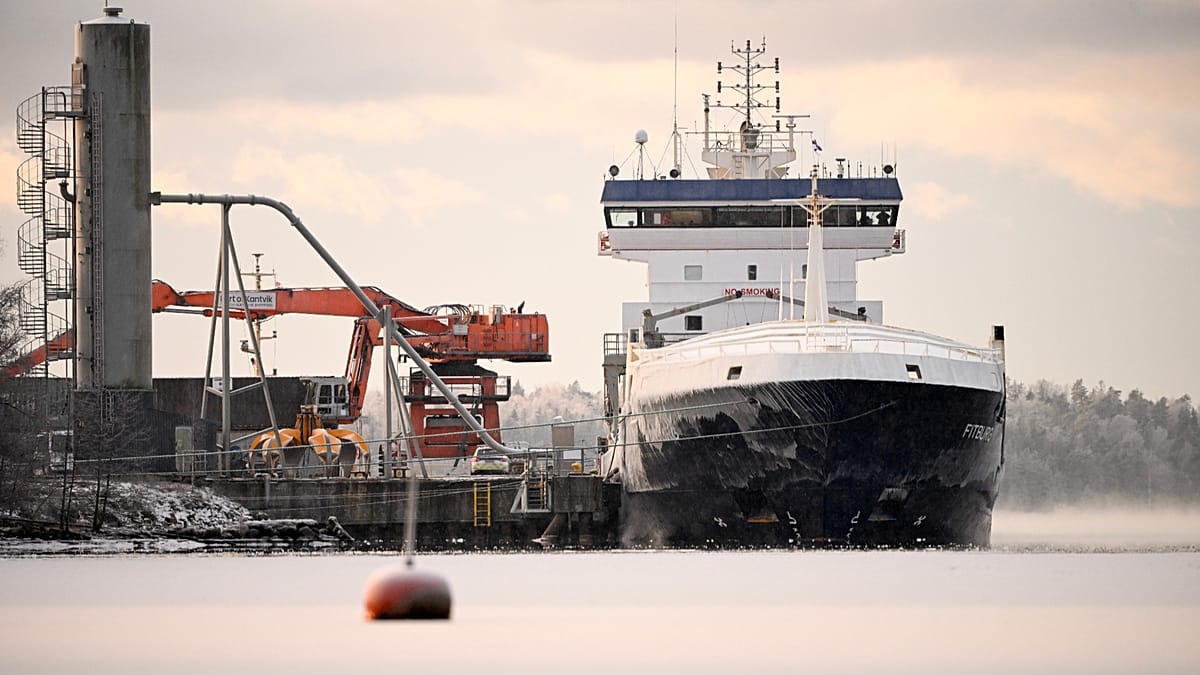
A Finnish court has sentenced the Russian captain of a cargo vessel to three and a half years in prison for deliberately damaging two undersea cables that connect Finland and Estonia. The Helsinki District Court also convicted the ship's deputy captain, an Azerbaijani national, handing him a sentence of two years and ten months. Both men were found guilty of “aggravated criminal damage” for their roles in the incident involving the freighter Fitburg.
The 132-metre vessel, which had departed from St Petersburg and was bound for the Israeli port of Haifa, was detained on New Year's Eve after Finnish authorities suspected that its anchor had damaged a telecoms cable in the Gulf of Finland. Investigators believe the ship dragged its anchor along the seabed for several kilometres, severing the cable owned by Finnish telecoms group Elisa and located in Estonia's exclusive economic zone.
Rising concerns over hybrid warfare
The case is the latest in a series of incidents that have heightened tensions in the Baltic region since Russia's full-scale invasion of Ukraine in February 2022. Many European governments and military analysts view such suspected sabotage as part of a broader pattern of hybrid warfare waged by Moscow against Western infrastructure. The deliberate targeting of undersea cables, power links, and gas pipelines has become a key security concern for NATO and the European Union.
In a separate but related case, Finnish authorities boarded the Russian-linked oil tanker Eagle S in December 2024 after it was suspected of damaging power and telecommunications cables in the Baltic Sea. However, that case was dismissed by a Finnish court in October after prosecutors failed to prove intent. The contrast between the two outcomes highlights the legal challenges in holding perpetrators accountable for such acts.
The Fitburg, flagged in St Vincent and the Grenadines, was carrying a cargo of steel products. Finnish customs determined in January that the cargo was subject to sanctions against Russia, but no criminal investigation was launched because the products only entered Finnish territorial waters when authorities ordered the ship to move. An inspection by the Finnish Transport and Communications Agency found no severe deficiencies in the vessel itself.
The conviction comes as NATO and the EU remain on high alert over a string of airspace violations and other suspicious activities attributed to Russia. Eight NATO countries bordering the Baltic Sea have stepped up patrols, deploying frigates, aircraft, and naval drones to monitor the region. The alliance has also been working on new initiatives to protect undersea infrastructure, recognising the critical importance of these cables to Europe's digital economy and security.
While the Finnish court's ruling is a significant legal milestone, it is unlikely to deter future attempts at sabotage, experts say. The Baltic Sea remains a chokepoint for both commercial shipping and military activity, and the vast network of cables and pipelines on its seabed is vulnerable to both accidental and deliberate damage. The case also raises questions about the adequacy of existing international law to address such hybrid threats, which often fall below the threshold of armed conflict.
For Finland, which shares a long border with Russia and joined NATO in 2023, the verdict sends a clear signal that attacks on critical infrastructure will be met with legal consequences. But as the Eagle S case demonstrated, proving intent remains a high bar. The Fitburg ruling, with its explicit finding of aggravated criminal damage, may set a precedent for how other Baltic states handle similar incidents.
The broader geopolitical context is inescapable. Since the invasion of Ukraine, European leaders have repeatedly warned of Russia's willingness to use unconventional means to pressure Western nations. The sabotage of undersea cables is seen as a low-cost, deniable way to disrupt communications and sow uncertainty. As NATO and the EU bolster their defences, the Fitburg case serves as a reminder that the battle for the seabed is as much legal as it is military.