From the flood-swept valleys of Nepal, where children now sleep at their own school desks, to Sudan, where more than five thousand schools remain shuttered, the evidence of a global education emergency is stark. In Ukraine, Gaza, and the Sahel, young people caught in conflict ask for remarkably little: a classroom, a teacher, a desk. Yet today, the education of 258 million school-aged children worldwide is disrupted by crises, and for these children, missing out on quality education means missing out on life chances.
Meanwhile, global spending on education aid is projected to fall by 24 per cent this year. In the very emergencies where education matters most, it is being neglected. This is a political failure before it is a financial one, argues Reem Alabali Radovan, Germany's Minister for Economic Cooperation and Development, in an exclusive op-ed for European Pulse.
Why education in emergencies is a strategic priority
The consequences of inaction are severe. When children in crises are denied learning, we do not merely postpone their futures—we mortgage our own. Children without education are more vulnerable to violence, recruitment into armed groups, exploitation, and early marriage. Girls are often the first to be denied access to education and the last to return to school. And societies that lose a generation to illiteracy do not quietly disappear; they export instability, forced displacement, and conflict across borders.
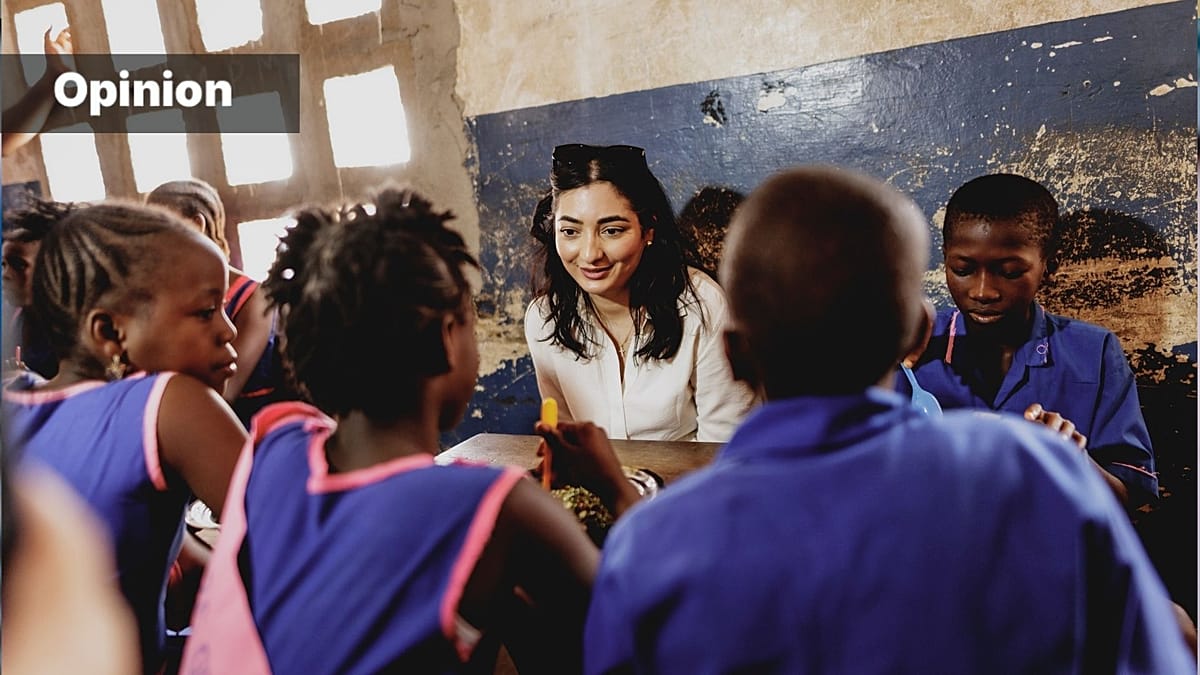
Excluding children from school today will deepen the security, economic, and social challenges of tomorrow. In the short term, school is the most effective lifeline for children. A classroom is a place of safety, of meals, of psychosocial support, of normality in the abnormal. Getting children back to learning within days of a disaster is the difference between trauma and recovery—and between hope and the loss of it.
In the long term, education is the most effective development policy there is. It is essential for peace and stability. Every additional year of education makes a lasting difference: for literacy, for livelihoods, for girls who marry later and lead sooner, for teachers who train the next generation, and for communities that can absorb a flood or a war and rebuild.
Germany steps up as others step back
That is why the work of Education Cannot Wait (ECW), the global fund for education in emergencies, is so important. Over a decade of action, ECW and its partners have enabled education for more than 16 million crisis-affected children across 33,000 schools, even in the toughest places. Nearly 300,000 teachers—over half of them women—have been trained. And ECW has an ambitious goal: to improve access to education for another 10 million of the world's most crisis-affected children over the next four years.
As an international community, we can make it happen if we all contribute. That is why, at a time when others are stepping back from multilateralism, Germany is stepping forward. Berlin has committed €20 million per year to ECW for 2027–2031, contributing to its US$600 million replenishment target.
Knowing that budgets are tight, we make this commitment with open eyes. Because the evidence is unambiguous: there is no more effective way to build peace, no faster way to restore dignity, and no smarter investment in our own security than a child in a classroom.
With this commitment, Germany is sending a clear message: we strongly believe in multilateral partnerships, and we remain a reliable partner. Only through collective action can we find solutions to global challenges and ensure stability worldwide. Now we ask our partners in the G7, in Europe, and beyond to do the same.
We must not let education become the silent casualty of our times. Together, we can make a difference—so that every child, everywhere, has the chance to learn and build a better future.